Another Slip-Up
It’s here - rules, and a mountain of them.
They didn’t stop until they got their cut.
Blame the industry for attracting the ire of the all-mighty rule makers.
This means that growth in this sector won’t be as gangbusters moving forward, if ever.
It’s a net negative for the original vision of crypto because the industry relies on that extra supercharger growth to attract incremental investors, and all in one poof, it's gone, like the wind.
What exactly happened?
The Financial Stability Oversight Council (FSOC), the U.S. regulatory panel comprising top financial regulators, successfully pushed Congress to enact legislation addressing risks digital assets pose to the financial system, including strict oversight of crypto spot markets and stablecoins.
Anything that Congress touches turns to higher costs and more red tape.
The FSOC's current enforcement regime follows a slate of directives that were released throughout the mid-2020s. The administration’s mandate effectively forced U.S. government agencies to double down on digital asset sector enforcement and close holes in regulation.
Legislative clarity has largely replaced the ambiguity of the past, with bills now codified to address stablecoins and digital commodities regulation.
Federal financial regulators now possess explicit rulemaking authority over the spot market for cryptocurrencies that are not securities, addressing conflicts of interest and abusive trading practices.
It’s not a joke that regulation has raced to the front and center of the crypto narrative as the defining constraint on the industry.
It has been relentless.
Just as we thought the worst had passed, the industry was forced to reckon with the consequences of the trust-toppling scandals that induced this heavy-handed regulation.
The poster child for this era remains reality TV star and influencer Kim Kardashian.
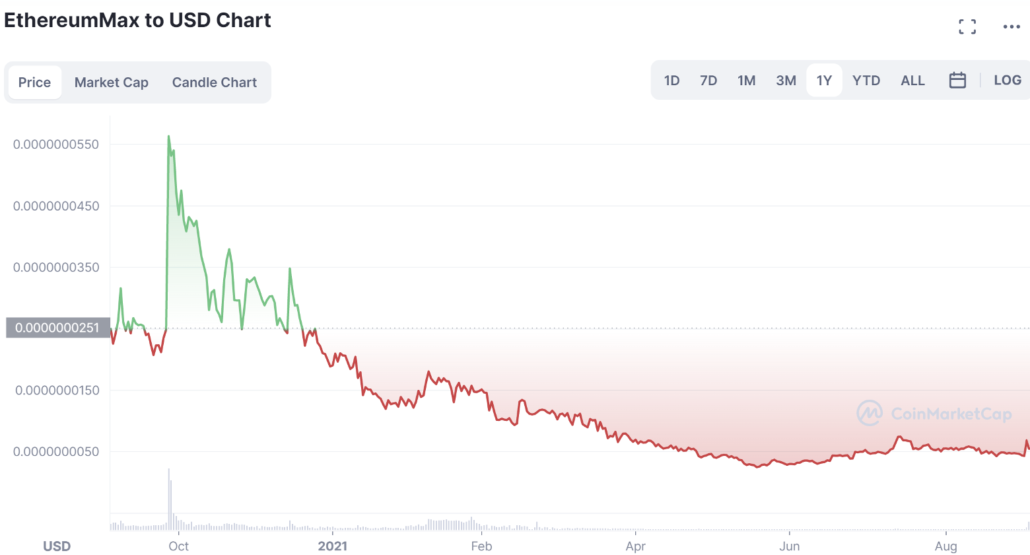
She is the Hollywood socialite who pushed Ethereum Max, a digital coin that aptly borrowed its name from the second biggest crypto, Ethereum.
What were the results?
Ethereum Max is effectively dead, prompting investors to sue Kardashian, who initially failed to disclaim that her marketing was being paid for by the company that owned the token.
Kardashian’s legal battles became a landmark case for influencer liability, even as her lawyers argued there was insufficient evidence that her endorsements led to the plaintiffs buying EMAX.
She paid a settlement of $1.26 million.
EMAX's value was based on the greater fool theory because it had no utility whatsoever.
As investors and promoters like Kardashian talked up such coins, more people invested, and the price went up, allowing the investors at the beginning to cash out.
Kardashian was paid $250,000 by Ethereum Max for her marketing efforts.
Altcoins like EMAX lack the stability of established assets like Bitcoin and Ether.
And EMAX never returned to meteoric highs, meaning the greater fool theory in this coin only reached so high for the previous investors to cash out.
EMAX remains a cautionary tale because investing in such assets is akin to pouring money down a black hole, with the asset depreciating rapidly.
While the exact number of people who invested based on celebrity endorsements is history, data from that period found that Kardashian's advertisement reached about one in five US adults and roughly 30% of crypto owners.
This was a public relations disaster that permanently damaged the crypto industry.
It’s bad enough that the industry impoverished many of its participants during the purge, but it also involved the lowest level of brain activity on the human planet.
One might conclude that the Kardashian fiasco marked the bottom of the industry's reputation, because how much lower and pitiful could crypto get?
The one silver lining in the market's survival is that the big holders haven’t sold out, which bodes well for crypto now that capital markets have stabilized.
That appears to be the last leg crypto is standing on, which could be either scary or a sanctuary, depending on how you look at it.
Lastly, steer away from anything other than Bitcoin if you are going to invest.