• support@madhedgefundtrader.com
  • Member Login
Mad Hedge Fund Trader
  • Home
  • About
  • Store
  • Luncheons
  • Testimonials
  • Contact Us
  • Click to open the search input field Click to open the search input field Search
  • Menu Menu
Mad Hedge Fund Trader

Another Sovereign Country Considers Bitcoin

Bitcoin Letter

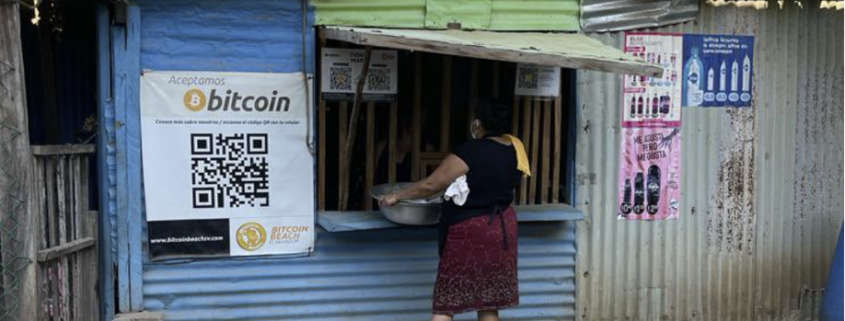
Another sovereign country once appeared ready to consider Bitcoin, and for a moment, it looked like the experiment launched in Central America might quickly spread north. By 2026, however, the reality is more restrained. Bitcoin adoption has entered a slower, more selective phase across Latin America, shaped less by ideological enthusiasm and more by political limits, regulatory pressure, and hard economic trade-offs.

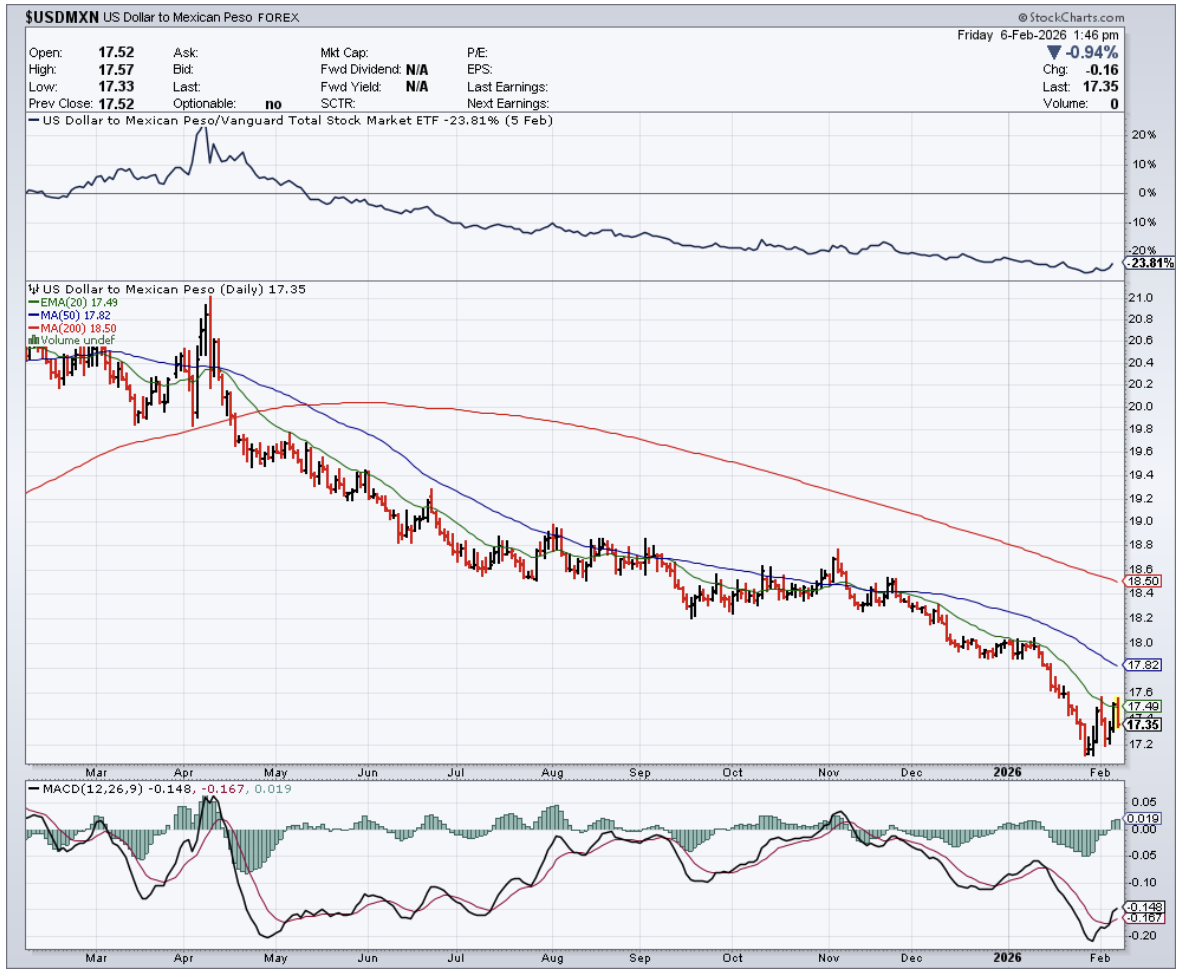
The early narrative was built on frustration with local currencies. Across parts of the region, long histories of inflation and devaluation created fertile ground for alternative monetary ideas. But broad claims of collapse have not held evenly. Mexico’s peso, for example, did not spiral into oblivion. After years of volatility, it proved comparatively resilient through the mid-2020s, supported by strong remittance inflows, nearshoring investment, and orthodox central bank policy. For most households, holding pesos in a bank did not become the nightmare scenario once implied.

That context matters when revisiting political calls to adopt Bitcoin as legal tender. Indira Kempis, a senator from Nuevo León, did publicly advocate for Bitcoin adoption and framed it as a tool for financial inclusion. She emphasized Bitcoin’s potential to serve the unbanked and said she was consulting with people knowledgeable about the asset. Those statements were real, but the effort never translated into national policy. Mexico did not move toward making Bitcoin legal tender, and no broad legislative coalition formed around the idea.

The argument that Bitcoin could bank the unbanked continues to resonate rhetorically. Millions of Mexicans remain outside the formal financial system, and digital wallets can lower barriers to entry. But by 2026, policymakers largely treat crypto as a complementary payment rail rather than a replacement for sovereign currency. Bitcoin is tolerated, regulated, and sometimes encouraged for innovation, but not elevated to the status of national money.

The experience of El Salvador has also tempered regional enthusiasm. President Nayib Bukele made history by adopting Bitcoin as legal tender, but the long-term outcome was more nuanced than early boosters expected. By 2024, El Salvador amended its Bitcoin law as part of negotiations with international lenders, removing mandatory acceptance and scaling back the legal tender framework. Bitcoin remained on the balance sheet and in official rhetoric, but its role shifted from revolutionary currency to an optional instrument.

That recalibration mattered across the region. Rather than triggering a domino effect, El Salvador’s path became a cautionary reference point. Legislators elsewhere continued to study crypto, but few were willing to stake monetary sovereignty on it.

Where Bitcoin has made steadier inroads is in payments and remittances. Crypto rails proved useful for cross-border transfers, particularly in corridors with high fees and slow settlement. Coinbase Global expanded services in Mexico by enabling recipients to cash out crypto into pesos at tens of thousands of retail locations. This targeted the remittance market directly, offering speed and cost advantages without requiring users to abandon fiat entirely.

That approach was more durable than legal-tender experiments. It allowed crypto to compete with incumbents like Western Union on efficiency rather than ideology. Over time, crypto remittances became another option in a crowded payments landscape rather than a wholesale disruption of national currencies.

Prominent business figures also continued to promote Bitcoin. Ricardo Salinas Pliego, founder and chairman of Grupo Salinas, remained one of Bitcoin’s most vocal advocates in Mexico, urging long-term holding and criticizing fiat debasement. His support kept Bitcoin in the public conversation, but it did not translate into official monetary reform.

By 2026, the tone around Bitcoin in Latin America is more pragmatic. Grand predictions of immediate legal tender adoption have faded. Volatility remains, and while Bitcoin has matured relative to its early years, governments are reluctant to tie fiscal stability to an asset they do not control. The idea that entire regions would balance their budgets through Bitcoin has not materialized.

Instead, Bitcoin occupies a narrower but more realistic role: a speculative asset, a hedge for some individuals, and a payment and remittance tool where it offers clear advantages. Sovereign adoption, where it exists at all, is partial and reversible. The era of sweeping declarations has given way to incremental integration, and that slower path now defines Bitcoin’s relationship with Latin American states.


https://www.madhedgefundtrader.com/wp-content/uploads/2022/03/bitcoin-e1646340136884.png 300 450 Mad Hedge Fund Trader https://madhedgefundtrader.com/wp-content/uploads/2019/05/cropped-mad-hedge-logo-transparent-192x192_f9578834168ba24df3eb53916a12c882.png Mad Hedge Fund Trader2026-02-06 13:00:272026-02-06 11:26:52Another Sovereign Country Considers Bitcoin
Mad Hedge Fund Trader

The Strong Breadth of Crypto

Bitcoin Letter

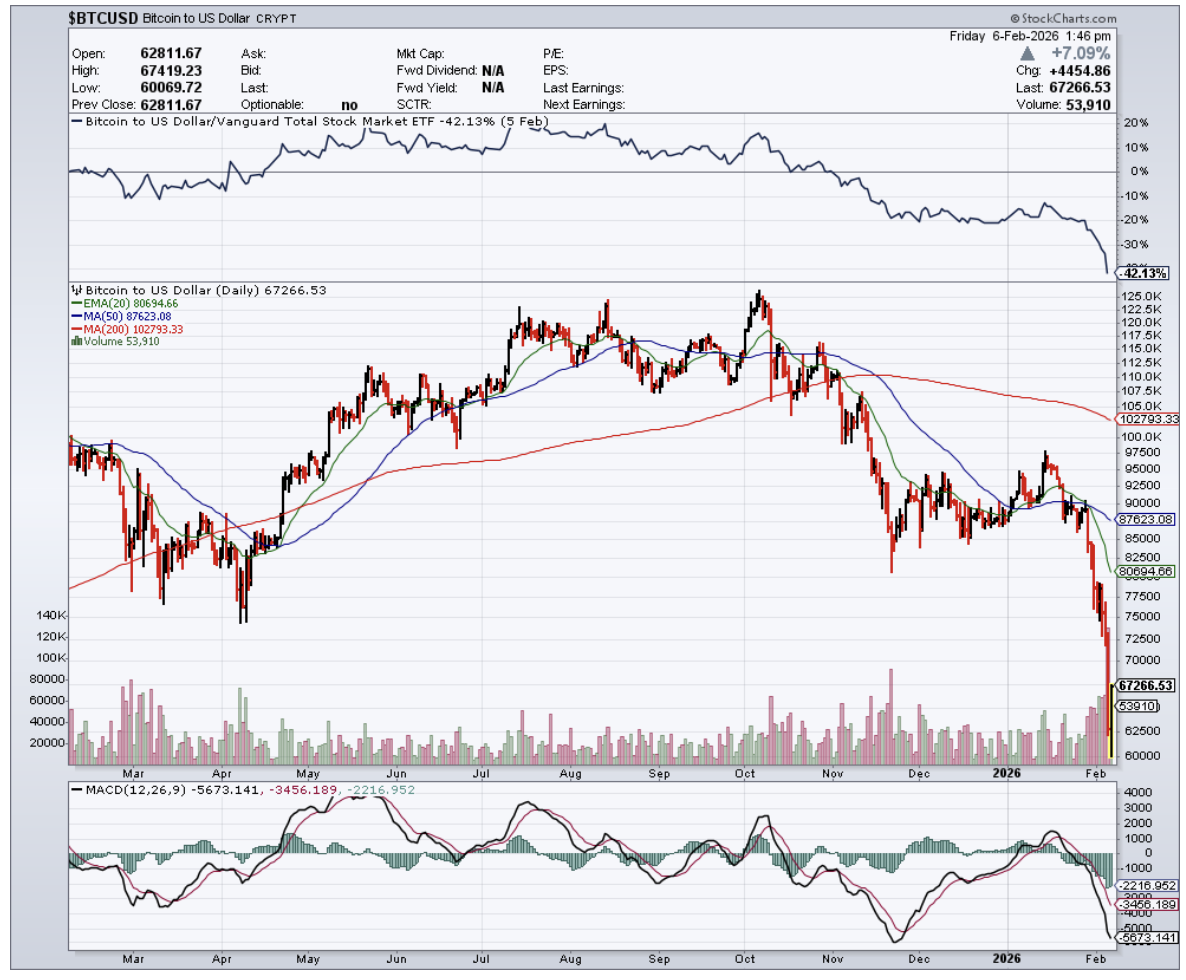
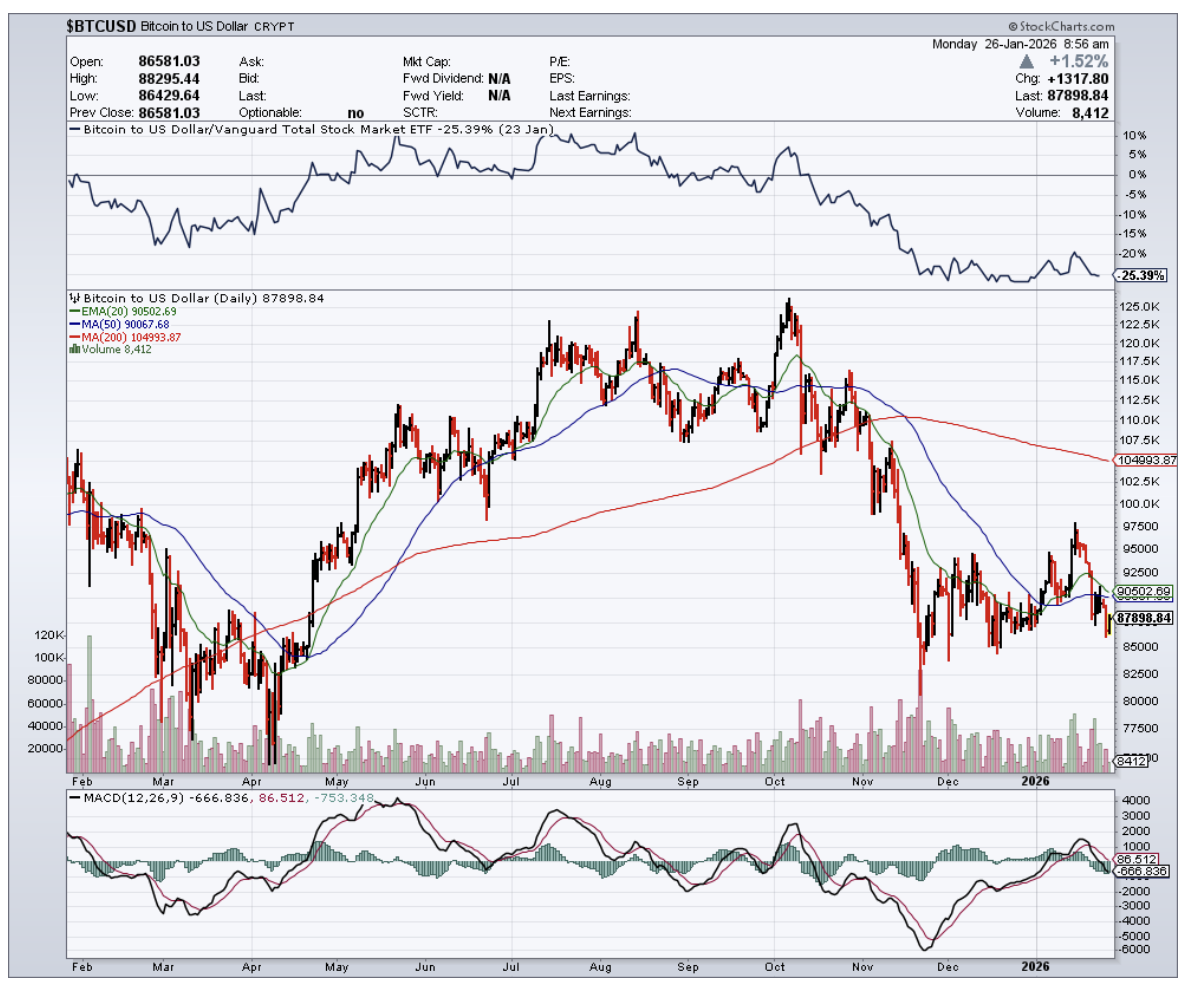
Periods of weakness in Bitcoin price action often reflect positioning and profit-taking rather than a breakdown in the asset’s underlying structure.

Bitcoin remains a volatile asset by design, and retracements have historically occurred even during sustained growth phases. Sharp pullbacks, while uncomfortable, have repeatedly functioned as resets rather than trend reversals.

From a structural perspective, Bitcoin’s price behavior continues to reflect cyclical volatility rather than instability.

Corrections are a feature, not a flaw.

Bitcoin does not move in a straight line, and expectations that it should do so tend to form near local extremes rather than durable inflection points.

What has been more notable during periods of Bitcoin consolidation is the behavior of the broader digital asset market.

Even when Bitcoin has struggled to make near-term progress, capital rotation into alternative crypto assets has often remained active, signaling broader participation rather than capital flight.

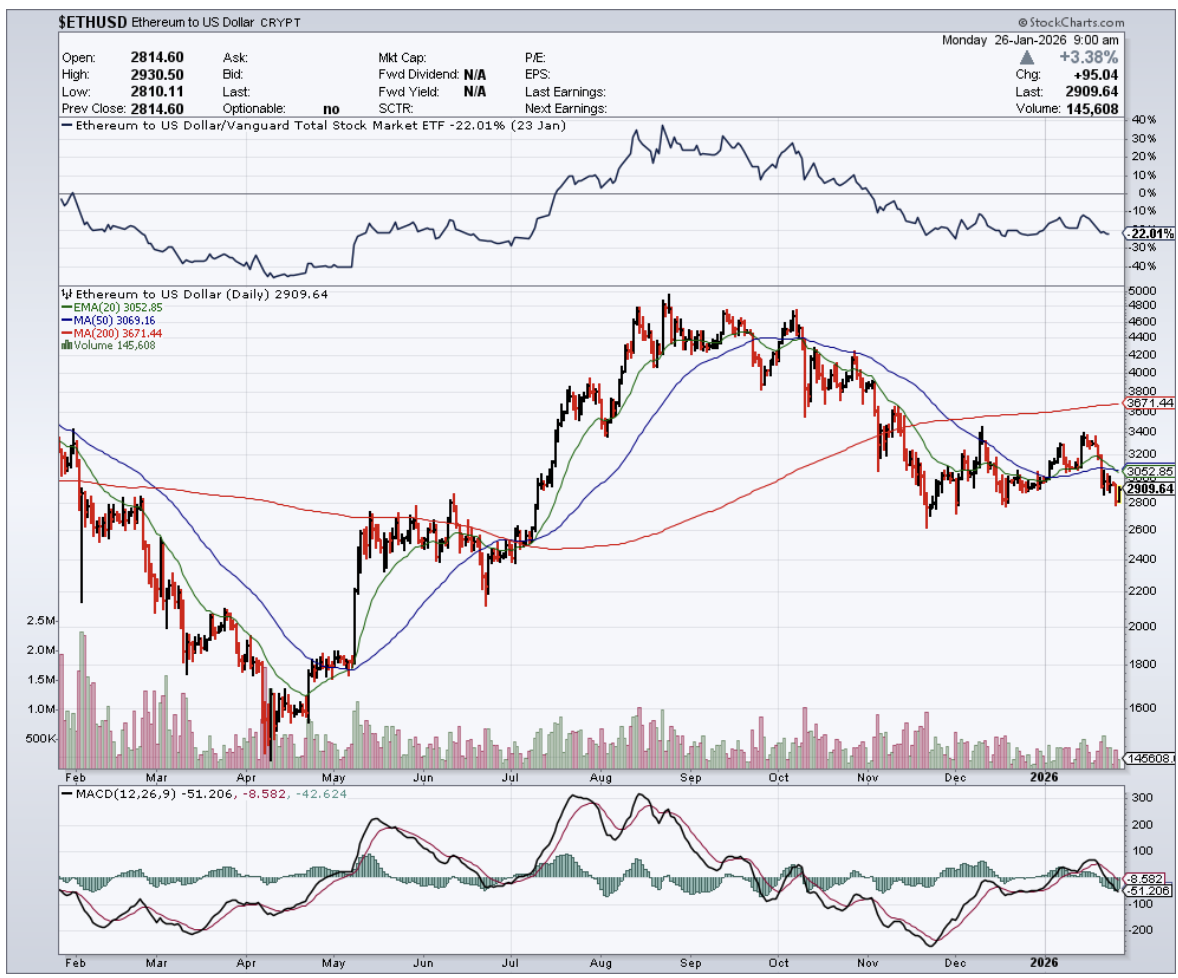
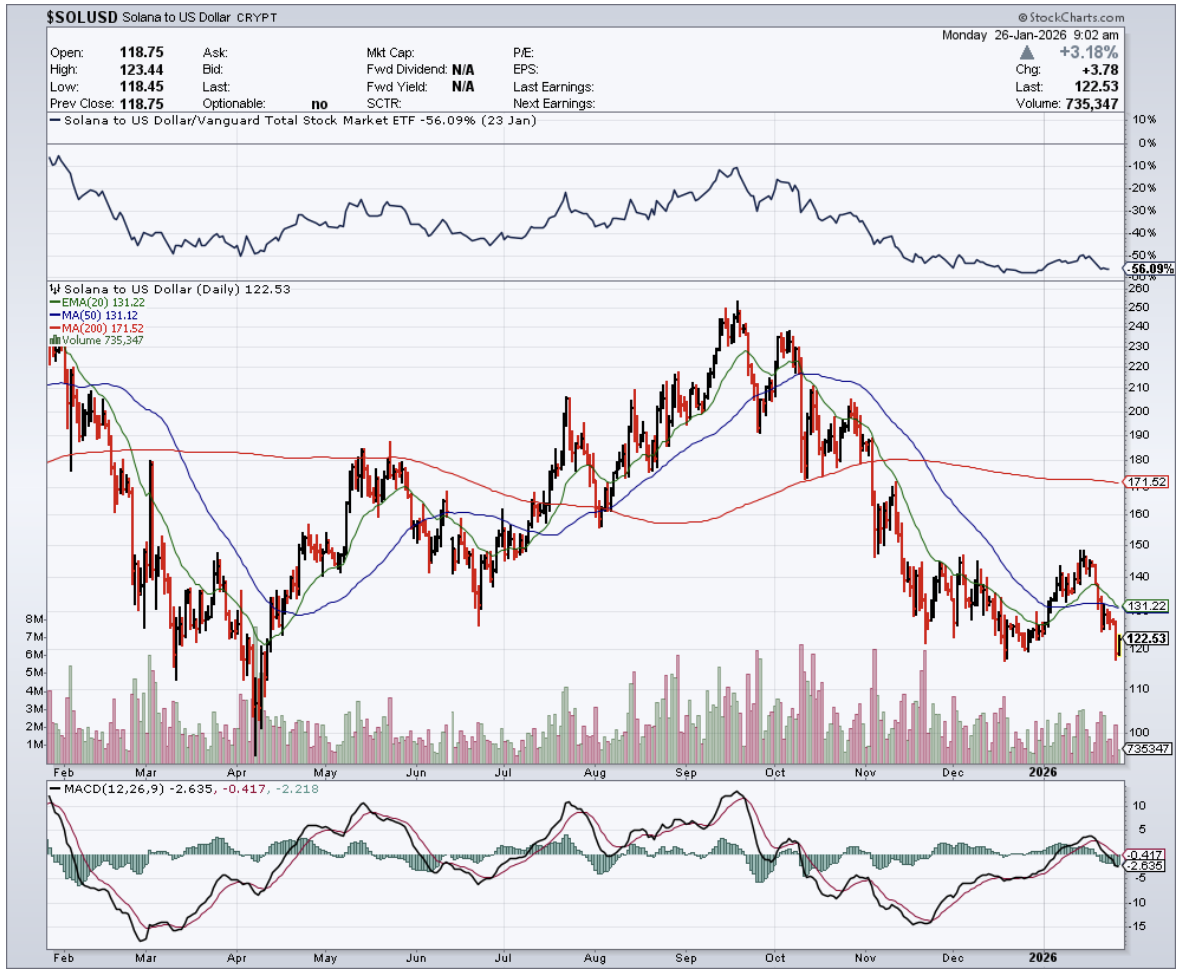
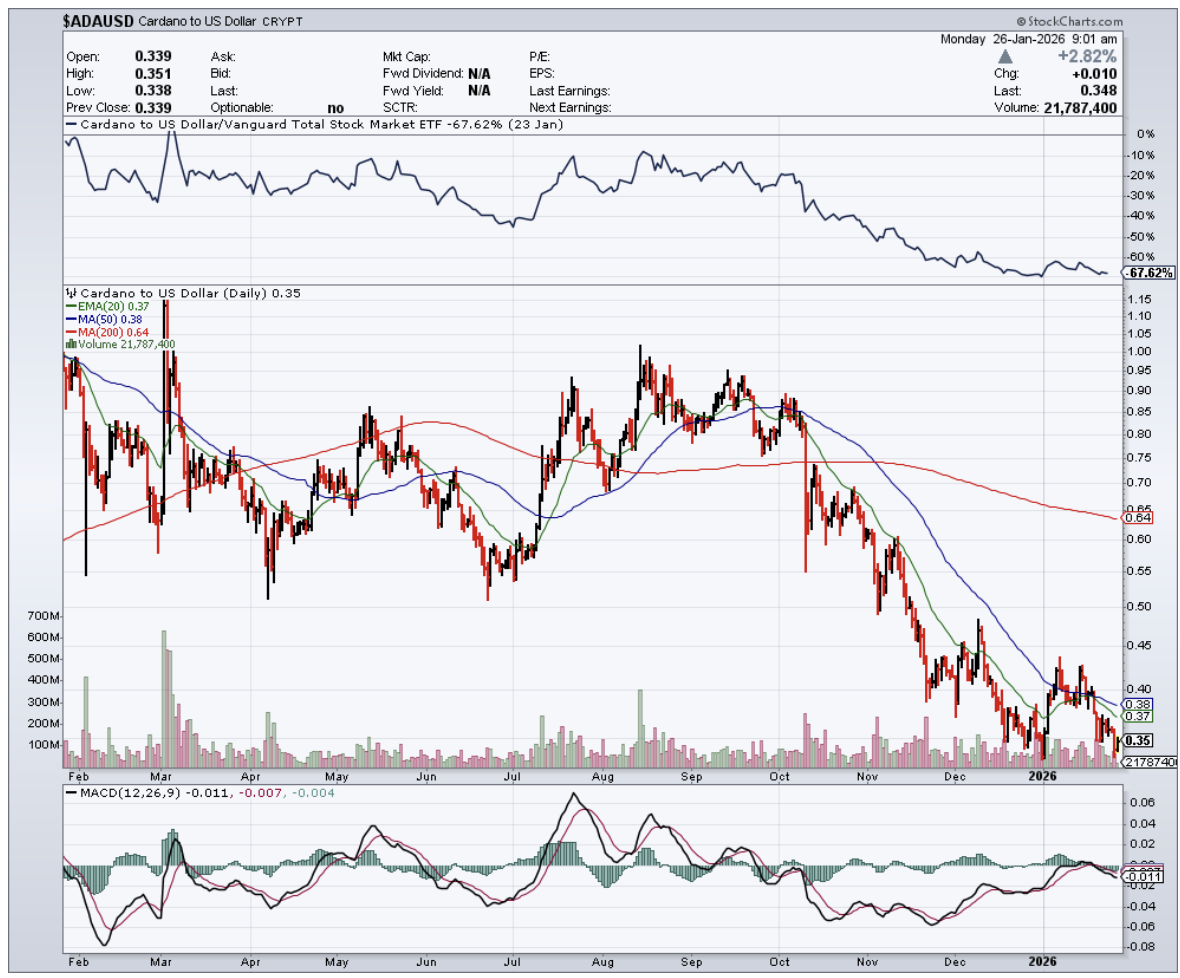
Assets such as Ethereum, Solana, and Cardano have each experienced phases of outsized growth across multiple market cycles, alongside many smaller projects that have captured speculative and developmental interest.

This breadth reflects a market that has expanded beyond a single-asset thesis.

Bitcoin has begun to exhibit characteristics of a more mature asset, even while remaining volatile by traditional standards.

At the same time, much of the altcoin market remains earlier in its development curve, where experimentation, speculation, and rapid growth are more common.

As a result, capital that once flowed almost exclusively into Bitcoin increasingly disperses across a wider set of digital assets, particularly those perceived to offer higher upside at earlier stages.

A few years ago, broad-based participation across dozens of crypto assets would have seemed implausible.

The expansion of liquidity beyond Bitcoin reflects both increased risk tolerance and a growing belief that multiple blockchain networks can coexist with differentiated use cases.

That dispersion does not weaken Bitcoin’s role, but it does change how capital cycles through the ecosystem.

Macro conditions also continue to influence crypto markets.

Strength in the US dollar and shifts in global liquidity have periodically pressured risk assets, including digital currencies. While Bitcoin is often framed as an alternative monetary asset, it still competes for capital within the same global financial system.

During periods of dollar strength or tightening financial conditions, it is common for investors to reduce exposure, lock in gains, or rebalance toward perceived safety.

Currency volatility in emerging and developed markets alike has reinforced this dynamic, reminding investors that crypto does not exist in isolation from global macro forces.

Another recurring source of market anxiety has been the distribution of long-dormant bitcoin holdings from early industry failures.

The long-running resolution of the Mt. Gox bankruptcy has periodically resurfaced as a sentiment overhang, driven by concerns that large distributions could temporarily pressure prices.

Historically, however, such events have tended to influence short-term behavior rather than long-term market structure.

Even when additional supply enters the market, it does not alter Bitcoin’s fixed issuance schedule or long-term scarcity.

If selling pressure emerges, it typically delays recovery rather than defining a new secular trend.

Despite these intermittent headwinds, the broader direction of crypto adoption has remained constructive.

Bitcoin continues to attract institutional interest, corporate balance-sheet allocation, and sovereign-level experimentation, while alternative networks push forward with development, scaling, and application design.

That combination has reinforced the idea that crypto markets are no longer driven by a single narrative or participant class.

Breadth across assets, use cases, and geographies has become one of the defining characteristics of the ecosystem.

Volatility remains, cycles persist, and corrections are unavoidable.

But the widening participation across digital assets suggests that crypto has moved beyond its earliest phase, even if it remains far from mature.

That breadth continues to be one of the strongest signals underpinning the asset class.


https://madhedgefundtrader.com/wp-content/uploads/2019/05/cropped-mad-hedge-logo-transparent-192x192_f9578834168ba24df3eb53916a12c882.png 0 0 Mad Hedge Fund Trader https://madhedgefundtrader.com/wp-content/uploads/2019/05/cropped-mad-hedge-logo-transparent-192x192_f9578834168ba24df3eb53916a12c882.png Mad Hedge Fund Trader2026-01-26 13:08:442026-02-05 13:54:59The Strong Breadth of Crypto
Mad Hedge Fund Trader

A Levered Bet on Bitcoin

Bitcoin Letter

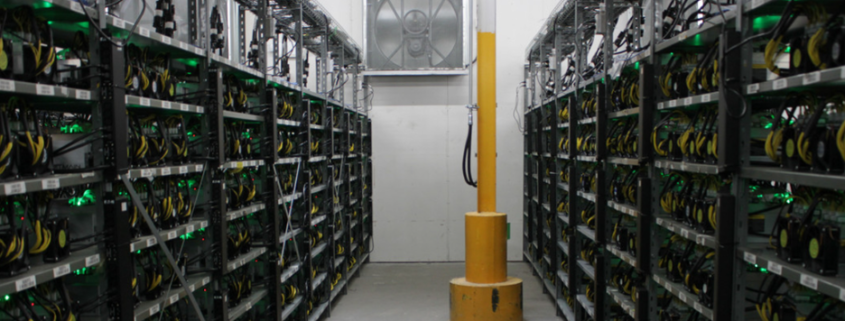
Like gold and gold miners, bitcoin miners are also a levered play on the price of bitcoin.

In layman’s terms, when the price of bitcoin goes up, the miners go up more.

The largest-scale Bitcoin miner in the US is Marathon Digital Holdings (MARA), and readers should take notice.

The stock is up over 1,100% in the past 365 days as the miner has ridden the elevator up with the price of Bitcoin.

Marathon has legs and doesn’t live in fear of them if you are a believer of Bitcoin like I am.

Deploying resources in this stock has some weight, especially after we received a 27% discount when the stock dropped after they announced a $650 million convertible senior notes offering to fund their purchases of additional Bitcoin miners.

Almost as important, they disclosed a Securities and Exchange Commission (SEC) subpoena that requested documents related to its data center contracts in Hardin, Montana.

Last year, Marathon reorganized itself as a Bitcoin mining company and placed a long-term order for more than 100,000 high-end ASIC miners from Bitmain.

At the end of 2020, Marathon only held 126 Bitcoins. But in March, it purchased an additional 4,813 Bitcoins for $150 million at an average price of $31,168.

This brilliant move in hindsight means they are playing with house money now.

Marathon operated 27,280 miners at the end of October, and it expects to expand its fleet to 133,000 miners by mid-2022.

But those miners cost more than $10,000 per unit each, and Marathon expects to remain unprofitable as it takes on more debt to fund those purchases.

Last year, Marathon only generated $4.4 million in revenue and posted a net loss of $10.4 million.

Marathon's $650 million senior convertible debt offering gives a chance for the company to grow out of its loss-making model.

It’s hard to run away from the exorbitant costs to expand its mining fleet, but once the scale is realized, it will be able to focus on earnings growth.

As for the SEC subpoena, it's related to Marathon's deals with Beowulf Energy and other parties to build a data center in Hardin last October.

In particular, the agency is investigating Marathon's issuance of six million shares of restricted common stock to fund those deals and might trigger problems for Marathon, since it relies on Beowulf's lower energy prices to mine Bitcoin at cost-efficient rates.

Even if something were to come from this, I doubt it will be a deal-breaker and maybe even a possible fine.

The silver lining is that Bitcoin must drop significantly for Marathon to become unprofitable.

They are doing everything they can to scale their business as fast as possible.

Taking on more leverage to corner the bitcoin miner supply market is scary for some people, but after the pandemic, much of this activity is normalized.

After factoring in energy and hosting costs, the breakeven rate on Bitcoin for Marathon is around $6,500.

Even though the company is levered, they are insulated by its unit economics.

Certainly, it’s expensive to scale in a fragmented market, and it’s not a guarantee that energy costs will be advantageous for Marathon in the long term.

As many have read, there are various breakdowns in the global energy market that could reverberate on Marathon’s balance sheet even if not yet.

The breakeven estimate serves as a reminder of how this is just a numbers game, and reducing the cost of energy makes it almost unfair to compete against.

Daily miner revenue is hovering near record highs, and Marathon has among the lowest mining costs per coin.

The stock has iron-clad support around $37, and I would be buying MARA stock incrementally all the way down to $37 if we ever get there.

I have a hunch that we will never dip below the low $40s.


https://www.madhedgefundtrader.com/wp-content/uploads/2021/11/bitcoin-mining.png 410 936 Mad Hedge Fund Trader https://madhedgefundtrader.com/wp-content/uploads/2019/05/cropped-mad-hedge-logo-transparent-192x192_f9578834168ba24df3eb53916a12c882.png Mad Hedge Fund Trader2026-01-26 13:06:152026-02-02 11:20:41A Levered Bet on Bitcoin
Mad Hedge Fund Trader

Traders Take Taproot Profits

Bitcoin Letter

Bitcoin operates with Taproot, a protocol upgrade that refined how transactions and spending conditions are expressed on the network.

At a technical level, the change is best understood as a structural improvement rather than a headline event, as protocol refinements tend to quietly enhance efficiency and transaction handling over time.

At the investor level, major upgrades often function as liquidity events. Market participants tend to accumulate bitcoin into periods of anticipation and rebalance positions once the change is fully absorbed, removing the speculative premium attached to the upgrade itself.

Removing that anticipation can weigh on short-term price behavior, but it does no damage to Bitcoin’s long-term value narrative.

Taproot’s core cryptographic improvement is the adoption of Schnorr signatures.

These signatures improve transaction security, efficiency, and data handling.

Most importantly, the upgrade expands Bitcoin’s ability to express more complex spending conditions directly on-chain.

A critical change enabled by Taproot is the broader use of conditional transaction logic that resembles smart contracts.

Smart contracts are digital agreements written in code and enforced by the blockchain.

They are essential in powering decentralized finance applications and tokenized digital assets on programmable blockchains.

Compared to Ethereum, Bitcoin has historically been far more constrained in accommodating smart contracts by design.

Taproot does not change that design philosophy, but it allows Bitcoin to support a wider range of constrained contract structures.

Taprooted Bitcoin also improves privacy by allowing multi-signature transactions, or transactions involving multiple conditions, to appear on-chain as standard single-signature transactions.

Multi-signature transactions are commonly used in custody arrangements, payment channels, and advanced contract constructions.

As a result, these transactions become indistinguishable from simple transfers, improving fungibility and reducing information leakage.

Schnorr signatures also limit the amount of data required for these transactions, which are more complex to process than standard ones.

With less data involved, transactions become more resource-efficient in both verification and block space usage.

Consequently, transactions can be processed more efficiently, supporting lower average fees during periods of normal network activity.

Taproot makes Bitcoin a more efficient and flexible settlement network while preserving its conservative security model.

The last major protocol upgrade cycle, beginning in 201,7 enabled layered scaling solutions that facilitate faster and cheaper payments without altering the base layer.

Those developments helped expand Bitcoin’s utility while maintaining its role as a secure settlement network.

Adoption of new protocol features occurs gradually, and Taproot’s practical usage has increased steadily rather than immediately.

At a broader level, Bitcoin remains in an evolutionary phase, but its development path has been consistent since its inception.

Making Bitcoin more accommodating for developers building constrained, security-focused applications clarifies its role alongside other blockchain ecosystems rather than positioning it as a direct replacement.

On the negative side of the ledger, the limitations of Taproot are primarily structural.

Taproot does not transform Bitcoin into a generalized application platform, and expectations that it would do so were misplaced.

It also remains uncertain how some higher-level application designs will mature, as adoption depends on wallet support, tooling, and layered infrastructure.

Not all upgrades are immediately reflected in user-facing changes, and some benefits take time to surface.

In a broader competitive landscape, digital assets continue to pursue different approaches to payments, settlement, and virtual economies.

Protocol upgrades like Taproot are necessary to ensure that foundational networks remain efficient, secure, and adaptable.

The ability to build layered applications on top of a stable monetary base remains central to Bitcoin’s long-term thesis.

That future continues to develop incrementally rather than dramatically.

Taproot represents another step in that direction, strengthening Bitcoin’s technical foundation while leaving its core identity unchanged.


https://www.madhedgefundtrader.com/wp-content/uploads/2021/11/btc.png 576 936 Mad Hedge Fund Trader https://madhedgefundtrader.com/wp-content/uploads/2019/05/cropped-mad-hedge-logo-transparent-192x192_f9578834168ba24df3eb53916a12c882.png Mad Hedge Fund Trader2026-01-26 13:02:092026-01-29 12:50:09Traders Take Taproot Profits
Mad Hedge Fund Trader

Bitcoin Hoarders Aren't Selling

Bitcoin Letter

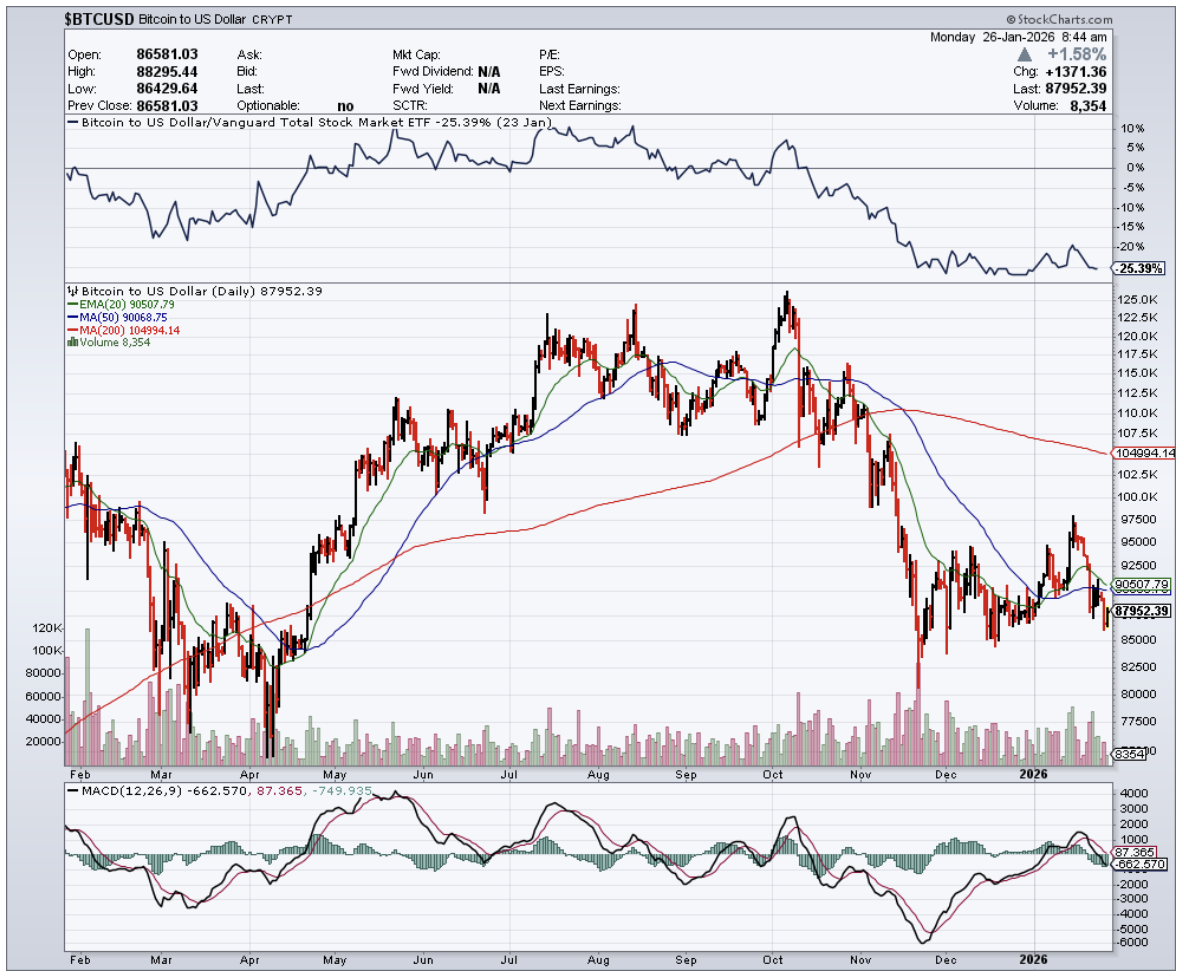
Bitcoin lately has been resting, and the good thing is, it hasn’t been overly choppy.

After reaching prior cycle highs, it retraced into a broad consolidation range that reflects digestion rather than exhaustion, and that is a sign of things to come.

We are well past the era of large-scale asset purchase programs, and many outsiders expected the transition away from ultra-loose monetary policy to be disorderly.

That has not been the case.

Orderly normalization matters for an inherently volatile asset like Bitcoin, and so far, that is largely what markets have experienced.

Inflation readings have established a clear upper bound relative to earlier peaks, and as subsequent data settled into a lower but still elevated range, Bitcoin’s long-term narrative remained intact rather than impaired.

As the price of Bitcoin has persistently maintained levels well above prior-cycle ranges, the talking heads and diva hedge fund managers have largely stopped questioning its legitimacy.

It’s about time.

That shift represents a meaningful validation milestone for the asset class.

At a broader level, the Federal Reserve remains constrained.

Each policy path carries trade-offs, and most of them are structurally favorable to scarce, non-sovereign assets. The primary risk remains a loss of confidence driven by uncontrolled inflation, which would destabilize the U.S. dollar itself.

Conversely, periods of renewed liquidity support or slower-than-expected tightening continue to reinforce Bitcoin’s role as a hedge against monetary debasement.

Inflation ultimately proved more persistent than initially described, and that persistence has gradually eroded confidence in central banks’ ability to fine-tune outcomes. That erosion continues to benefit Bitcoin’s positioning as a long-duration alternative asset.

Liquidity-driven moves in Bitcoin have increasingly followed a familiar pattern of anticipation followed by consolidation rather than violent reversals.

High inflation surprises that once would have caused panic selling now tend to reinforce Bitcoin’s perceived store-of-value characteristics over longer horizons.

Sometimes markets still need to take one step back to move two steps forward.

Risk-off reactions driven by currency strength and macro uncertainty continue to weigh on speculative assets in the short term, but those reactions have become more contained than in earlier cycles.

Doubts about inflation being temporary have long since faded, and the market has broadly accepted that a structural shift in the global economic backdrop is underway.

Another knock-on effect has been recurring concerns about stagnating growth paired with elevated inflation, a combination that complicates capital deployment across traditional assets.

That environment makes it psychologically harder for investors to commit aggressively to large alternative investments, including real estate, during periods of uncertainty.

This helps explain extended consolidation phases rather than decisive breakouts in either direction.

On a constructive note, the supply of bitcoin held on exchanges remains structurally lower than in prior cycles, suggesting a continued preference among investors to self-custody rather than keep coins readily available for sale.

That behavior aligns with a market in observation mode rather than distribution.

Long-term holders continue to represent a dominant share of total supply, and their reluctance to sell has become a defining feature of Bitcoin’s maturity.

Short-term consolidation phases have repeatedly given way to renewed trend moves once macro uncertainty clears or stabilizes.

At the household level, the case for holding Bitcoin has strengthened rather than weakened.

Living costs remain elevated across energy, housing, food, transportation, and other essentials, reinforcing awareness of currency debasement among everyday consumers.

Against that backdrop, Bitcoin continues to be viewed by many as a hedge against long-term monetary erosion rather than a short-term trading vehicle.

Interest-rate expectations now shift incrementally rather than violently, and markets have adapted to a world where higher rates do not automatically invalidate the Bitcoin thesis.

A measured approach to policy normalization has reduced the shock factor that once triggered sharp selloffs.

A move of this magnitude would have produced far deeper drawdowns in earlier years. Instead, Bitcoin has increasingly absorbed macro stress while maintaining structural support.

That resilience remains one of the strongest signals that Bitcoin has evolved beyond a purely speculative asset and into a durable component of the global financial landscape.


https://www.madhedgefundtrader.com/wp-content/uploads/2021/11/bitcoin-activity.png 740 898 Mad Hedge Fund Trader https://madhedgefundtrader.com/wp-content/uploads/2019/05/cropped-mad-hedge-logo-transparent-192x192_f9578834168ba24df3eb53916a12c882.png Mad Hedge Fund Trader2026-01-23 13:00:032026-01-23 13:01:09Bitcoin Hoarders Aren't Selling
Mad Hedge Fund Trader

High Inflation is a Gift to Crypto

Bitcoin Letter

The writing has been on the proverbial wall as central banks around the world struggled for years to contain inflation without destabilizing financial systems.

A steady stream of economic data over the past several years has highlighted how fragile the global financial balance became after the pandemic, with inflation emerging as one of the most persistent challenges.

Central banks were slow to tighten policy because moving too aggressively risked triggering recession, asset market stress, or outright financial accidents. For a long time, it was simply easier to keep policy loose than to risk being blamed for breaking the system.

That hesitation reshaped how investors viewed scarce assets.

The appeal of Bitcoin has consistently strengthened during periods when inflation outpaced wages and purchasing power eroded. While Bitcoin is not mechanically linked to inflation data, its narrative as a hedge against monetary debasement gained traction as inflation surged across developed economies between 2021 and 2023.

Canada was an early warning sign. Inflation surged to levels not seen in decades as supply chain disruptions, labor shortages, and rising energy costs collided. Prices for housing, transportation, and food rose sharply, forcing central banks to abandon the idea that inflation was merely transitory.

Similar dynamics played out across Europe and the United States.

Supply chains proved far more fragile than expected, and they did not normalize quickly. Worker shortages, geopolitical disruptions, and energy market volatility repeatedly pushed costs higher, even after headline inflation began to cool.

Governments were forced to step in at times simply to keep essential goods moving. Fuel shortages, transport bottlenecks, and labor constraints became recurring reminders that modern economies are more brittle than they appear.

Inflation acted as a quiet tax on consumers, businesses, and savers. Wage increases often failed to keep pace with rising prices, meaning higher nominal income did not translate into higher real purchasing power. For many households, raises were effectively absorbed by higher rent, food, energy, and insurance costs.

That erosion of purchasing power pushed more people to reconsider where they stored long-term value.

Rising interest in crypto during high inflation periods was not driven by optimism alone, but by frustration with traditional systems that appeared unable to preserve real wealth. For many investors, crypto represented an opt-out mechanism rather than a speculative gamble.

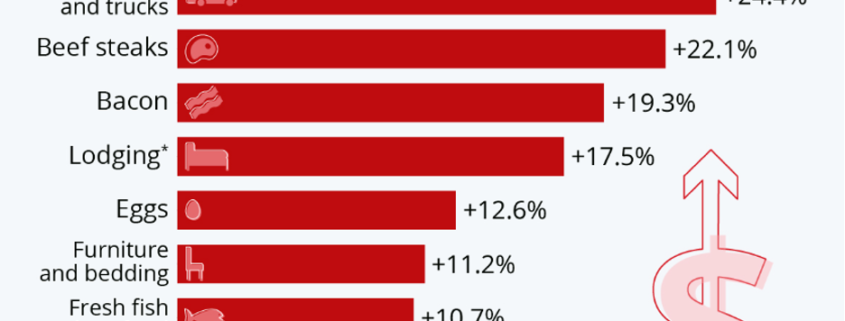
Supply shocks compounded the problem. Energy disruptions, extreme weather, and geopolitical tensions repeatedly slowed logistics and increased costs. Food prices were especially sensitive, with meat, eggs, and dining costs rising sharply during peak inflation periods, even as other categories stabilized later.

These pressures reinforced a broader narrative. When trust in institutions weakens and policy responses lag behind economic reality, alternative systems attract attention.

The rise in crypto adoption has reflected that shift in sentiment. It has been less about chasing rapid gains and more about hedging against policy uncertainty, currency debasement, and institutional fragility.

Crypto price cycles have remained volatile, but the underlying demand story has matured. Participation has broadened, infrastructure has improved, and access through regulated investment products has expanded globally.

The result is an asset class that responds not just to speculation, but to macroeconomic stress.

High inflation did not single-handedly drive crypto adoption, but it accelerated it. And as long as confidence in monetary policy remains imperfect, digital assets will continue to benefit from that uncertainty.


https://www.madhedgefundtrader.com/wp-content/uploads/2021/10/us-inflation.png 900 936 Mad Hedge Fund Trader https://madhedgefundtrader.com/wp-content/uploads/2019/05/cropped-mad-hedge-logo-transparent-192x192_f9578834168ba24df3eb53916a12c882.png Mad Hedge Fund Trader2026-01-15 13:04:332026-01-22 09:49:44High Inflation is a Gift to Crypto
Mad Hedge Fund Trader

Shiba Inu Coin

Bitcoin Letter

This article is not a joke. This is an article about a parody token that is now a real thing.

There are meme stocks, and there are meme tokens.

There is the argument out there that the flood of liquidity is giving these assets their time in the sun.

I am not saying these assets are great to buy and hold long-term, hardly not, but they do offer the volatility for traders to jump in and out of them for a nice profit.

Shiba Inu Coin (SHIB), a popular meme token based on another alternative coin, Dogecoin (DOGE), is a decentralized cryptocurrency created in August 2020 by an anonymous person or persons known as “Ryoshi.”

SHIB experienced its most explosive run during the 2021 meme-asset cycle and has since settled into a more mature, volatility-driven trading range.

While this dog-inspired cryptocurrency continues to see sharp rallies during periods of market enthusiasm, it remains well below its 2021 all-time high of approximately $0.000088.

Shiba Inu Coin now typically ranks around No. 34 by market capitalization, with a market value fluctuating between roughly $4.7 billion and $5.2 billion, still firmly placing it among the largest meme-based cryptocurrencies, but far from the very top of the market.

Before investing in any altcoins, it’s important to understand that these coins are a great deal riskier than something like Bitcoin (BTC).

It sounds funny just saying that but yes, there are different degrees of risk with different coins.

There has been a lot of hype surrounding the Fear of Missing Out (FOMO) movement, but I would say, only deploy capital in altcoins if you are willing to write off the entire investment.

And I’ll say this, it’s a speculative investment in general, so at least do a little due diligence before you take the plunge.

Shiba Inu Coin is an Ethereum-based ERC-20 token, which means it was developed on the Ethereum blockchain, rather than its own blockchain.

Ryoshi decided to launch SHIB on Ethereum (ETH) because it’s “already secure and well-established,” according to the SHIB white paper, or, as its community calls it, the “woof paper.”

I have gone on record saying that Ethereum will go higher than Bitcoin in the future because it’s that attractive platform that every DeFi developer wants to build on, and SHIB is just one iteration of that.

Developers also choose to roll out their projects using the ETH platform because it’s way cheaper than building a platform from scratch.

SHIB launched with a total supply of 1 quadrillion tokens, though a meaningful portion has since been burned, bringing the circulating supply down to roughly 589 trillion SHIB over time.

Ryoshi is on record saying he doesn’t have any SHIB, and nearly half of its initial supply was locked in a liquidity pool on the decentralized exchange Uniswap.

The rest was sent to Ethereum co-founder Vitalik Buterin.

According to SHIB’s white paper, Ryoshi sent tokens to Buterin with hopes that he’d keep the tokens.

However, Buterin did not.

He donated a significant amount to the India Covid Relief Fund and other charities, which goes to show that not all Covid Relief Funds are created equal.

This is not a joke, and some people might be laughing when they read what this coin is based on.

That is why altcoins may require additional caution due to their differences from something like Bitcoin, including their structure, supply, and utility.

SHIB supporters might point to a comprehensive ecosystem, which now includes smart contract functionality, NFTs, liquidity mining opportunities, and a dedicated Layer-2 network, Shibarium, aimed at lowering transaction costs and expanding real utility beyond pure community hype.

Another juicy piece of news saw rising support for a Change.org petition urging trading platform Robinhood to list SHIB on the broker’s platform.

That effort ultimately succeeded.

SHIB has been listed on Robinhood since 2022, improving accessibility and liquidity, though the listing did not translate into a sustained re-rating of the token’s price.

When asked by analysts, Robinhood CEO Vladimir Tenev had initially been noncommittal, but the listing was later approved as part of a broader expansion of the company’s crypto offerings.

That’s the thing about these altcoins — they can come out of nowhere, and even a “fake it till you make it,” SHIB created real wealth during its peak cycle for early participants.

Now the secret is out about SHIB, I would scale in slowly, but don’t bet the ranch on this speculative bet, and prepare for high volatility.


https://www.madhedgefundtrader.com/wp-content/uploads/2021/10/shiba.png 888 1178 Mad Hedge Fund Trader https://madhedgefundtrader.com/wp-content/uploads/2019/05/cropped-mad-hedge-logo-transparent-192x192_f9578834168ba24df3eb53916a12c882.png Mad Hedge Fund Trader2026-01-15 13:02:102026-01-21 13:23:42Shiba Inu Coin
Mad Hedge Fund Trader

Global Pension Funds Next in Line

Bitcoin Letter

Once it rains, it pours.

South Korea’s public pension ecosystem has long been viewed as conservative, but that perception has been steadily eroding. One of the country’s largest institutional pools of capital, the Korean Teachers’ Credit Union (KTCU), has explored digital asset exposure as part of its broader effort to improve long term returns.

The fund considered gaining Bitcoin exposure through exchange-traded funds in early 2022, a move that would have been unthinkable for most public pensions just a few years earlier.

I am not going to touch on whether there is a moral high ground when it comes to investing employee retirement assets. The reality is that the fixed-income instruments pension funds traditionally rely on have struggled to deliver adequate returns in a prolonged low-yield environment.

The definition of insanity is repeating the same approach when it no longer works.

Faced with a shrinking menu of viable options, institutional allocators have been forced to expand their definition of alternative assets, and crypto has increasingly entered that conversation.

Pension fund managers have performance targets like everyone else and are ultimately judged on results.

This shift does not represent the old status quo for retirement capital, but it does reflect a broader change in how alternative investments are evaluated.

KTCU’s exploration of Bitcoin-linked exchange-traded products included funds associated with South Korean asset manager Mirae Asset Global Investments, which launched Bitcoin futures-based ETFs through its Canadian subsidiary Horizons ETFs in 2021.

Today, KTCU oversees more than $45 billion in assets under management, with a substantial portion allocated to alternative investments alongside domestic and international equities.

The mere consideration of crypto and blockchain exposure by pension funds has opened a new chapter in the digital asset market, one where the most conservative capital pools in the world no longer dismiss the asset class outright.

What once seemed bizarre has become increasingly rational when viewed through the lens of portfolio construction and risk management.

Despite lingering concerns about volatility, crypto has established itself as one of the most actively traded and institutionally monitored asset classes globally.

Regulatory clarity has improved over time, particularly following the approval of spot Bitcoin exchange-traded funds in major markets, including the United States, which significantly lowered the barrier to entry for large institutional investors in Bitcoin.

Traditional stewards of retirement capital have begun voting with their currency, and this trend has extended beyond Korea into other parts of Asia.

Family offices were early adopters of crypto funds, but pension plans and endowments have since followed, accelerating the professionalization of the digital asset ecosystem.

The market has grown more sophisticated and more institutional, driven by post pandemic monetary policy, inflation concerns, and the search for assets that behave differently from traditional markets.

Being risk-averse no longer automatically means avoiding cryptocurrency. Increasingly, it means understanding it.

Several high-profile pension-related moves have underscored this evolution.

The Houston Firefighters’ Relief and Retirement Fund confirmed allocations to Bitcoin and Ethereum, marking one of the earliest United States public pension entries into digital assets.

Canada’s Ontario Teachers’ Pension Plan Board participated in a major funding round for crypto exchange FTX. That investment was later written down following FTX’s collapse, reinforcing the importance of counterparty risk management rather than reversing institutional interest in digital assets more broadly.

This growing channel of institutional capital has reshaped the crypto market structure, providing deeper liquidity and a more resilient base of long-term participants.

With more buyers able to access the market through regulated products, crypto has moved further into the financial mainstream, even as volatility remains a defining feature of the asset class.


https://www.madhedgefundtrader.com/wp-content/uploads/2021/10/the-K.png 562 936 Mad Hedge Fund Trader https://madhedgefundtrader.com/wp-content/uploads/2019/05/cropped-mad-hedge-logo-transparent-192x192_f9578834168ba24df3eb53916a12c882.png Mad Hedge Fund Trader2026-01-15 13:00:292026-01-21 13:20:36Global Pension Funds Next in Line
Mad Hedge Fund Trader

Are Altcoins Relevant?

Bitcoin Letter

As some of you may have figured out, there are other cryptocurrencies out there besides Bitcoin (BTC).

In fact, there are thousands of different cryptocurrencies out there.

Generated, in part, by the transformational narrative of BTC, many have tried to replicate the success of Bitcoin in terms of percentage gain of the underlying asset.

These other peer-to-peer digital currencies have emerged over the last decade and are all chasing BTC.

First, let me get it out of the way by saying that BTC has extraordinarily benefited from its first-mover advantage and the subsequent snowballing network effect.

Altcoins, not even one, have replicated these super boosters.

These digital currencies, better known as altcoins, are mainly designed to overcome the structural and technical limitations of BTC while supporting a diverse set of real-world use cases.

Why should investors keep tabs on altcoins?

Per the date of this writing, BTC has reached market capitalizations well over one trillion dollars at cycle peaks, and altcoins have represented a comparable share of total crypto market capitalization across cycles.

Commanding a substantial portion of the crypto market is enough to warrant attention.

Since altcoins are such a large part of the market, every crypto investor should understand how they work.

In fact, the way you might profit from crypto is not in BTC itself, but in the diverse set of other assets in the space.

It’s true that many missed the BTC boat. Make sure you don’t miss the next boat.

Owing to the growth of the decentralized finance ecosystem, the increased use of smart contracts, and the introduction of environmentally friendly consensus mechanisms, altcoins expanded their market capitalization rapidly between 2020 and 2021, followed by consolidation and shakeouts in subsequent years.

Altcoin popularity signaled the growing breadth of high-quality crypto assets entering the industry.

Many blockchain companies and projects issue their own cryptocurrency tokens, making them the primary utility token for users to interact with their network.

Since there are hundreds of projects and decentralized finance opportunities available, such as staking and yield farming, together with an open market to choose from, it has proven increasingly difficult to determine the most promising projects.

One major variable that must be baked into the pie is that altcoins tend to offer higher risk and higher reward as a cryptocurrency investment.

Although Bitcoin is volatile, it remains the market leader and has already gained substantial value and name recognition, so investors looking for extra juice gravitate toward lower-priced, nascent coins with more upside.

Altcoins have more room to grow, but they also carry higher idiosyncratic and survivorship risk. Therefore, I can’t advise readers to pour their entire net worth into altcoins.

A wonky altcoin has repeatedly gone to zero across cycles, and there is no way to recover fiat capital once that happens.

Readers looking for altcoin exposure should only allocate a small portion of their portfolio into this space, and I would still emphasize using reputable platforms such as Robinhood or Coinbase.

Altcoins are often more experimental. Since they came out after Bitcoin, they have attempted to improve on its technology. In terms of transaction speeds and costs, many altcoins are superior to Bitcoin in narrow technical dimensions, though often at the expense of decentralization or security.

Should you consider investing in altcoins?

The proverbial low-hanging fruit in BTC was harvested earlier, although Bitcoin remains the benchmark asset in the space.

Another serious challenge with altcoins is how to pick the right one in a crowded setup, which is where we come in.

We continue to navigate through altcoins and give readers the best chance to succeed.

Like real estate, many altcoins are priced relative to the value proposition they offer when compared to a high-five figure or six-figure BTC, which is essentially seen as the best house in the best neighborhood and therefore priced the highest.

The altcoin that performs best in the short run is often the worst house in the best neighborhood, while the greatest long-term potential tends to come from the best house in a rapidly gentrifying neighborhood.

Altcoins and their underlying prices have behaved in a similar fashion to real estate prices, which is why Ethereum and some others have cycled between periods of apparent undervaluation and excess when measured against BTC.

In short, the rising tide lifting all boats has applied unevenly across digital assets over multiple cycles. Bitcoin itself moved through a full market cycle after 2021, but the broader crypto asset class survived, matured, and validated its existence through repeated stress tests.


https://madhedgefundtrader.com/wp-content/uploads/2019/05/cropped-mad-hedge-logo-transparent-192x192_f9578834168ba24df3eb53916a12c882.png 0 0 Mad Hedge Fund Trader https://madhedgefundtrader.com/wp-content/uploads/2019/05/cropped-mad-hedge-logo-transparent-192x192_f9578834168ba24df3eb53916a12c882.png Mad Hedge Fund Trader2026-01-13 13:04:192026-01-28 10:49:58Are Altcoins Relevant?
Mad Hedge Fund Trader

Understanding the Fog of War

Bitcoin Letter

One might postulate that the price of Bitcoin and Chinese housing have no relevant correlation with each other.

Think again!

Granted, Chinese citizens aren’t denominating their mortgages in Bitcoin to snap up their ritzy Shanghai townhouses overlooking the Bund.

I don’t mean that.

But Bitcoin is an asset just like stocks, bonds, and commodities, and is exposed to one-off events that shake out the financial system.

What’s brewing in the Middle Kingdom?

China’s biggest property builder, Evergrande, has since collapsed into one of the largest restructurings in global property history.

Add it up, Chinese bank deposits are estimated at over $45 trillion, more than 2x the US.

Would any Chinese financial crisis lead to an epic flight to fiat alternatives?

Does nobody recognize that this is a planned liquidity drain of the property market in China by the CCP?

All escape "exits" have already been shut. You can't even buy paper gold in China either. Forget Bitcoin!

So I don’t believe that the potential disorderly selling of Chinese flats or the bust of a major property developer would end up boosting the price of Bitcoin because the Chinese government has made it abundantly clear that Bitcoin remains a hard prohibition for its citizens, with enforcement expanded through 2024.

If there is a 20% dip in Chinese property prices, the Chinese would believe that’s a once-in-a-century buy-the-dip type of event, which ultimately became a multi-year decline exceeding 30% in many tier-2 and tier-3 cities.

That doesn’t mean that some won’t try to sell on the down low and get their money out of China through hell or high water.

Some certainly will. China made it clear they didn’t want their citizens investing in overseas assets. I know of the odd millionaire spinning out a random credit card to put a down payment on a house in Vancouver.

What this does scream is policy error big time, an overtightening that could result in a hard landing that is ruinous for global growth.

That would be the worst-case scenario, and I would put that at 10%, which in hindsight proved directionally correct, though slower and more structural than abrupt.

Why is this company systemically important?

Evergrande was once China’s darling real estate developer. Now, it has defaulted, been restructured, and effectively dismantled.

It was founded in 1997 by Xu Jiayin. It has completed around 1,300 commercial, residential, and infrastructure projects, and at its peak, employed over 200,000 people directly, with millions indirectly exposed.

The company’s success came because it was aligned perfectly with the parabolic boom in real estate that has been driven by the last two decades of staggering Chinese growth, growth for a country that is unparalleled in all of modern human history.

The tragedy in all this is that over 1.6 million Chinese put deposits down on homes that hadn’t been built, and this was more often than not their entire life savings.

Most likely, it is they who held the bag, many of whom faced long delays, partial recoveries, or state-mediated completions.

Better them than me.

For a soft landing to happen, the Chinese government has selectively intervened while still allowing developers to fail.

Even though I categorize this as a quasi-gray swan, opposed to a solid black swan, it is highly likely that it did not spill over into the broader global market, and when large bitcoin dips occurred, bitcoin buyers were ultimately gifted lower prices to enter.

These opportunities were few and far between in that cycle, and I can guarantee that MicroStrategy CEO Michael Saylor went on to repeatedly execute additional bitcoin purchases, often financed with corporate paper.

Limiting the fallout proved more complex than initially assumed, with piecemeal liquidity support and moral-hazard constraints shaping policy responses, plugging holes before they became unpluggable, not unlike our own debt ceiling mess.

The larger issue remains to ponder. Was this the tip of the iceberg?

The silence and lack of major actions from policymakers made everyone nervous at the time, but most likely, they were managing it quietly through state banks and local governments.

The response was largely driven by the People’s Bank of China, which initiated targeted liquidity operations that became a multi-year pattern rather than a single rescue event.

Evergrande was ultimately confirmed to have over $300 billion in liabilities, more than any other property developer in the world. At its peak, it was a beast in China’s high-yield dollar bond market.

A lackluster response to an already expensive market proved costly, with real estate still estimated to account for roughly 35 to 40% of household assets in China despite price declines. At the time, home sales by value showed their sharpest drop since the onset of the coronavirus.

Isolating Evergrande became a point of emphasis for the Chinese Communist Party, using the firm as a scapegoat for sky-high property prices.

They were the fall guy.

This was more of a political show than anything else, a show of power, letting the world know that this economic pain was nothing to even bat an eyelid about.

Bitcoin, perceived as a riskier asset along the risk curve, was not immune from sell-offs, and risk-off sentiment contributed to episodic drawdowns during the 2021 to 2022 cycle.

I had faith in the Chinese government’s authority to contain systemic fallout, and while $40,000 proved only a temporary reference point for Bitcoin, the asset ultimately moved through a full cycle drawdown before reaching new highs in subsequent years.

Short-term relief rallies did occur as headlines improved, though always within a broader macro tightening cycle.

This episode should be understood as part of a standard risk reset, where a 5% equity drawdown translated into roughly double that in crypto volatility.

Booking some of those gaudy profits earlier in the cycle to lower cost basis while deploying capital at lower levels ultimately proved to be the correct play.


https://madhedgefundtrader.com/wp-content/uploads/2019/05/cropped-mad-hedge-logo-transparent-192x192_f9578834168ba24df3eb53916a12c882.png 0 0 Mad Hedge Fund Trader https://madhedgefundtrader.com/wp-content/uploads/2019/05/cropped-mad-hedge-logo-transparent-192x192_f9578834168ba24df3eb53916a12c882.png Mad Hedge Fund Trader2026-01-13 13:02:222026-01-21 13:22:37Understanding the Fog of War
Page 1 of 35123›»

Legal Disclaimer

There is a very high degree of risk involved in trading. Past results are not indicative of future returns. MadHedgeFundTrader.com and all individuals affiliated with this site assume no responsibilities for your trading and investment results. The indicators, strategies, columns, articles and all other features are for educational purposes only and should not be construed as investment advice. Information for futures trading observations are obtained from sources believed to be reliable, but we do not warrant its completeness or accuracy, or warrant any results from the use of the information. Your use of the trading observations is entirely at your own risk and it is your sole responsibility to evaluate the accuracy, completeness and usefulness of the information. You must assess the risk of any trade with your broker and make your own independent decisions regarding any securities mentioned herein. Affiliates of MadHedgeFundTrader.com may have a position or effect transactions in the securities described herein (or options thereon) and/or otherwise employ trading strategies that may be consistent or inconsistent with the provided strategies.

Copyright © 2026. Mad Hedge Fund Trader. All Rights Reserved. support@madhedgefundtrader.com
Scroll to top