• support@madhedgefundtrader.com
  • Member Login
Mad Hedge Fund Trader
  • Home
  • About
  • Store
  • Luncheons
  • Testimonials
  • Contact Us
  • Click to open the search input field Click to open the search input field Search
  • Menu Menu

Tag Archive for: (INCY)

april@madhedgefundtrader.com

Shear Genius

Biotech Letter

My barber Charlie has this uncanny ability to diagnose which of his clients are making money in the market just by watching how they tip.

Last Thursday, while he was working his magic on what's left of my hairline, he mentioned how his pharmaceutical rep clients have been tipping like oil sheiks lately.

"Something big is brewing in biotech," he said. That conversation got me thinking about Incyte Corporation (INCY).

You see, Charlie's pharmaceutical reps understand something most Wall Street analysts miss most of the time, and that’s the difference between flashy breakthrough drugs that grab headlines and the workhorses that generate consistent cash flow quarter after quarter.

Incyte falls squarely into that second category, except their "workhorse" just delivered Q2 2025 numbers that would make a racehorse jealous.

Digging deeper, I found where things get exciting, and why my neighbor's dermatologist probably drives a Porsche.

Incyte's Opzelura cream isn't just another skincare product - it's the first and only FDA-approved treatment for vitiligo in the United States. Think about that for a moment.

When you own the sole solution to a visible medical condition that affects millions, you've essentially discovered a legal monopoly that patients will pay for without batting an eye.

Revenue from this little tube of magic hit $164.5 million in Q2, climbing 38.6% quarter-over-quarter and 35.2% year-over-year.

But the real treasure lies in their emerging drug Niktimvo, which just posted sales of $36.2 million with a staggering 166% quarterly growth.

Meanwhile, the clinical data backing this drug shows 86% of patients with essential thrombocythemia achieving normalized blood counts.

For a condition affecting roughly 60,000 Americans, those efficacy rates suggest Incyte has another blockbuster hiding behind the boring medical terminology.

More impressively, the financial architecture of this company reads like a masterclass in pharmaceutical economics.

Their gross margin expanded to 55.9% while operating income margin hit 25.6%, a three-year high. On top of that, their total debt sits at just $42.4 million against EBITDA of $334.5 million.

That debt-to-EBITDA ratio of 0.04x is like having a mortgage payment of fifty bucks on a million-dollar mansion.

Now here's where Wall Street's myopia creates opportunity.

Everyone obsesses over Jakafi's patent cliff coming in 2028, treating it like some inevitable catastrophe. What they're missing is the patent protection story that extends well beyond that timeline.

Opzelura's patents don't expire until 2040, essentially giving Incyte a guaranteed revenue stream for the next 15 years.

The May settlement with Novartis (NVS) also cut their royalty payments in half, dropping cost of goods sold guidance to just 8-9% of revenues.

Every percentage point of margin expansion in a billion-dollar revenue company translates to serious money hitting shareholders' pockets.

The acquisition angle makes this story even more compelling.

Remember when Sanofi (SNY) swooped in and bought Blueprint Medicines for $9.5 billion in June?

Incyte trades at 13.8x forward earnings, roughly 24% below the sector median, with minimal debt, growing cash flows, and a diversified pipeline that includes povorcitinib and INCB123667.

They're essentially gift-wrapped for a strategic buyer. Those November 2024 rumors about Merck (MRK) sniffing around weren't idle gossip - they were reconnaissance missions.

What really seals this investment thesis is the momentum building behind their numbers.

Non-GAAP earnings per share hit $1.57, beating expectations by a nickel, while management raised Jakafi guidance from $2.95-3 billion to $3-3.05 billion for 2025.

The beauty of Incyte's transformation reminds me of watching a small-town hardware store evolve into a regional empire. They're systematically building a franchise that compounds value over time.

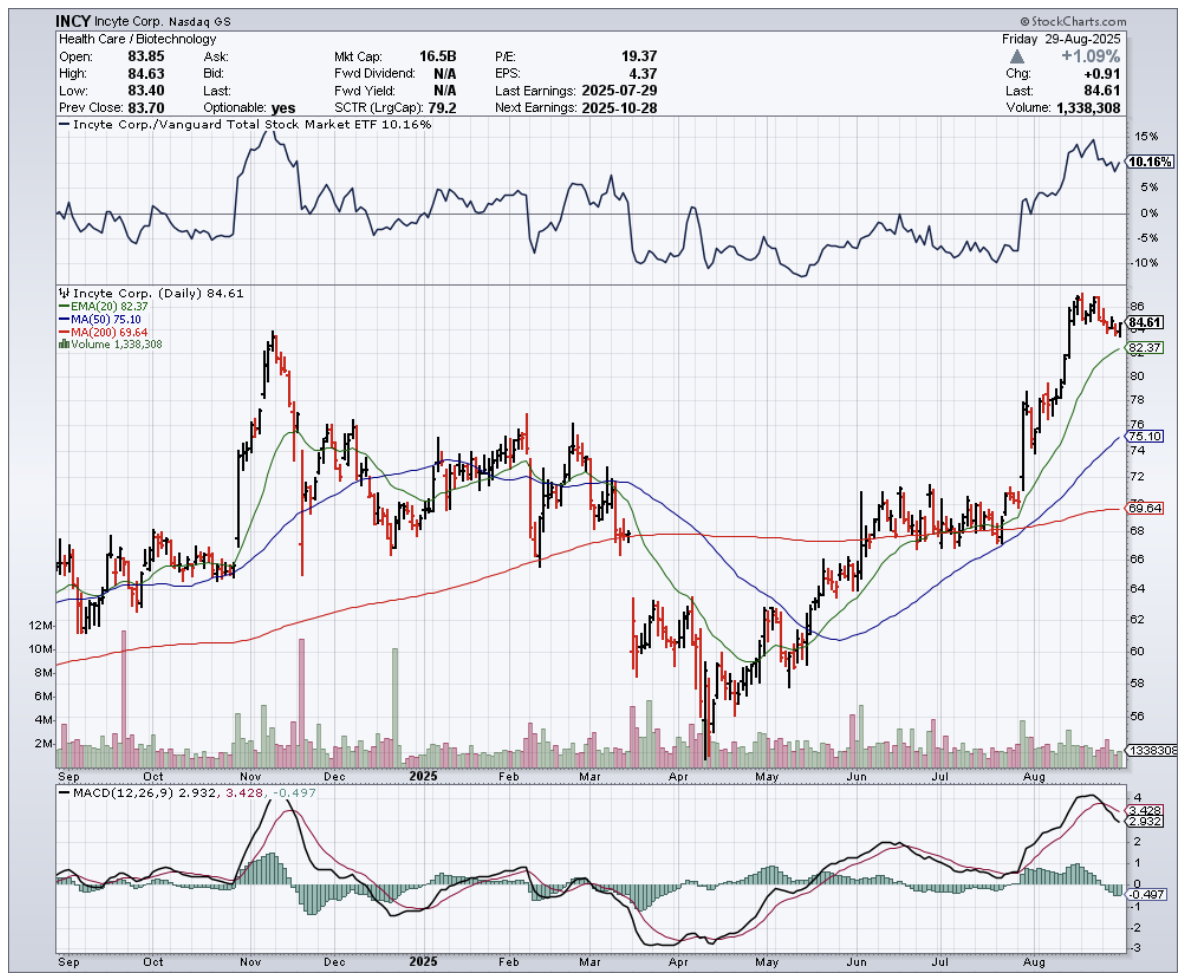
Trading at $84.61 with multiple growth catalysts, patent protection extending into the 2040s, and a strong balance sheet, this represents exactly the kind of overlooked opportunity that creates generational wealth.

My barber may think he's just cutting hair and making conversation, but his pharmaceutical rep theory just validated what decades of investing has taught me: find companies that solve real problems for real people, then hold on tight.

My next visit to Charlie's chair just might coincide with a very good mood and an even better tip.
 

https://madhedgefundtrader.com/wp-content/uploads/2019/05/cropped-mad-hedge-logo-transparent-192x192_f9578834168ba24df3eb53916a12c882.png 0 0 april@madhedgefundtrader.com https://madhedgefundtrader.com/wp-content/uploads/2019/05/cropped-mad-hedge-logo-transparent-192x192_f9578834168ba24df3eb53916a12c882.png april@madhedgefundtrader.com2025-09-04 12:00:082025-09-04 12:15:39Shear Genius
april@madhedgefundtrader.com

Small Giants Rising

Biotech Letter

Remember when David took down Goliath? Well, history's repeating itself in the biotech arena, and this time, David's got deep pockets and a Ph.D.

Since April, I've been watching a trend on the so-called "next-generation" players in biotech and healthcare world. It reminds me of the massive changes I witnessed in Asian markets back in the '70s.

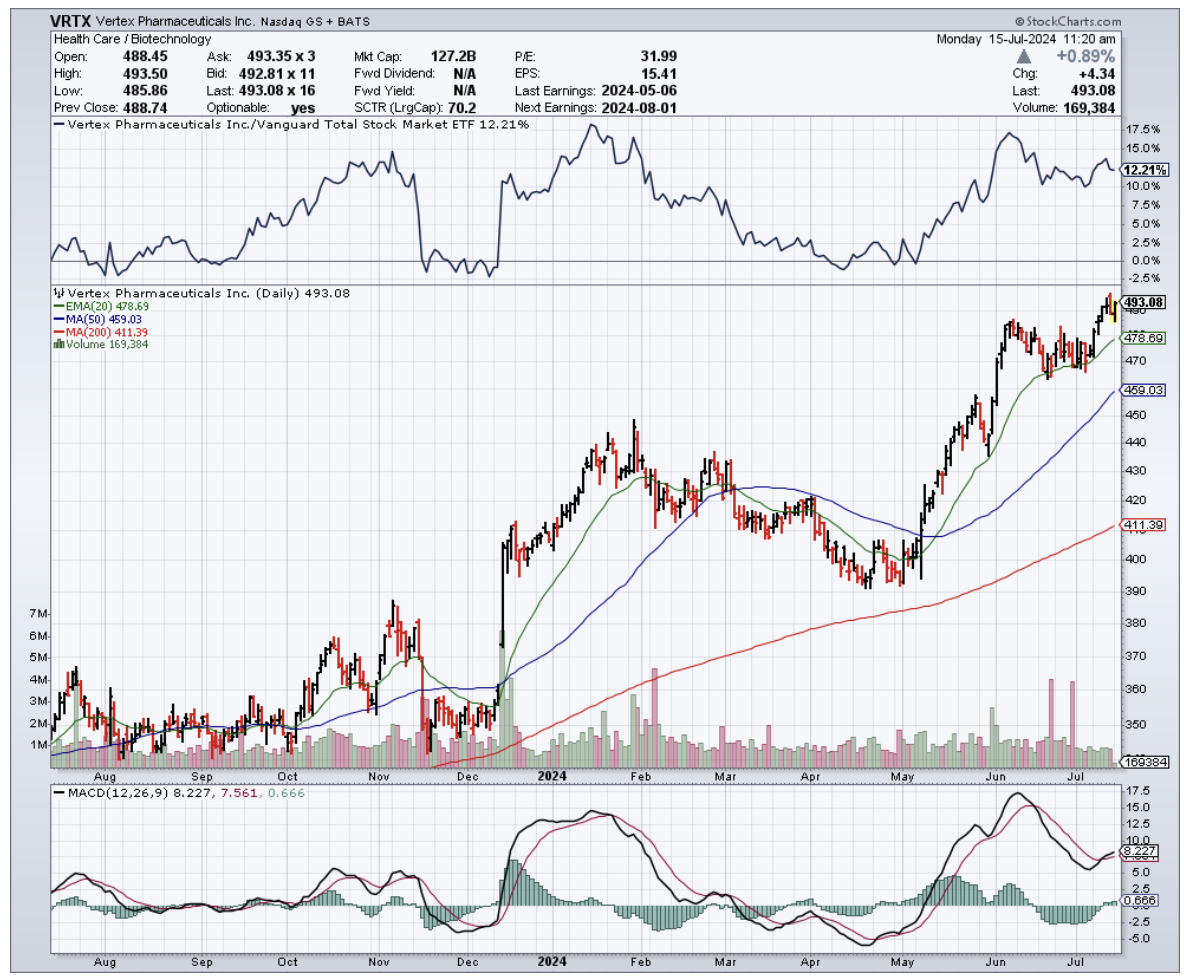
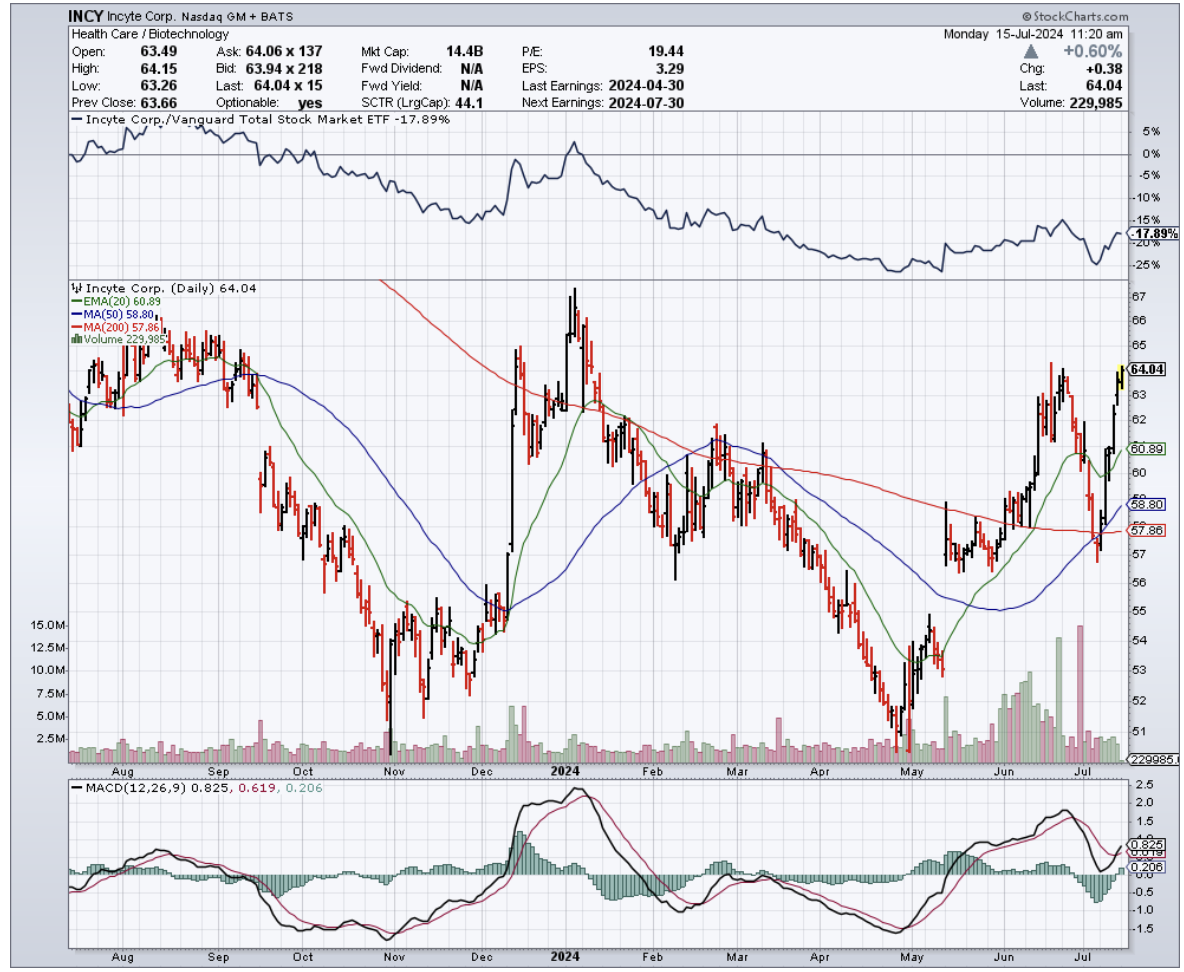
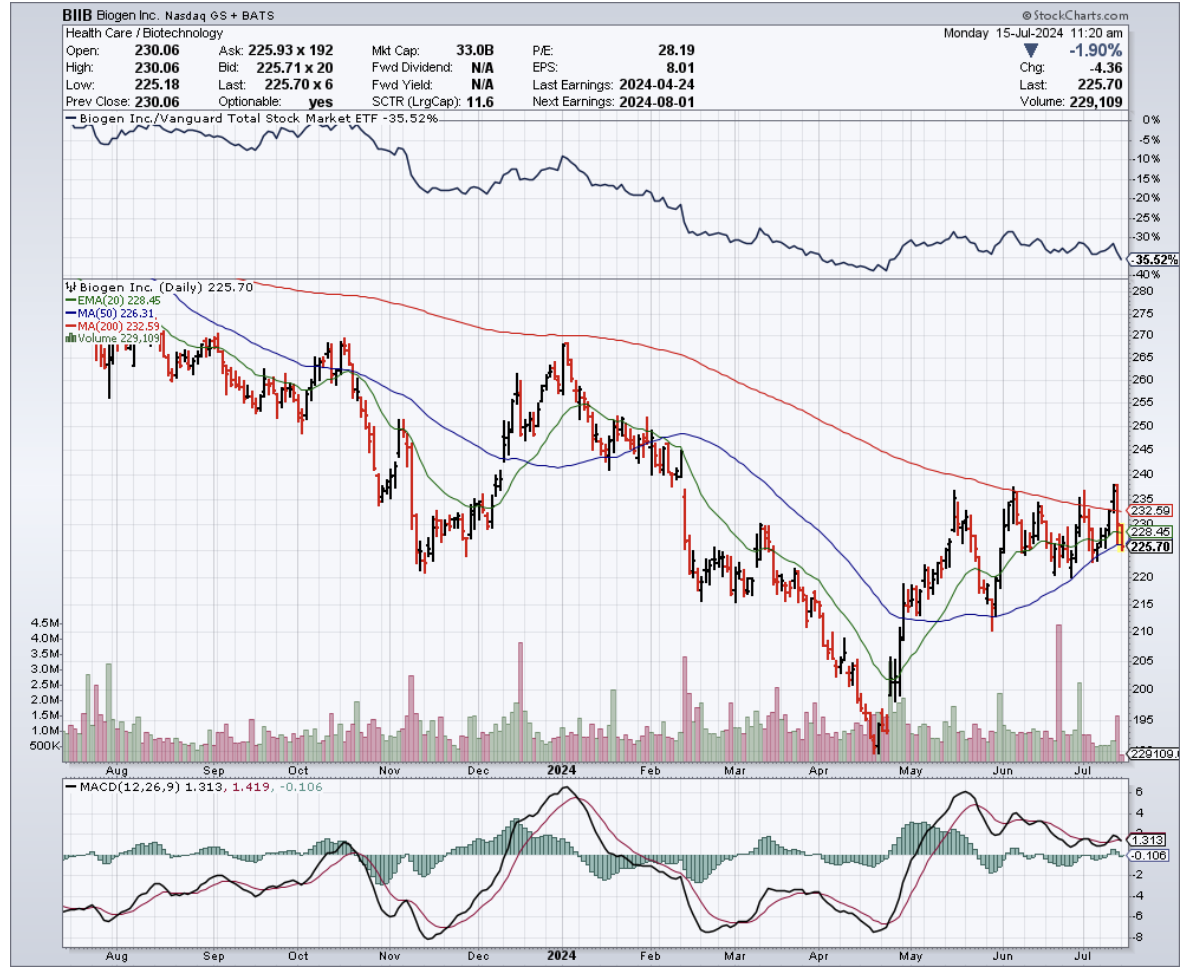
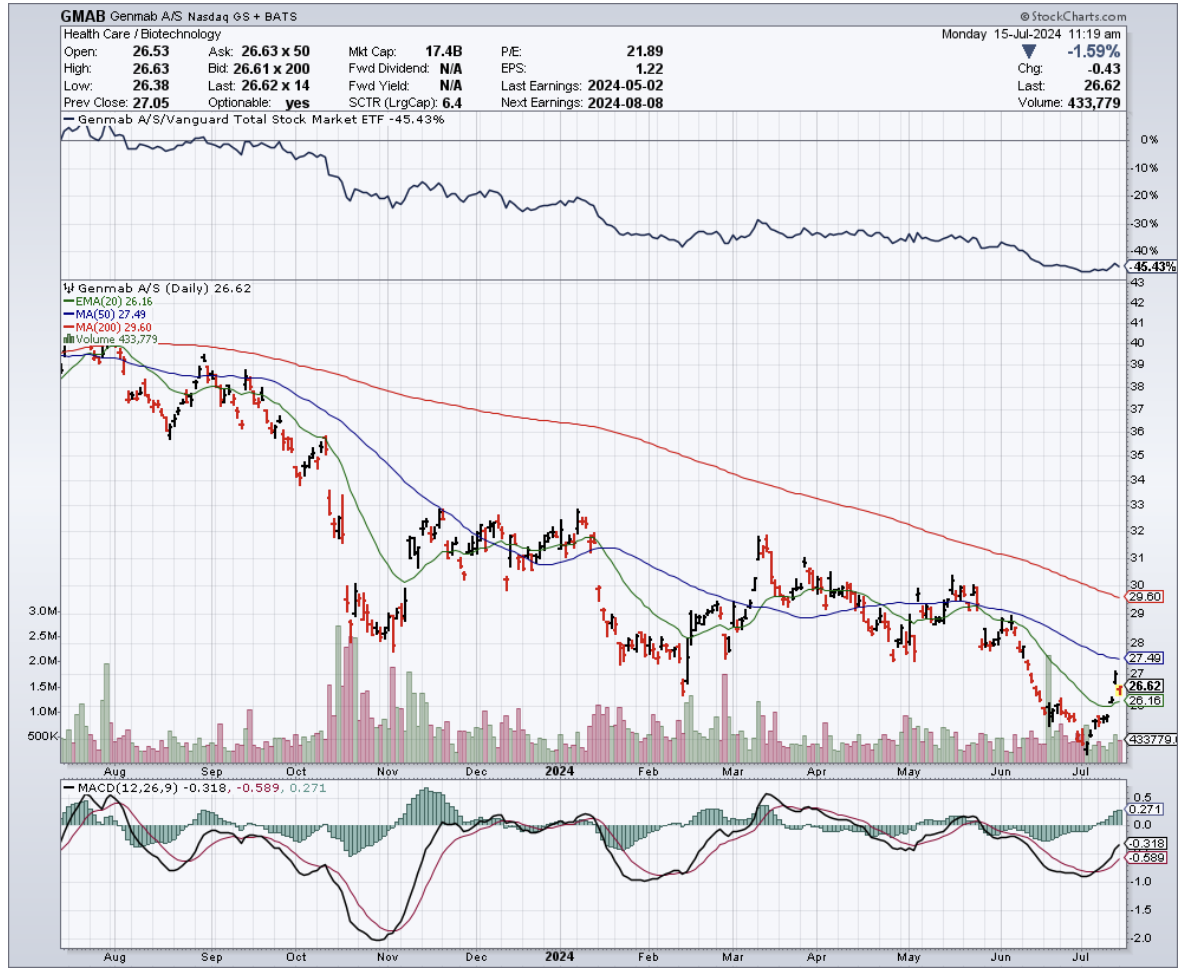
Over the past months, companies like Genmab (GMAB), Ono Pharmaceutical (OPHLY), Vertex (VRTX), Incyte (INCY), Biogen (BIIB), and Asahi Kasei (AHKSY) have been making waves that would impress even the most seasoned surfer. And these next-gen dealmakers aren't just dipping their toes in the M&A pool - they're doing cannonballs.

With cash reserves that would make Scrooge McDuck blush, these companies are overturning industry norms, already joining the prestigious $100 billion market cap club. At this celebration, the champagne flows freely.

So, what’s the play here?

With IPOs cooling down like day-old coffee, companies eyeing public debuts are now ripe targets for acquisition, more tempting than a juicy peach.

This fresh class of biotechs, unphased by the FTC's scrutiny that acts like kryptonite to pharma giants, are acting more like rocket fuel for these agile consolidators.

They slide through regulatory gaps faster than a greased pig at a county fair, grabbing six out of ten biopharma M&A deals in the second quarter alone. They’re not just taking a slice of the pie—they’re rewriting the recipe.

And if we're talking about firepower? These newcomers boast an average of $3.8 billion in pro forma adjusted cash, which isn't just walking-around money — that's "buy a small country" money.

But don't think for a second that this cash is just sitting pretty in their coffers. These upstarts are putting their money where their mouth is.

Take Incyte, for instance. They flexed their financial muscle with a $2 billion buyback in May 2024, sending a clear message to the market: "We're here to play, and we're playing to win."

And that's just the tip of the iceberg. The industry as a whole is lounging on a cool $1.5 trillion. That's enough liquidity to stretch the imagination — perhaps even to purchase a small planet. Mars, anyone? Elon might give us a discount.

But this financial might isn't just about buying power – it's about survival. As I said before, Big Pharma is teetering on a patent cliff that threatens to erode their revenue streams. To stay competitive, they're scrambling to replenish their pipelines, acquiring promising assets and gobbling up innovative technologies with the voracity of Pac-Man on steroids. And it's not just the usual suspects making moves.

This sense of urgency has created a fertile ground for an emerging cohort of aggressive dealmakers. Companies like Alnylam (ALNY), argenx (ARGX), BeiGene (BGNE), Moderna (MRNA), Neurocrine Biosciences (NBIX), BioNTech (BNTX), and Ipsen (IPSEY) are biting off more than the market expected them to chew, and they're coming to the table hungry.

And these companies aren't just nibbling around the edges. They're making bold moves, acquiring cutting-edge biotech firms with promising pipelines. We're talking oncology, epilepsy, kidney diseases, cardiovascular plays –  it's like someone turned a medical textbook into a shopping catalog.

In fact, even the big boys are flexing their muscles.

Novo Holdings (NVO) dropped a jaw-dropping $16.5 billion on Catalent (CTLT). That's not even for a drug - it's for manufacturing. Talk about betting on the picks and shovels in this biotech gold rush.

Eli Lilly (LLY) just plunked down $3.2 billion on Morphic Therapeutic (MORF), betting big on inflammation, immunity, and oncology.

Johnson & Johnson's (JNJ) been on a shopping spree, too, snagging Numab's Yellow Jersey for $1.25 billion and Proteologix for $850 million. Both plays in inflammation and immunity - clearly, they've found their sweet spot.

Biogen's not twiddling its thumbs either, striking a deal with HI-Bio worth up to $1.8 billion.

Not to be outdone, Gilead (GILD) shook hands with CymaBay Therapeutics to the tune of $4.3 billion. Even AbbVie (ABBV), playing it cooler, still dropped a cool $250 million on Celsius.

Meanwhile, Merck's (MRK) set its sights on EyeBio for up to $3 billion, focusing on ophthalmology.

Sanofi (SNY), Bristol Myers Squibb (BMY), GSK (GSK) - they're all in, placing their chips on everything from rare diseases to generics to asthma. Clearly, the Big Pharma giants are also trying to keep up with this shift. 

As the biotech field evolves, watching these underdogs will be like watching history in the making — where today's Davids become tomorrow's Goliaths. I suggest you keep a close eye on the names above. Adding them to your portfolio would mean you’re not just watching the giants rise — you’ll be a part of the story.


https://madhedgefundtrader.com/wp-content/uploads/2019/05/cropped-mad-hedge-logo-transparent-192x192_f9578834168ba24df3eb53916a12c882.png 0 0 april@madhedgefundtrader.com https://madhedgefundtrader.com/wp-content/uploads/2019/05/cropped-mad-hedge-logo-transparent-192x192_f9578834168ba24df3eb53916a12c882.png april@madhedgefundtrader.com2024-07-16 12:00:452024-07-16 12:17:13Small Giants Rising
Mad Hedge Fund Trader

June 7, 2022

Biotech Letter

Mad Hedge Biotech and Healthcare Letter
 June 7, 2022
Fiat Lux

Featured Trade:

(A LOW-KEY BIOTECH SET FOR A BULL RUN)
(REGN), (BAYG), (NVS), (RHHBY), (SNY), (ABBV), (PFE), (INCY), (MRK)

https://madhedgefundtrader.com/wp-content/uploads/2019/05/cropped-mad-hedge-logo-transparent-192x192_f9578834168ba24df3eb53916a12c882.png 0 0 Mad Hedge Fund Trader https://madhedgefundtrader.com/wp-content/uploads/2019/05/cropped-mad-hedge-logo-transparent-192x192_f9578834168ba24df3eb53916a12c882.png Mad Hedge Fund Trader2022-06-07 18:02:152022-06-07 19:13:48June 7, 2022
Mad Hedge Fund Trader

A Low-Key Biotech Set for a Bull Run

Biotech Letter

Biotechnology stocks have been sliding for months now, but scientific advancements are not slowing down.

The public’s focus on messenger RNA and gene editing may have dwindled, but the fact remains that more and more patients are benefiting from the discoveries.

More importantly, new treatments are well on their way to clinical trials.

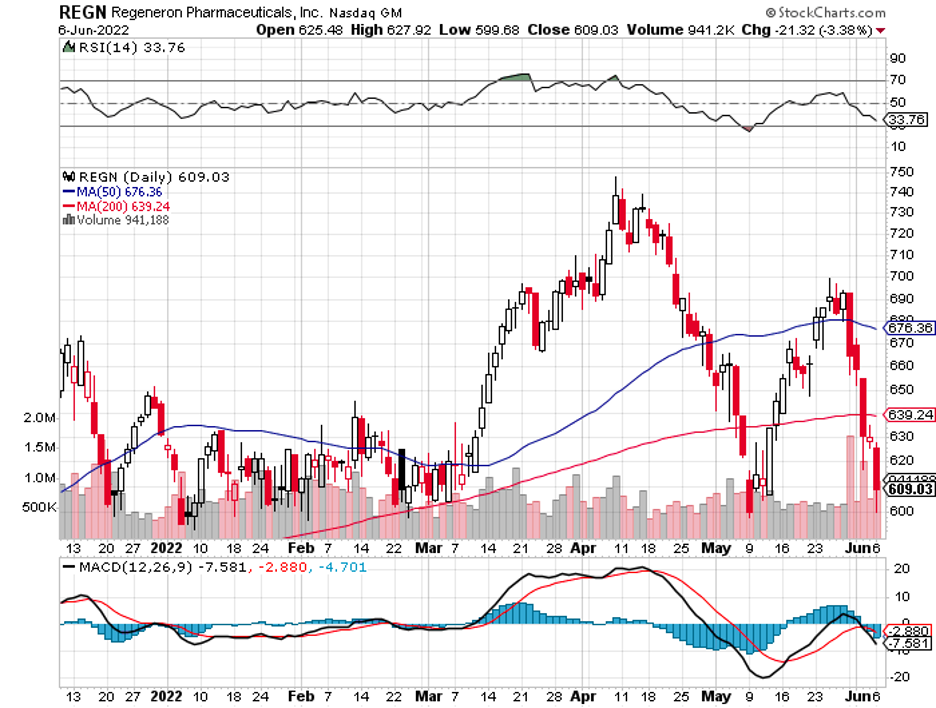
That’s why I think Regeneron (REGN) could easily be one of the big winners in the coming years.

Despite the economic slowdown, Regeneron shares are doing okay. They have actually practically doubled since the start of 2020, when the biotech was thrust under the spotlight for its anti-COVID antibody cocktail, REGEN-COV.

Its popularity heightened when then-president Donald Trump used its treatment.

While the demand for REGEN-COV has since declined, the drug still raked in $7.5 billion in sales in 2021.

However, that would most likely not be the trend since it was proven to be not as effective against the newer strains. In addition, the FDA significantly limited the situations in which the antibody cocktail can be used.

For the foreseeable future, Regeneron shareholders’ earnings are primarily dependent on macular degeneration treatment Eylea and asthma and dermatitis drug Dupixent.

For Eylea, which Regeneron shares with Bayer (BAYG) outside the US, sales grew by 19% in 2021 to record $9.4 billion.

A vital issue Eylea faces is its expiring US patent by mid-2023, which will probably lead to more aggressive biosimilar competition as early as 2024.

Aside from that, more and more rivals are emerging, such as Beovu from Novartis (NVS) and Vabysmo from Roche (RHHBY).

Luckily for Regeneron, Beovu hasn’t gained traction due to safety issues, while Vabysmo is still struggling to establish itself as a viable alternative.

Thanks to its entrenched position as an undisputed market leader, Eylea sales will continue to be a top-selling treatment.

While things are still going well for Eylea, Regeneron has been proactive in establishing Dupixent as another key growth driver.

Dupixent, which was co-developed with Sanofi (SNY), showed off an impressive 51% jump in sales last year to rake in $6.2 billion—and this isn’t the peak yet.

Dupixent is estimated to reach over $14 billion in sales in the following years due to expanded markets.

Sales of this newer drug have caught up with Eylea’s in the past years.

In fact, Dupixent is projected to overtake Eylea sales by 2024, with the figure almost doubling by 2025 compared to the 2021 revenue.

In terms of competition in the atopic dermatitis sector, Dupixent is challenged by Rinvoq from AbbVie (ABBV), Cibinqo from Pfizer (PFE), and Opzelura from Incyte (INCY).

Nonetheless, Dupixent still looks well-positioned to expand into current and new indications in the following years and be able to fight off competitors.

It is critical for any biotechnology and healthcare business to maintain a solid pipeline to respond to upcoming patent losses and the rise of generic competition.

In this aspect, Regeneron has been performing excellently.

It has several treatments queued that complement the existing blockbusters, Eylea and Dupixent, and bolster the long-term growth prospects.

A good example is the company’s experimental treatment Aflibercept, which is slated to release Phase 3 results in the third or fourth quarter of 2022.

If this succeeds, it can enhance and strengthen Eylea’s efficacy, allowing Regeneron to retain its dominant position in the retinal market.

The company is also working on getting the green light for seven new indications on Dupixent-related treatments, which would be out by late 2022 and early 2023.

Another area under Regeneron’s radar is oncology.

While it’s cancer portfolio isn’t likely to become a significant growth driver anytime soon, there’s definitely potential here—and the potential comes in the form of in-house combos with Libtayo.

Libtayo, a cancer checkpoint inhibitor, is the most significant drug candidate in Regeneron’s oncology pipeline today.

Although it’s a latecomer to the field, Regeneron has become one of the frontrunners in the skin cancer segment with the approval of its cutaneous squamous cell carcinoma indication and the addition of the basal cell carcinoma label.

However, those are relatively minor markets. In terms of infiltrating a major market, Libtayo’s first venture is into the lung cancer sector.

But, this could be challenging since Merck’s (MRK) Keytruda has a firm hold of this market.

Still, Libtayo has the potential to achieve blockbuster status—a goal that Regeneron looks to be aggressively pursuing.

Aside from skin and lung cancer treatments, Regeneron has been developing Libtayo-based candidates for prostate cancer treatment REGN5678 and ovarian cancer therapy REGN4018. It is also working on another lung cancer treatment, REGN5093, to hopefully bolster its foothold in this lucrative market.

Needless to say, approval of these cancer treatments would be an incredible game-changer not only for cancer patients but also for Regeneron.

Overall, Regeneron is an outstanding biotechnology company and investment option. The success of its blockbuster treatments will offer a strong foundation for the company’s future growth.

If you add the more than 30 pipeline candidates of Regeneron in the mix, then it’s easy to see that a bull run might just be on the horizon for this stock.

While regulatory hurdles and emerging competitors would present challenges, it’s clear that Regeneron has these issues under control.

Moreover, the company’s pipeline has clearly shown that it’s ready to meet the challenges head-on. Hence, it would be advisable to buy the dip.


regeneron cancer

https://madhedgefundtrader.com/wp-content/uploads/2019/05/cropped-mad-hedge-logo-transparent-192x192_f9578834168ba24df3eb53916a12c882.png 0 0 Mad Hedge Fund Trader https://madhedgefundtrader.com/wp-content/uploads/2019/05/cropped-mad-hedge-logo-transparent-192x192_f9578834168ba24df3eb53916a12c882.png Mad Hedge Fund Trader2022-06-07 18:00:102022-06-29 01:21:06A Low-Key Biotech Set for a Bull Run
Mad Hedge Fund Trader

June 2, 2022

Biotech Letter

Mad Hedge Biotech and Healthcare Letter
 June 2, 2022
Fiat Lux

Featured Trade:

(A SOLID BIOPHARMA FILLED WITH PROMISING CATALYSTS)
(GSK), (PFE), (INCY)

https://madhedgefundtrader.com/wp-content/uploads/2019/05/cropped-mad-hedge-logo-transparent-192x192_f9578834168ba24df3eb53916a12c882.png 0 0 Mad Hedge Fund Trader https://madhedgefundtrader.com/wp-content/uploads/2019/05/cropped-mad-hedge-logo-transparent-192x192_f9578834168ba24df3eb53916a12c882.png Mad Hedge Fund Trader2022-06-02 17:02:352022-06-02 17:29:48June 2, 2022
Mad Hedge Fund Trader

A Solid Biopharma Filled with Promising Catalysts

Biotech Letter

If the rumblings in the market have you laboring just to get a full night’s rest, know that you are not alone. What’s more comforting is that you are not defenseless in this situation.

It pays to buy stocks that will still be worth something to your investment portfolio in uncertain periods, even if these end up getting torn apart a bit due to political and economic issues.

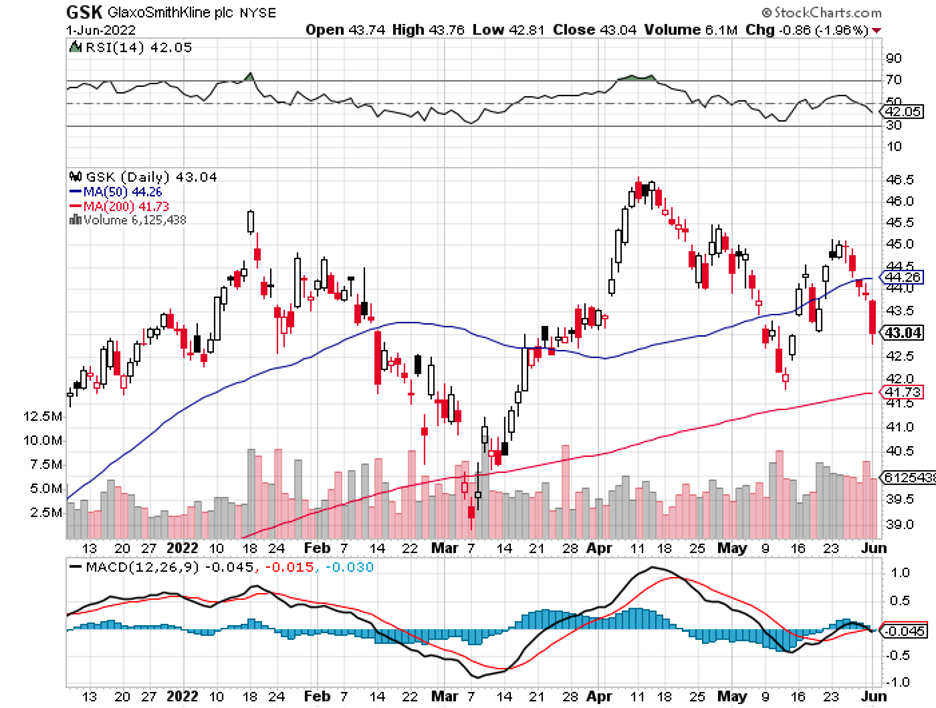
One of them is GlaxoSmithKline (GSK).

With a massive market capitalization of over $104 billion, GSK is recognized as one of the most prominent biopharmaceutical players in the healthcare sector.

Primarily due to its extensive portfolio of drugs and services, ranging from amoxicillin to antidepressants, this company raked in roughly $46 billion in 2021.

This shows off a quarterly increase in revenue by 40% in the past five years, with a quarterly free cash flow rise of 378%. Among other factors, these figures are indicative of GSK’s long-term health.

Regarding its revenue-making capacity for shareholders, the company’s forward dividend is recorded at $2.92, putting its yield at approximately more than 5%. This is higher than the average recorded by the market, which is 1.2%.

While this sounds great, investors should be aware that GSK’s dividend doesn’t necessarily come with the guarantee of climbing over time.

Actually, the company’s payout has only increased by 13.3% over the past 10 years. So, it’s reasonable to believe that the figure would most likely stay the same.

Nevertheless, GSK has more revenue streams to add in the short term. The company has 5 varying treatments queued for registration.

That is, if they gain regulatory approval, GSK would have 5 new drugs to launch soon.

On top of these, the company has a myriad of late-stage candidates in its pipeline that hold the potential to advance in the following years as well. Evidently, GSK isn’t short on promising growth catalysts.

In another move to bolster its pipeline, GSK recently announced its plan to buy Affinivax for roughly $3.3 billion. If everything goes well, GSK will add this Boston-based company to its portfolio to expand its vaccine programs by the third quarter of 2022.

This move is one of the many decisions GSK made in preparation for the impending spinoff of its consumer healthcare business, Haleon, which is anticipated to happen by July 2022.

The plan is to have 80% of GSK’s holdings in Haleon be spun off to its shareholders while the company retains 20% to strengthen its financial standing. Pfizer (PFE) will get the remaining ownership.

Considering the brands under Haleon, including Sensodyne, Panadol, and Centrum, this future spinoff is projected to become a world leader in the field of consumer healthcare. Clearly, GSK shareholders would benefit greatly from this plan.

Another recent move to broaden its pipeline is GSK’s $1.9 billion agreement with Sierra Oncology.

This deal, which is also expected to reach completion by the third quarter of 2022, will add bone marrow cancer drug candidate Momelotinib to GSK’s pipeline.

Momelotinib targets myelofibrosis patients with anemia. The estimated number of individuals with myelofibrosis in the US alone is 20,000.

While there’s no fixed number on the drug’s target market, we can only look at the history of patients.

Typically, 40% of myelofibrosis patients are already battling anemia upon diagnosis, and virtually all of them eventually develop the condition.

Conservatively, I can say that 70% of the total patient population has anemia. This would amount to roughly 14,000 eligible patients.

At the moment, only a handful of treatments target myelofibrosis. One of the most popular is Jakafi from Incyte (INCY).

However, Jakafi and chemotherapy fail to yield results consistently, Momelotinib could become a viable option for the target population.

As a relatively new candidate, it’s reasonable to assume that Momelotinib could seize only 35% of this market or roughly 4,900 patients.

So far, there’s still no pricing information for Momelotinib, but the $120,000 average expense for cancer treatment annually is a good indicator in terms of an estimate.

Taking into consideration other factors like patient assistance programs and the adjustments in prices from negotiations with health insurers, then Momelotinib could reach pricing of $80,000 for each patient.

This could total approximately $400 million in yearly sales in the US alone. Since the US comprises 40% of drug spending worldwide, there is an excellent chance that Momelotinib will reach $1 billion in annual sales.

Putting this in perspective, $1 billion in additional revenue yearly would amount to a 2.2% boost over GSK’s $45.9 billion expected revenue in 2022.

Needless to say, this Sierra Oncology deal is more than enough to move the needle for the company.

Overall, GSK has an exciting year ahead. With the Haleon spinoff and the continuous growth of its pipeline, it’s easy to see why this company is an excellent long-term investment.


gsk

https://madhedgefundtrader.com/wp-content/uploads/2019/05/cropped-mad-hedge-logo-transparent-192x192_f9578834168ba24df3eb53916a12c882.png 0 0 Mad Hedge Fund Trader https://madhedgefundtrader.com/wp-content/uploads/2019/05/cropped-mad-hedge-logo-transparent-192x192_f9578834168ba24df3eb53916a12c882.png Mad Hedge Fund Trader2022-06-02 17:00:402022-06-07 17:47:25A Solid Biopharma Filled with Promising Catalysts
Mad Hedge Fund Trader

March 17, 2022

Biotech Letter

Mad Hedge Biotech and Healthcare Letter
March 17, 2022
Fiat Lux

Featured Trade:

(A SECURE STOCK TO ASSUAGE YOUR FEARS)
(NVS), (INCY), (ABBV), (VYGR), (PFE), (BNTX), (CVAC), (RHHBY)

https://madhedgefundtrader.com/wp-content/uploads/2019/05/cropped-mad-hedge-logo-transparent-192x192_f9578834168ba24df3eb53916a12c882.png 0 0 Mad Hedge Fund Trader https://madhedgefundtrader.com/wp-content/uploads/2019/05/cropped-mad-hedge-logo-transparent-192x192_f9578834168ba24df3eb53916a12c882.png Mad Hedge Fund Trader2022-03-17 16:32:462022-03-17 17:27:46March 17, 2022
Mad Hedge Fund Trader

A Secure Stock to Assuage your Fears

Biotech Letter

The year 2022 marked the time fear made a comeback to Wall Street.

Since the year began, we’ve been plagued with fears over Russia’s invasion of Ukraine, constant threats of high inflation, and the possibility of a recession.

There’s even the fear of major corrections among overheated stocks that could drag the entire market along with it.

Nevertheless, it’s critical to bear in mind that what we have is a market of stocks rather than a stock market.

Although the S&P has been unstable and the Nasdaq continues to be riddled with corrections, we can still be confident that value stocks and, of course, dividend stocks are faring much better.

Truth be told, that’s hardly surprising since value stocks typically outperform the market even in the most challenging periods.

Moreover, the highest-quality stocks tend to deliver the best performance.

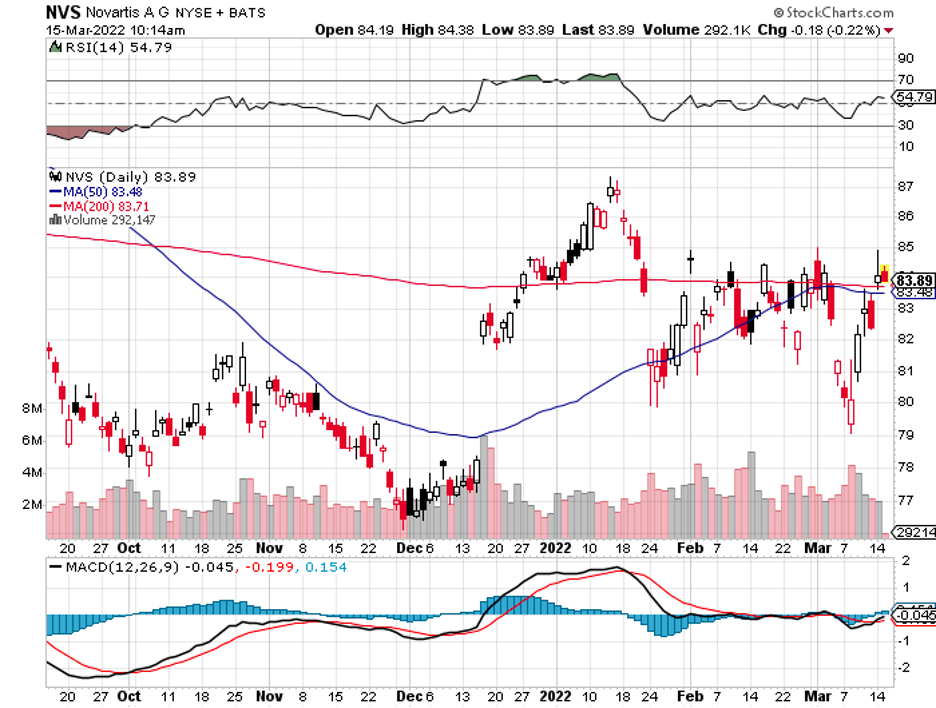
When it comes to high-value stocks, one of the defensive, low volatility names that constantly crops up is Novartis (NVS).

To date, Novartis is considered as one of the Big Pharma companies globally, with a staggering market capitalization of $224 billion.

Recently, Novartis has become more aggressive in diversifying its lineup—a strategy that showed tremendous payoffs.

After all, one of the competitive edges of Novartis is its solid profitability compared to its peers, which is primarily driven by the company’s well-balanced portfolio.

For years, the company has been widely known for its oncology treatment portfolio, which was strengthened by its eventual collaboration with Incyte (INCY).

Apart from cancer, it has so far succeeded in developing treatments for cardiovascular, immunology, and even blood disorders.

Its current portfolio of drugs generated impressive revenue despite the economic slowdown over the past months.

For example, psoriatic arthritis drug Cosentyx, which is AbbVie’s (ABBV) top-selling Humira’s biggest competitor, raked in $3.5 billion in sales last year, showing off a 20% increase year-over-year, while myelofibrosis treatment Jakavi reported a 23% jump to reach $1.2 billion. 

Meanwhile, heart failure treatment Entresto recorded an impressive 46% climb year-over-year to reach roughly $3 billion. 

Aside from these, Novartis has a promising pipeline. Thus far, it has 54 programs queued for Phase 3 trials.

Even if we assume that the company only achieves a 50% success rate, these new products could still add substantial revenue streams within the next few years.

Further leveraging its size and capital, Novartis has been searching for avenues to expand its in the biotechnology market.

Its latest move towards this direction is a license option agreement with Voyager Therapeutics (VYGR).

Novartis has long been on a perennial search for revolutionary therapies to take under its wing, and this deal with Voyager appears to be an excellent opportunity for both companies.

In a nutshell, the two companies have agreed to collaborate on gene therapy programs for adeno-associated virus capsids.

This biobucks deal sees Novartis paying Voyager $54 million upfront, with the possibility of shelling out up to $1.7 billion in several milestone payments and royalties.

The agreement covers three programs targeting the central nervous system plus potentially two more after 12 months.

In addition, Novartis will be granted access to Voyager’s proprietary RNA-based screening platform used to deliver the payload in gene therapy-based treatments.

Another biotechnology-related venture for Novartis is its deal with Carisma Therapeutics.

Following its success with the COVID-19 vaccine production for Pfizer (PFE) and BioNTech (BNTX), the Big Pharma company entered another contract manufacturing agreement with Carisma Therapeutics.

In this deal, Novartis will handle the manufacture of Carisma’s HER2-targeted CAR-M cell therapy, which is under development for the treatment of solid tumors and is slated to be submitted for approval in 2023.

Other than Carisma, Novartis also signed an initial manufacturing deal with CureVac (CVAC) and Roche (RHHBY) in 2021.

Overall, this makes Novartis a relatively safe and low-risk play in the biotechnology and healthcare sector.


novartis

https://madhedgefundtrader.com/wp-content/uploads/2019/05/cropped-mad-hedge-logo-transparent-192x192_f9578834168ba24df3eb53916a12c882.png 0 0 Mad Hedge Fund Trader https://madhedgefundtrader.com/wp-content/uploads/2019/05/cropped-mad-hedge-logo-transparent-192x192_f9578834168ba24df3eb53916a12c882.png Mad Hedge Fund Trader2022-03-17 16:30:402022-03-30 03:23:50A Secure Stock to Assuage your Fears
Mad Hedge Fund Trader

November 30, 2021

Biotech Letter

Mad Hedge Biotech and Healthcare Letter
November 30, 2021
Fiat Lux

Featured Trade:

(BEYOND THE COVID-19 VACCINE)
(AZN), (PFE), (BNTX), (REGN), (GILD), (INCY), (MRNA)

https://madhedgefundtrader.com/wp-content/uploads/2019/05/cropped-mad-hedge-logo-transparent-192x192_f9578834168ba24df3eb53916a12c882.png 0 0 Mad Hedge Fund Trader https://madhedgefundtrader.com/wp-content/uploads/2019/05/cropped-mad-hedge-logo-transparent-192x192_f9578834168ba24df3eb53916a12c882.png Mad Hedge Fund Trader2021-11-30 18:27:322021-11-30 18:27:32November 30, 2021
Mad Hedge Fund Trader

Beyond the Covid-19 Vaccine

Biotech Letter

Even altruism has its limits.

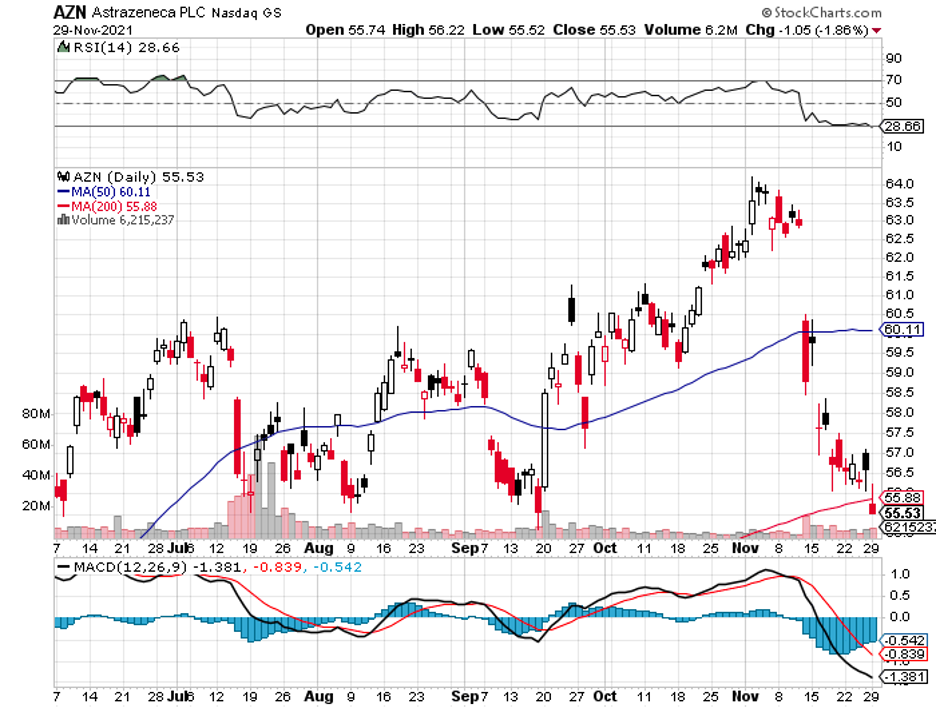
Adding to the list of things we didn’t expect to happen in 2021, AstraZeneca (AZN) has followed the footsteps of Pfizer (PFE) and BioNTech (BNTX) and decided to begin making money off its COVID-19 vaccine.

The news is an about-face from the Cambridge-based company’s previous pledge to not profit from this while the pandemic is still ongoing.

Given AstraZeneca’s decision, there’s a possibility that it no longer believes that COVID-19 remains a threat of global proportions—or it at least thinks the issue has become more manageable.

It remains to be seen how the company will react to the emergence of the Omicron variant, and if it plans to push through with this decision.

While AstraZeneca’s agreements with different countries won’t allow it to come right out of the gate and just start slapping massive profits all over the place, the company plans to begin “progressively transitioning” to profitability following its third-quarter call.

Moreover, the company assured that its COVID-19 vaccine would remain reasonably priced for low- to middle-income countries. This means that it plans to jack up the price in wealthier nations instead.

However, AstraZeneca isn’t doing this for purely financial reasons.

According to the company, profits from the vaccine will be allocated to another COVID-19-related effort, its antibody therapy called AZD7442—a treatment that’s expected to compete with therapies from Regeneron (REGN) and Gilead Sciences (GILD).

Regardless of how they spin this recent turn of events, the key takeaway is that they’ll start making money off the vaccine.

Although changing their tune about the COVID-19 vaccine might get them some flak, it’s crucial to bear in mind that AstraZeneca is a for-profit company. This is the natural course for them to take vis-a-vis their products.

Besides its work on COVID-19, AstraZeneca has been pouring money on R&D over the past 12 months to fund different clinical trials for its oncology, cardiovascular, and immunology segments. To date, the company’s spending on research and development has climbed by 27.5% year-over-year to reach $3.54 billion in the first 6 months of 2021.

This move to invest heavily in developing new drugs for severe medical conditions is anticipated to secure a solid future revenue and continuous growth in earnings per share for the company.

Given its pipeline and history, AstraZeneca is actually projected to grow by over 20% annually over the course of the next five years.

One result of this effort is the expansion of the company’s top-selling cancer drug, Imfinzi.

At the moment, Imfinzi is approved as a lung cancer treatment. However, it can soon boost its sales to include biliary tract cancer in its indications.

There are roughly 50,000 individuals diagnosed with biliary tract cancer annually in the United States, Japan, and Europe, with the number hitting 210,000 across the globe.

In terms of profitability, we can look at Incyte’s (INCY) Pemazyre, which was approved in 2020. Sales of the drug grew four-fold in the first 9 months to reach $48 million.

Admittedly, Imfinzi’s market share will rely on its efficacy and safety results.

However, the treatment has a track record of delivering a superior standard of care and guaranteeing that it has the same safety profile as chemotherapy.

Hence, it’s reasonable to say that we can conservatively expect Imfinzi to capture at least 15% of the whole biliary tract cancer market. This would be roughly 30,000 patients worldwide.

Currently, Imfinzi’s price tag is at $180,000 in the US, but the drug might be cheaper in other countries.

Based on the market potential of its biliary tract cancer indication, this additional indication could rake in an additional $600 million annually for AstraZeneca once it gains regulatory approval.

Although this is merely less than 2% of the projected $36.1 billion total revenue for AstraZeneca in 2021, adding $600 million would still be a notable tailwind to the $2.5 billion estimated earnings from Imfinzi.

While its COVID-19 vaccine did not deliver the same outstanding efficacy results as the mRNA vaccines of Moderna (MRNA) and Pfizer / BioNTech, it’s still one of the handfuls of major pharmaceutical companies that managed to develop and distribute an effective product.

Overall, vaccine decisions aside, AstraZeneca appears to be in a great place with a robust oncology portfolio. Therefore, this stock looks like a solid buy with several upcoming price catalysts in 2021 and 2022.

astrazeneca

https://madhedgefundtrader.com/wp-content/uploads/2019/05/cropped-mad-hedge-logo-transparent-192x192_f9578834168ba24df3eb53916a12c882.png 0 0 Mad Hedge Fund Trader https://madhedgefundtrader.com/wp-content/uploads/2019/05/cropped-mad-hedge-logo-transparent-192x192_f9578834168ba24df3eb53916a12c882.png Mad Hedge Fund Trader2021-11-30 16:00:492021-12-09 17:18:24Beyond the Covid-19 Vaccine
Page 1 of 212

tastytrade, Inc. (“tastytrade”) has entered into a Marketing Agreement with Mad Hedge Fund Trader (“Marketing Agent”) whereby tastytrade pays compensation to Marketing Agent to recommend tastytrade’s brokerage services. The existence of this Marketing Agreement should not be deemed as an endorsement or recommendation of Marketing Agent by tastytrade and/or any of its affiliated companies. Neither tastytrade nor any of its affiliated companies is responsible for the privacy practices of Marketing Agent or this website. tastytrade does not warrant the accuracy or content of the products or services offered by Marketing Agent or this website. Marketing Agent is independent and is not an affiliate of tastytrade. 

Legal Disclaimer

There is a very high degree of risk involved in trading. Past results are not indicative of future returns. MadHedgeFundTrader.com and all individuals affiliated with this site assume no responsibilities for your trading and investment results. The indicators, strategies, columns, articles and all other features are for educational purposes only and should not be construed as investment advice. Information for futures trading observations are obtained from sources believed to be reliable, but we do not warrant its completeness or accuracy, or warrant any results from the use of the information. Your use of the trading observations is entirely at your own risk and it is your sole responsibility to evaluate the accuracy, completeness and usefulness of the information. You must assess the risk of any trade with your broker and make your own independent decisions regarding any securities mentioned herein. Affiliates of MadHedgeFundTrader.com may have a position or effect transactions in the securities described herein (or options thereon) and/or otherwise employ trading strategies that may be consistent or inconsistent with the provided strategies.

Copyright © 2026. Mad Hedge Fund Trader. All Rights Reserved. support@madhedgefundtrader.com
Scroll to top