• support@madhedgefundtrader.com
  • Member Login
Mad Hedge Fund Trader
  • Home
  • About
  • Store
  • Luncheons
  • Testimonials
  • Contact Us
  • Click to open the search input field Click to open the search input field Search
  • Menu Menu

Tag Archive for: (LLY)

Mad Hedge Fund Trader

Multi-Pronged Stocks Positioned for Long-Term Success

Biotech Letter

The majority of the global population lives in nations where obesity and being overweight kill more individuals than being underweight.

Over 40% of the US population is categorized as obese, with drugs barely scratching the surface, as only about 3% of the obese patients take them.

More alarmingly, 39 million children under 5 years old were obese or overweight in 2020.

This is why it is no surprise that more and more companies in the biotechnology and healthcare sector are working on obesity treatments. After all, obesity is the starting point of a lot of serious diseases.

Obesity is a primary risk issue for diabetes, heart disease, stroke, some types of cancer, and several severe conditions—most of which are among the leading reasons behind premature deaths.

However, a key factor to consider here is that obesity is preventable. Hence, dealing with this condition could help patients manage better potential severe conditions.

Needless to say, the market for this condition can also be lucrative. In the US alone, the annual expense for obesity medication reached approximately $173 billion in 2019.

This is because the medical bills of an adult with obesity are at least $1,861 higher than someone with a healthy weight.

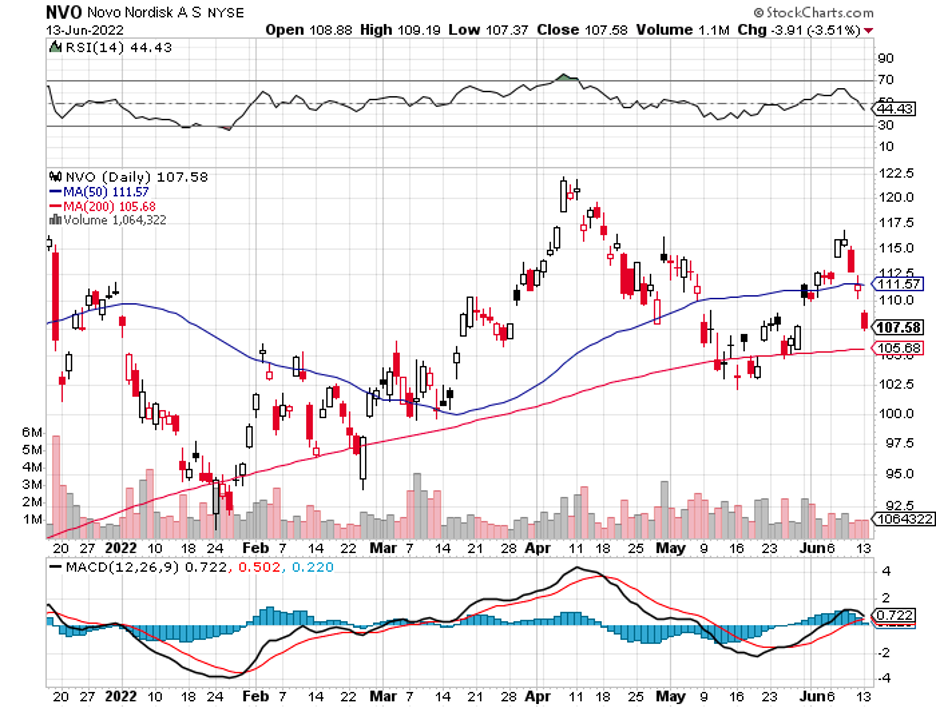
So far, two names have emerged as major players in the obesity market: Eli Lilly (LLY) and Novo Nordisk (NVO).

Noticeable weight loss was observed in clinical trials of treatments that Novo Nordisk and Eli Lilly initially developed for diabetes.

Consequently, these announcements pushed the stocks higher despite the backdrop of a relatively flat Nasdaq Composite recently.

For Eli Lilly, the company disclosed that results of its Phase 3 trials for its diabetes drug Tirazeptide showed that the highest dose would lead to a 21% to 25% weight loss or an average of 52 pounds within 18 months.

The possibility that Tirzepatide, which is already sold under Mounjaro as a Type 2 diabetes treatment, can also be marketed as a weight-loss drug has been prodding Eli Lilly stock.

At the moment, Eli Lilly was only able to test Tirzepatide against Novo Nordisk's Wegovi. The former notably outperformed the Danish candidate on most factors.

If Tirzepatide gains FDA approval as an obesity drug, then Eli Lilly can launch it commercially by mid-2023.

Given the size of the market and the drug’s promising results, Tirzepatide is estimated to reach over $10 billion in obesity sales alone, in addition to the more than $12 billion projected in diabetes sales.

Aside from obesity, Eli Lilly is also looking into testing Tirzepatide for other linked conditions like heart failure, stroke, and other cardiovascular diseases.

If these work out, then the additional markets would contribute over $14 billion in sales by 2030.

Meanwhile, Novo Nordisk also released promising results for its investigational treatment named Kagrisema.

While Eli Lilly is considered a dominant force in the diabetes market, Novo Nordisk is a strong challenger. Some would say that this Danish company is the global leader in the segment.

That could very well be the case because a company can be considered a global controller if it holds around 30% of the market.

While the diabetes sector tends to be complex since it’s segmented, Novo Nordisk indisputably holds 30% of the primary market. Moreover, it holds 40% to 50% of a diabetes sub-market focused on insulin products.

With that said, it was hardly unexpected that Novo Nordisk was the first to market an FDA-approved drug for obesity: Wegovi.

Wegovi, the same drug tested by Eli Lilly against Tirzepatide, was launched in June 2021. This treatment enabled obese patients to lose roughly 15% of their body weight.

Since Eli Lilly has been working on a more effective drug, Wegovi sales are expected to reach approximately $5.5 billion by 2025 and eventually lose stake to competitors and Novo Nordisk’s own next-generation treatment Kagrisema.

The diabetes and obesity markets present substantial growth opportunities in the years to come.

It is projected that roughly 415 million people are suffering from diabetes globally, and the number is anticipated to increase to 642 million by 2040, representing a 3% annual rise.

In the US alone, it is expected that the prevalence of diabetes will rise by 54% to over 54.9 million people between 2015 and 2030.

This means the anti-obesity treatments market is estimated to expand more aggressively at a CAGR of roughly 15% in the next 5 years.

Both Eli Lilly and Novo Nordisk are well-established biopharma businesses that offer high-quality products across various areas.

They are both leaders in diabetes and obesity markets with impeccable growth opportunities. Their pipelines are well diversified, and neither relies solely on one product, making their businesses attractive and less risky.

I suggest that those looking for long-term investments put these stocks under their radar and start building up positions on pullbacks, as these are excellent companies to own in a well-balanced portfolio.
 

obesity


https://madhedgefundtrader.com/wp-content/uploads/2019/05/cropped-mad-hedge-logo-transparent-192x192_f9578834168ba24df3eb53916a12c882.png 0 0 Mad Hedge Fund Trader https://madhedgefundtrader.com/wp-content/uploads/2019/05/cropped-mad-hedge-logo-transparent-192x192_f9578834168ba24df3eb53916a12c882.png Mad Hedge Fund Trader2022-06-14 12:00:282022-06-28 21:33:36Multi-Pronged Stocks Positioned for Long-Term Success
Mad Hedge Fund Trader

April 19, 2022

Biotech Letter

Mad Hedge Biotech and Healthcare Letter
April 19, 2022
Fiat Lux

Featured Trade:

(A BUDDING UNDERDOG TO DOMINATE THE ALZHEIMER’S BATTLE)
(SAVA), (BIIB), (LLY), (RHHBY), (ABBV), (AMGN)

https://madhedgefundtrader.com/wp-content/uploads/2019/05/cropped-mad-hedge-logo-transparent-192x192_f9578834168ba24df3eb53916a12c882.png 0 0 Mad Hedge Fund Trader https://madhedgefundtrader.com/wp-content/uploads/2019/05/cropped-mad-hedge-logo-transparent-192x192_f9578834168ba24df3eb53916a12c882.png Mad Hedge Fund Trader2022-04-19 16:02:232022-04-19 22:21:22April 19, 2022
Mad Hedge Fund Trader

A Budding Underdog to Dominate the Alzheimer's Battle

Biotech Letter

One of the most significant unmet medical needs worldwide is the treatment of Alzheimer’s Disease (AD).

With over 6 million people affected in the US alone and roughly 40 million globally, this number is projected to double by 2050 as the population ages and more individuals live longer lives.

That’s why it comes as no surprise that even though the Centers for Medicare & Medicaid Services decided to limit the coverage of Biogen’s (BIIB) AD drug, Aduhelm, more and more drugmakers continue to move forward with their own candidates.

Eli Lilly (LLY) continues to work on Donanemab, which could be available for review by mid-2023. Meanwhile, Roche (RHHBY) is anticipated to release data on Gantenerumab by the end of 2022.

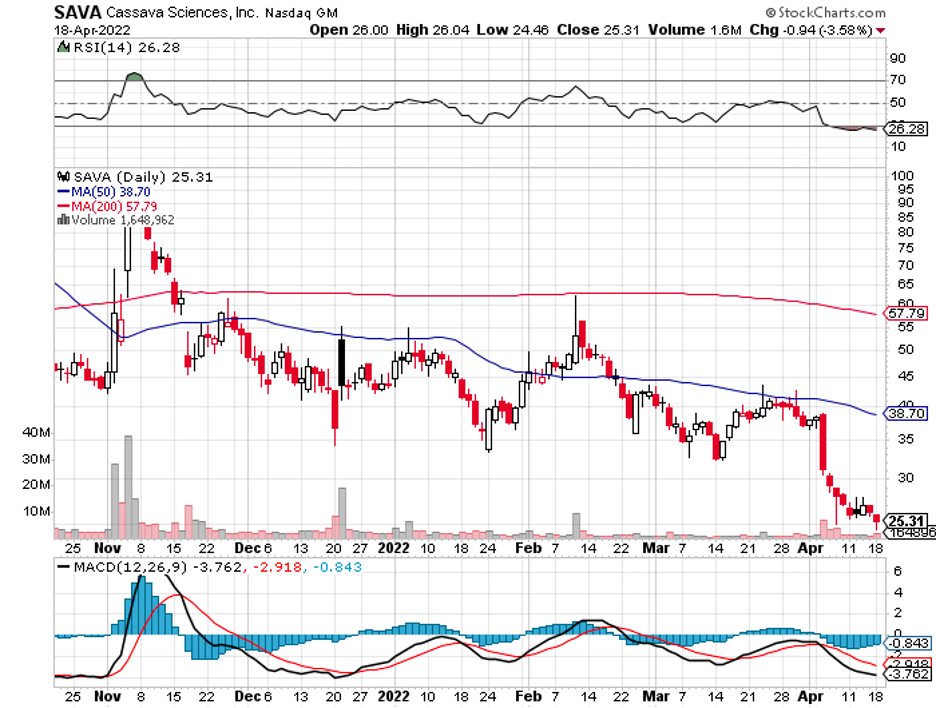
Among the drugmakers pursuing this field, one name continues to rake in positive reports: Cassava Sciences (SAVA).

Cassava’s lead AD drug candidate is Simufilam, a small oral pill. Thus far, this has shown no safety issues and even released the best clinical AD data.

Notably, this is the only treatment that demonstrated tangible cognitive improvement for longer than 6 months in the clinical studies for AD.

The fact that Cassava’s candidate bested Donanemab and Gantenerumab, which both received breakthrough designations, and Aduhelm, which got an accelerated approval, indicates its candidate’s strong potential.

Between their promising results, convenient storage of the pill, easy dosing method, impressive safety data, and the vast unmet medical market, Simufilam could very well be hailed as the best-selling AD treatment the moment it gains approval.

Another indicator of Simufilam’s promise is the lack—or even absence—of insider trading within Cassava in the past years.

Typically, company insiders know more about the projects than anyone else. Strong insider selling is generally followed by a fall in a company’s stock price.

This has not been spotted anywhere in Cassava, with multiple insiders taking on very big stakes in the company.

However, the strongest indicator for Cassava’s impending win is Simufilam being in clinical progression. In fact, it’s already dosing in Phase 3 trials.

While other drugmakers working on an AD treatment may have promising options, the earlier a candidate is in the clinical trials, the higher the risk of failure and the longer it’ll take to be commercialized.

Each step forward in clinical trials is basically a way to “de-risk” the candidates, which leads to an increased value of the company.

Naturally, one of the questions raised when dealing with a biotech not as large as AbbVie (ABBV) or even Amgen (AMGN) concerns financial health.

Cassava’s recent financial filings showed that the company has roughly $240 million in cash and $0 debt.

Looking at their workflow, Cassava typically burns about $9 million every quarter.

As they ramp up their Simufilam trials, this is obviously expected to change.

After all, Phase 3 trials tend to cost more. So, the company anticipates a bump in spending to reach $12.5 million to $15 million per quarter this 2022.

While this is a substantial increase in capital expenditure, the jump remains within reasonable projections of the price of Phase 3 trials.

Taking into consideration the higher burn rate of roughly $15 million every quarter, Cassava would still have sufficient cash to operate for 16 quarters or 4 years without the need to resort to any additional financing rounds—at least for Simufilam.

If it fails, investors would already know whether Simufilam was a success.

That means if Cassava does pursue financing efforts, it would be for new projects and not for this particular AD treatment.

The market has not been kind to the biotechnology sector lately. It’s because the market tends to overreact to negative news.

Farsighted investors who recognize the enduring potential of a company—even at its vulnerable periods—can sometimes reap outsized returns if they turn out correct.

However, a successful strategy for some investors is to bet on companies that other investors are afraid to touch.

Nevertheless, it’s still prudent to keep in mind that investing in a roller coaster like Cassava means preparing yourself for an unexpected and possibly wild ride.


https://madhedgefundtrader.com/wp-content/uploads/2019/05/cropped-mad-hedge-logo-transparent-192x192_f9578834168ba24df3eb53916a12c882.png 0 0 Mad Hedge Fund Trader https://madhedgefundtrader.com/wp-content/uploads/2019/05/cropped-mad-hedge-logo-transparent-192x192_f9578834168ba24df3eb53916a12c882.png Mad Hedge Fund Trader2022-04-19 16:00:522022-04-19 22:22:03A Budding Underdog to Dominate the Alzheimer's Battle
Mad Hedge Fund Trader

March 8, 2022

Biotech Letter

Mad Hedge Biotech and Healthcare Letter
March 8, 2022
Fiat Lux

Featured Trade:

(A BIOTECHNOLOGY AND HEALTHCARE TRIFECTA STOCK)
(ABBV), (NVO), (CPH), (LLY)

https://madhedgefundtrader.com/wp-content/uploads/2019/05/cropped-mad-hedge-logo-transparent-192x192_f9578834168ba24df3eb53916a12c882.png 0 0 Mad Hedge Fund Trader https://madhedgefundtrader.com/wp-content/uploads/2019/05/cropped-mad-hedge-logo-transparent-192x192_f9578834168ba24df3eb53916a12c882.png Mad Hedge Fund Trader2022-03-08 17:02:542022-03-08 17:54:28March 8, 2022
Mad Hedge Fund Trader

A Biotechnology and Healthcare Trifecta Stock

Biotech Letter

A myriad of macroeconomic problems has thrown the stock market and the economy off balance.

Major US indices have been down since 2022, with some like the Nasdaq slipping by over 10% year-to-date due to volatile trading.

Meanwhile, there are businesses on a tear amid the issues.

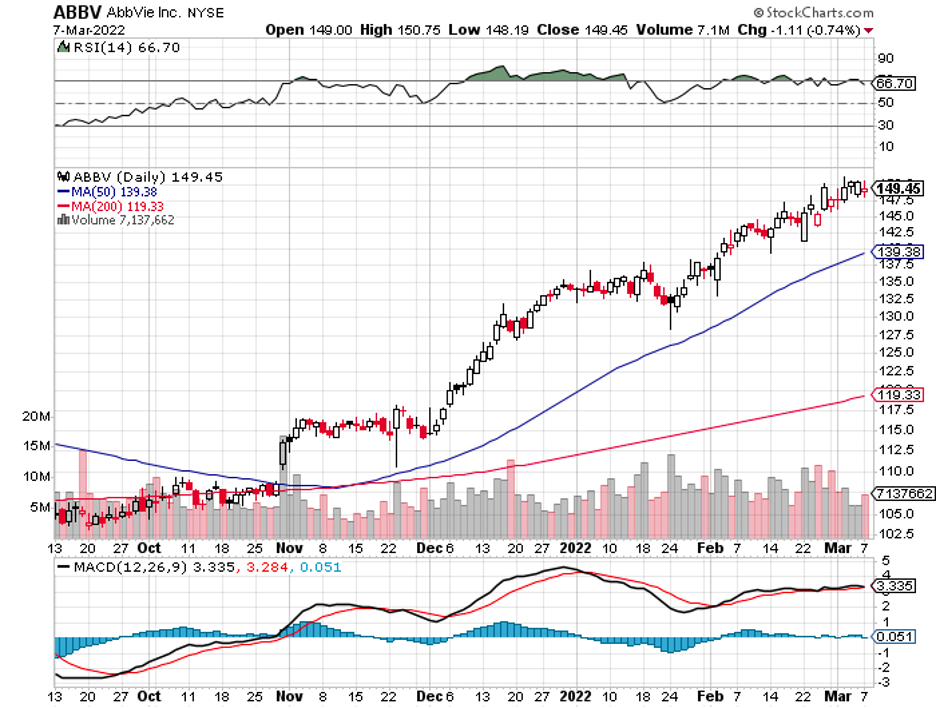
One of them is AbbVie (ABBV), which gained more than 20% over the past six months.

This growth reinforced AbbVie’s reputation as a rock-solid investment that investors can rely on during uncertain periods.

Looking at its performance, AbbVie can be considered an investor’s trifecta primarily because of the benefits the company offers, namely, high yield, promising growth potential, and solid dividend growth.

AbbVie came off 2021 with 30% growth in its shares despite the global economic slowdown.

During that period, AbbVie reported a 13.4% year-over-year increase in its adjusted EPS at $3.31 and a 7.4% jump for its revenues at $14.9 billion.

This notable performance is mainly due to Humira’s sales, but this won’t be the case in the following years.

In 2018, AbbVie lost patent protection for Humira in Europe and is slated to lose exclusivity in the US by 2023.

For the longest time, AbbVie has depended mainly on Humira as its most vital source of revenue stream.

Nowadays, the company has been taking on a more diversified tactic instead of solely relying on the top-selling drug. The effects can be seen in its fourth-quarter report.

The company’s oncology sector grew by 4.6% to reach $1.9 billion. As for its neuroscience branch, it reported $1.7 billion in revenues or an impressive 19% climb from last year.

While AbbVie has been honing its diversification plans, the company still hasn’t forgotten where its true strength lies: immunology treatments.

Its immunology segment, where Humira is filed under, raked in $6.7 billion in revenues, showing a 13.2% increase compared to the same period.

To keep the momentum and preserve its spot as the leader in this segment, AbbVie introduced two successors to Humira: Skyrizi and Rinvoq.

In the same report, it can be seen that Humira still brought in the bulk of AbbVie’s immunology revenues at $5.33 billion, indicating a 3.5% increase in its previous revenues.

However, Skyrizi and Rinvoq also showed promising results.

Skyrizi sales carried on with its upward trajectory, as seen in the whopping 70.5% jump it recorded to contribute $895 million to the company.

As for Rinvoq, this treatment recorded an even higher jump at 84.4% to reach $517 million.

Throughout 2021, Skyrizi generated $2.94 billion while Rinvoq contributed $1.65 billion in sales. This indicated an 85% growth for Skyrizi and an over 100% year increase for Rinvoq.

Considering their performance, these two immunology successors to Humira are anticipated to move forward at a strong clip as AbbVie bags more FDA approvals for additional uses.

If things go as planned, Skyrizi and Rinvoq can quickly reach a combined revenue of $15 billion by 2025.

Outside its immunology sector, oncology treatment Imbruvica is projected to become another blockbuster.

To date, this drug ranks second to Humira in terms of sales, with roughly $5.41 billion in total in 2021.

Meanwhile, AbbVie has also been busy boosting its neurosciences division.

The company recently acquired Belgium-based Syndesi Therapeutics for approximately $1 billion.

Offering an upfront payment of $130 million, Syndesi granted AbbVie access to its portfolio of novel modulators of the synaptic vesicle protein 2A (SV2A). Among the products in development, the most prized treatment is Syndesi’s lead molecule SDI 118.

This mechanism is currently under Phase 1b trials for its potential use to treat cognitive impairment and other conditions linked to various neuropsychiatric and neurodegenerative diseases. These include Alzheimer’s disease and major depressive disorder.

Basically, SDI-118 targets a patient’s nerve terminals to boost synaptic efficiency.

This would complement the bigger company’s existing neuroscience efforts since AbbVie believes that synaptic dysfunction is an underlying problem when it comes to cognitive impairment associated with several disorders.

Launched in 2017, Syndesi is a biotechnology company backed by Novo Holdings, which owns controlling shares in global companies Novo Nordisk (NVO) and Novozymes (CPH).

Apart from its remarkable performance and growing pipeline, AbbVie’s stock dividend also serves as a strong pull for investors.

AbbVie stands at $1.41 per quarter or $5.64 per year.

Since its inception in 2013, the company has consistently increased its dividend annually.

In fact, AbbVie’s dividend yield of 3.87% remains a key attraction to investors despite the stock’s rising price.

No matter what metrics you use, AbbVie has managed to securely position itself at the top of the healthcare and biotechnology sector.

Over the course of the more than 9 years since AbbVie became a publicly-traded company, only Eli Lilly (LLY) has raked in higher total returns.

While the general market continues to bring uncertainty, AbbVie has been executing all the right moves to provide shareholders a haven to invest their hard-earned cash and earn a steady and rising return.

abbvie investors

https://madhedgefundtrader.com/wp-content/uploads/2019/05/cropped-mad-hedge-logo-transparent-192x192_f9578834168ba24df3eb53916a12c882.png 0 0 Mad Hedge Fund Trader https://madhedgefundtrader.com/wp-content/uploads/2019/05/cropped-mad-hedge-logo-transparent-192x192_f9578834168ba24df3eb53916a12c882.png Mad Hedge Fund Trader2022-03-08 17:00:512022-03-19 01:44:44A Biotechnology and Healthcare Trifecta Stock
Mad Hedge Fund Trader

February 10, 2022

Biotech Letter

Mad Hedge Biotech and Healthcare Letter
February 10, 2022
Fiat Lux

Featured Trade:

(A HEALTHCARE ENIGMA TO ADD TO YOUR WATCHLIST)
(GILD), (JNJ), (PFE), (ABBV), (LLY), (MRK), (BMY),
(AMGN), (MRNA), (AZN), (REGN), (BNTX), (NVAX)

https://madhedgefundtrader.com/wp-content/uploads/2019/05/cropped-mad-hedge-logo-transparent-192x192_f9578834168ba24df3eb53916a12c882.png 0 0 Mad Hedge Fund Trader https://madhedgefundtrader.com/wp-content/uploads/2019/05/cropped-mad-hedge-logo-transparent-192x192_f9578834168ba24df3eb53916a12c882.png Mad Hedge Fund Trader2022-02-10 18:02:402022-02-10 19:06:33February 10, 2022
Mad Hedge Fund Trader

A Healthcare Enigma to Add to Your Watchlist

Biotech Letter

The top names in the biopharmaceutical world based on their market capitalization include Johnson & Johnson (JNJ), Pfizer (PFE), AbbVie (ABBV), Eli Lilly (LLY), Merck (MRK), Bristol Myers Squibb (BMY), Amgen (AMGN), and Gilead Sciences (GILD).

Among these names, Gilead is often viewed as an enigma, given its history and the challenge in predicting its share price trajectory.

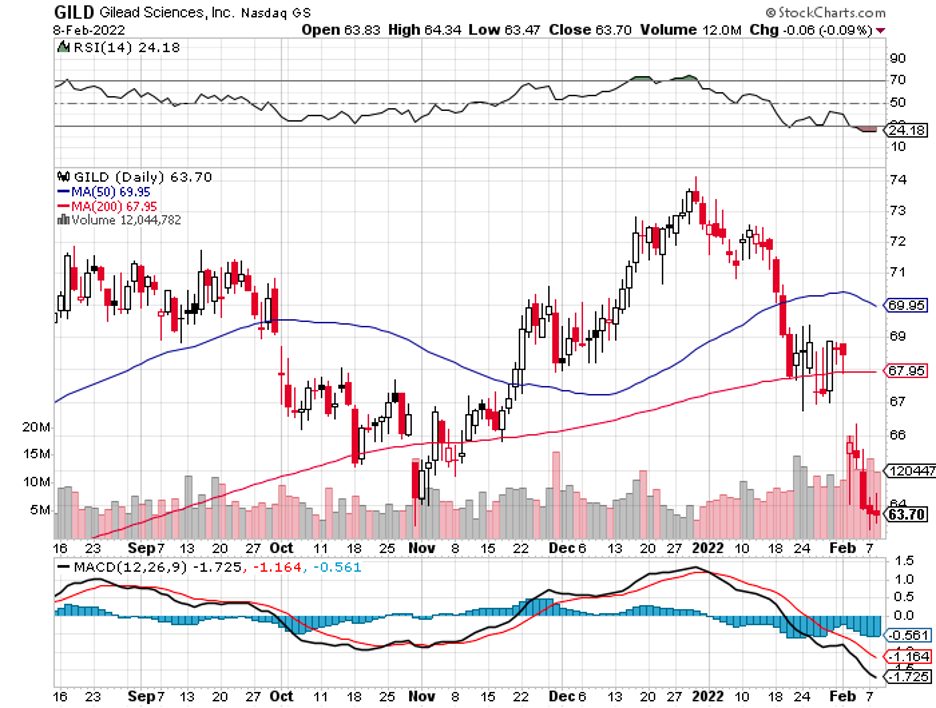
Over the past months, Gilead has been testing the patience of investors. In fact, the company is projected to experience a fall in revenues this year from $27 billion in 2021 to $24.05 billion in 2022.

The latest news that added to their anxiety was the pause on clinical trials for its cancer therapy, Magrolimab.

This came after its short-lived dominance in the Hepatitis C segment.

At that time, the sales of its leading drug Sovaldi skyrocketed from $140 million in 2013 to a jaw-dropping $10.2 billion by 2014.

Meanwhile, another Hepatitis C treatment, Harvoni, single handedly raked in $13.8 billion in sales in 2015, pushing the entire company’s revenues to an impressive $32.6 billion.

Unfortunately for Gilead, it became the victim of its own staggering success.

Its Hepatitis C treatments, Sovaldi and Harvoni, were incredibly effective and managed to cure the patients within months. The demand for these drugs fell because the patient pool gradually ran dry.

By 2019, the Hepatitis C franchise of the company had declined and managed to scrape $2.9 billion in combined sales.

Since then, though, the company has been struggling to regain investors' faith.

Nevertheless, these recent developments are not enough reasons to panic. If anything, Gilead has simply become even more attractively priced due to the fallout.

In 2020, Gilead managed to report its first year-on-year increase in revenues since its glory days in 2015.

As the COVID-19 pandemic started to take hold of the world, it was Gilead’s Veklury (Remdesivir) that secured the first-ever Emergency Use Authorization from the FDA.

While Veklury was eventually overshadowed by COVID-19 vaccines from Pfizer, Moderna (MRNA), JNJ, and AstraZeneca (AZN), as well as other treatments and antibody cocktails from Eli Lilly, Regeneron (REGN), and Merck, Gilead’s candidate managed a comeback by the fourth quarter of 2021 after experts declared it to be effective against the Omicron strain.

In effect, Veklury had a major impact on the company’s 2021 performance, recording $5.6 billion in annual sales.

Although this is not as illustrious or groundbreaking as its Hepatitis C treatments, the reemergence of Gilead as a frontrunner in the pandemic is proof that the company has not lost its knack for discovering and developing a winning formula for blockbuster treatments.

Another avenue that Gilead has been exploring is actively acquiring assets to expand its portfolio.

One notable move in that direction is its $11.9 billion acquisition of Kite Pharma, a leader in the cell therapy space, in 2017. Thus far, this agreement has yielded two drugs: Yescarta and Tecartus.

Since oncology is one of Gilead’s major areas of concentration, the commercialization of these two treatments conveys a promising future.

While both are yet to become blockbusters, the field of cell therapy has been rapidly expanding and turning into a critical therapeutic option for certain patient categories.

Yescarta is projected to rake in $1.5 billion in revenues if it receives the FDA green light for large B-cell lymphoma

Considering that its last trial data showed off a 60% improvement with Yescarta compared to standard of care in terms of halting the disease’s progression or even death, there’s a huge possibility that Gilead will be delivering good news soon.

As for Tecartus, this treatment received approval for acute lymphoblastic leukemia last year and is aiming to expand to cover mantle cell lymphoma by July 2022.

With its list price of $373,000, this CAR-T therapy is projected to reach blockbuster status in the following months as well.

Another oncology drug anticipated to reach blockbuster status soon is metastatic triple-negative breast cancer treatment Trodelvy, which Gilead gained access to following a $21 billion deal with Immunomedics in 2020.

Given its current approved indications and the queued trials to expand its coverage, Trodelvy is projected to reach $4.7 billion in peak sales.

Going back to the 2022 revenue forecast for Gilead, I think the change is from the company’s anticipated decline in Veklury sales.

Since Pfizer, BioNTech (BNTX), Novavax (NVAX), and Moderna have been actively working on Omicron-focused vaccines and treatments, Gilead expects its Veklury revenues to shrink as well.

Overall, Gilead still presents an excellent opportunity for long-term investors.

Despite its setbacks, the company has proven that it still holds the knack of rolling out remarkable and effective best-in-class treatments.

Moreover, its pipeline is filled with promising candidates poised to deliver in the years to come. So, don’t be too quick to write off Gilead just yet.

gilead

https://madhedgefundtrader.com/wp-content/uploads/2019/05/cropped-mad-hedge-logo-transparent-192x192_f9578834168ba24df3eb53916a12c882.png 0 0 Mad Hedge Fund Trader https://madhedgefundtrader.com/wp-content/uploads/2019/05/cropped-mad-hedge-logo-transparent-192x192_f9578834168ba24df3eb53916a12c882.png Mad Hedge Fund Trader2022-02-10 18:00:262022-02-18 17:39:31A Healthcare Enigma to Add to Your Watchlist
Mad Hedge Fund Trader

February 1, 2022

Biotech Letter

Mad Hedge Biotech and Healthcare Letter
February 1, 2022
Fiat Lux

Featured Trade:

(A SHIFT IN NEUROSCIENCE BIOTECH)
(BIIB), (AXSM), (PFE), (BMY), (MRK), (NVS), (ABBV), (GSK), (JNJ), (LLY), (RHHBY), (TAK)

https://madhedgefundtrader.com/wp-content/uploads/2019/05/cropped-mad-hedge-logo-transparent-192x192_f9578834168ba24df3eb53916a12c882.png 0 0 Mad Hedge Fund Trader https://madhedgefundtrader.com/wp-content/uploads/2019/05/cropped-mad-hedge-logo-transparent-192x192_f9578834168ba24df3eb53916a12c882.png Mad Hedge Fund Trader2022-02-01 19:02:232022-02-01 20:25:19February 1, 2022
Mad Hedge Fund Trader

A Shift in Neuroscience Biotech

Biotech Letter

Industry experts typically describe mergers and acquisitions as the life force that propels the biotechnology and healthcare sector forward.

Based on that description, it’s safe to say that the segment’s health has plummeted, considering the sluggishness observed last year.

In 2021, the M&A of this industry had fallen to one of its lowest recorded levels in history.

During this period, the deals only amounted to $108 billion for the entire year. This number was approximately 40% of the total recorded in 2019.

Despite the sluggishness in 2021 and the relatively slow start in 2022, this year is still projected to push the would-be buyers into more aggressive action.

After all, several key products are facing patent expiration before this decade ends.

The list includes Big Pharma players like Pfizer (PFE), Bristol Myers Squibb (BMY), Merck (MRK), and Novartis (NVS).

This means that a massive deal might be on the horizon, pretty much when AbbVie (ABBV) executed its jaw-dropping $63 bill acquisition of Allergan in 2019 following its problems with generics competing against its blockbuster drug Humira.

Aside from patent protection concerns, another factor in play is the intense competition in lucrative research sectors such as immunology, neurology, rare diseases, and oncology.

Add to this the constant pressure of Congress to pull down drug prices, and it becomes apparent why companies—big or small—turn to mergers and acquisitions for survival.

Simply put, biotech and healthcare companies have no other choice but to be aggressive in looking for external innovation to secure the continuous transformation of their businesses.

On that note, I think there could be major acquisitions to be announced in 2022.

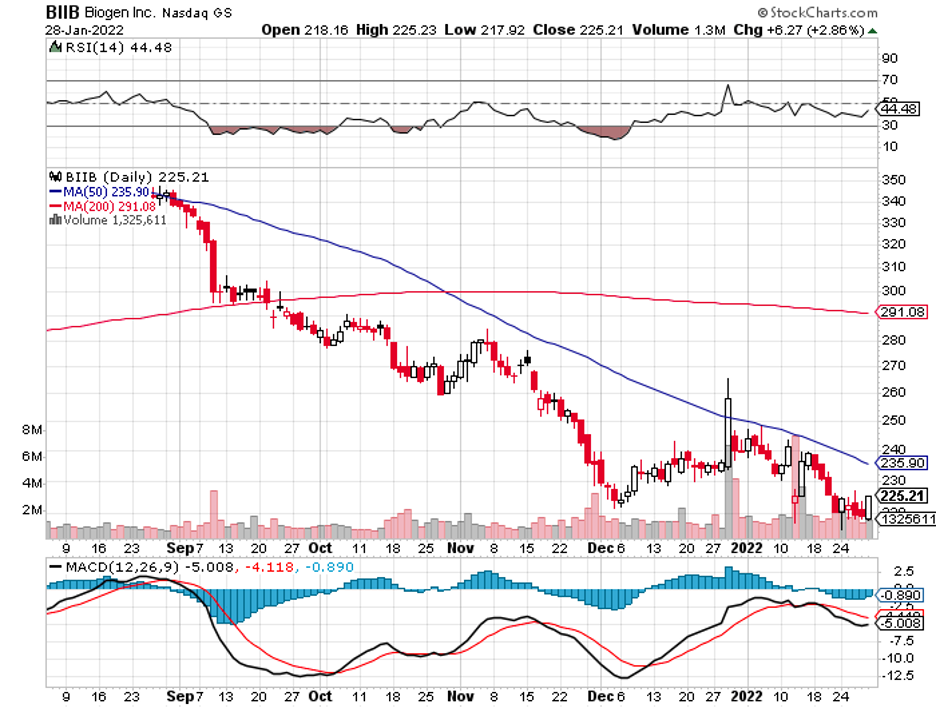
One deal I’m looking forward to is Biogen’s (BIIB) potential acquisition of Axsome Therapeutics (AXSM).

To remain competitive in the neuro stage, Biogen must keep up with the times—and a deal with Axsome might just be the solution.

Axsome’s size and price, with a market capitalization of $992 million, appear to be just the right fit for Biogen to gobble up.

More importantly, its portfolio is an excellent fit for Biogen. Both focus on neurological diseases, making their pipelines complementary to each other.

So far, Axsome has several leading candidates in the clinical stages.

One is AXS-05, which is a treatment for major depressive disorder (MDD).

Apart from MDD, this candidate is under late-stage review to target Alzheimer’s disease agitation.

In addition, Axsome is looking to advance AXS-05 in late-stage trials for smoking cessation therapy.

Needless to say, AXS-05 would go hand in hand with Biogen’s own approved, albeit controversial, Alzheimer’s drug Aduhelm.

Another promising candidate is AXS-07, a potential competitor of Pfizer and Novartis’ migraine medication. This drug has been submitted for FDA approval and might be launched by the second quarter of 2022.

There’s also AXS-12, which is a narcolepsy treatment candidate, and AXS-14, which is geared towards fibromyalgia. Both candidates are slated for FDA review by the third or fourth quarter of 2022.

For over 20 years, even the biggest and most powerful drug companies have stayed away from working on treatments specifically for the brain and central nervous system (CNS).

That’s not surprising considering the sheer number of failed programs in neuroscience, pushing drugmakers to believe that we still don’t have sufficient data on the subject, so the money might be better spent elsewhere. 

Nowadays, though, the CNS landscape is starting to shift.

GlaxoSmithKline (GSK) recently embarked on reviving its CNS program by striking a $700 million deal with a smaller biotechnology company called Alector.

Meanwhile, Pfizer and Novartis reached an agreement with Biohaven Pharmaceuticals for the latter’s migraine treatment and Parkinson’s drug.

Aside from these, Johnson & Johnson (JNJ), Eli Lilly (LLY), Roche (RHHBY), and Takeda (TAK) are anticipated to secure CNS-centered deals soon.

Despite the lower number of M&A deals last year, the volume of strategic collaborations in the neuroscience sector climbed by about 50% in 2021 compared to its 2020 performance.

By 2022, this space is projected to become even more investable, considering the number of biotechnology companies focusing on CNS. Watch out for blockbuster deals in this sector.


neuroscience


https://madhedgefundtrader.com/wp-content/uploads/2019/05/cropped-mad-hedge-logo-transparent-192x192_f9578834168ba24df3eb53916a12c882.png 0 0 Mad Hedge Fund Trader https://madhedgefundtrader.com/wp-content/uploads/2019/05/cropped-mad-hedge-logo-transparent-192x192_f9578834168ba24df3eb53916a12c882.png Mad Hedge Fund Trader2022-02-01 19:00:192022-02-08 20:01:22A Shift in Neuroscience Biotech
Mad Hedge Fund Trader

January 13, 2022

Biotech Letter

Mad Hedge Biotech and Healthcare Letter
January 13, 2022
Fiat Lux

Featured Trade:

(NO REST FOR THIS PANDEMIC SUPERSTAR)
(PFE), (MRK), (RHHBY), (DNAY), (JNJ), (LLY), (BNTX), (EDIT)

https://madhedgefundtrader.com/wp-content/uploads/2019/05/cropped-mad-hedge-logo-transparent-192x192_f9578834168ba24df3eb53916a12c882.png 0 0 Mad Hedge Fund Trader https://madhedgefundtrader.com/wp-content/uploads/2019/05/cropped-mad-hedge-logo-transparent-192x192_f9578834168ba24df3eb53916a12c882.png Mad Hedge Fund Trader2022-01-13 14:02:552022-01-13 19:47:13January 13, 2022
Page 19 of 28«‹1718192021›»

tastytrade, Inc. (“tastytrade”) has entered into a Marketing Agreement with Mad Hedge Fund Trader (“Marketing Agent”) whereby tastytrade pays compensation to Marketing Agent to recommend tastytrade’s brokerage services. The existence of this Marketing Agreement should not be deemed as an endorsement or recommendation of Marketing Agent by tastytrade and/or any of its affiliated companies. Neither tastytrade nor any of its affiliated companies is responsible for the privacy practices of Marketing Agent or this website. tastytrade does not warrant the accuracy or content of the products or services offered by Marketing Agent or this website. Marketing Agent is independent and is not an affiliate of tastytrade. 

Legal Disclaimer

There is a very high degree of risk involved in trading. Past results are not indicative of future returns. MadHedgeFundTrader.com and all individuals affiliated with this site assume no responsibilities for your trading and investment results. The indicators, strategies, columns, articles and all other features are for educational purposes only and should not be construed as investment advice. Information for futures trading observations are obtained from sources believed to be reliable, but we do not warrant its completeness or accuracy, or warrant any results from the use of the information. Your use of the trading observations is entirely at your own risk and it is your sole responsibility to evaluate the accuracy, completeness and usefulness of the information. You must assess the risk of any trade with your broker and make your own independent decisions regarding any securities mentioned herein. Affiliates of MadHedgeFundTrader.com may have a position or effect transactions in the securities described herein (or options thereon) and/or otherwise employ trading strategies that may be consistent or inconsistent with the provided strategies.

Copyright © 2026. Mad Hedge Fund Trader. All Rights Reserved. support@madhedgefundtrader.com
Scroll to top