Mad Hedge Biotech & Healthcare Letter
June 15, 2021
Fiat Lux
FEATURED TRADE:
(A STOCK TO ADD TO YOUR RETIREMENT PORTFOLIO)
(MRK), (REGN), (GSK), (LLY), (GILD)
Mad Hedge Biotech & Healthcare Letter
June 15, 2021
Fiat Lux
FEATURED TRADE:
(A STOCK TO ADD TO YOUR RETIREMENT PORTFOLIO)
(MRK), (REGN), (GSK), (LLY), (GILD)
Building a retirement portfolio is different from when you’re aggressively playing the market. With this, you’d want something with less risk and more stability. A healthy helping of income definitely wouldn’t hurt either.
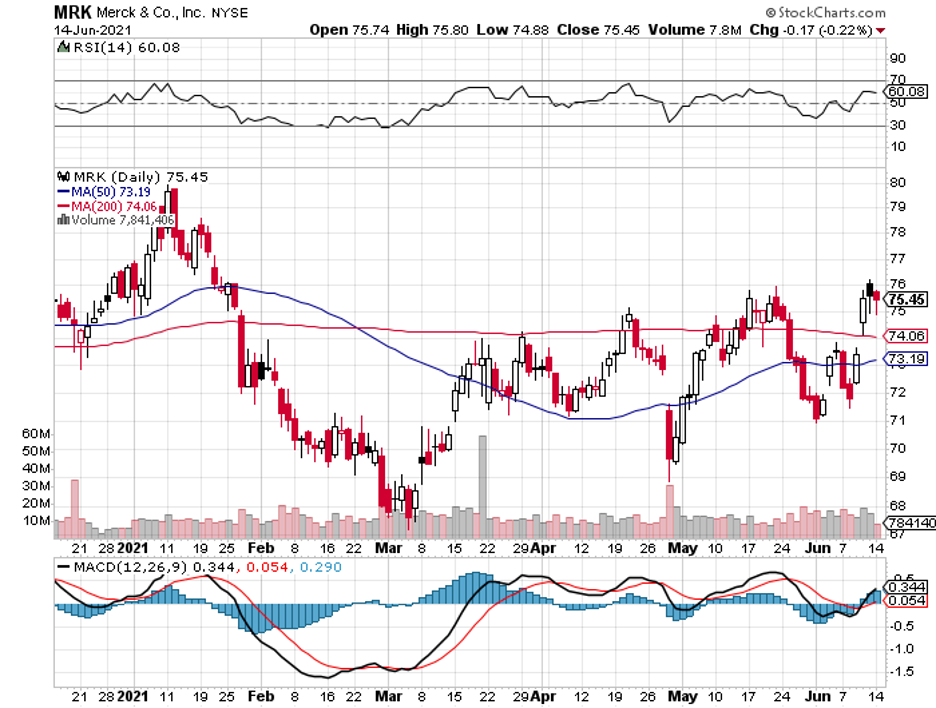
Taking these into consideration, a particular stock that offers a well-balanced mix of income and capital appreciation comes to mind: Merck (MRK).
The biggest news for Merck recently is its $1.2 billion deal with the US government involving its experimental COVID-19 antiviral.
The treatment, called Molnupiravir, is expected to cost about $700 per course, putting the total of the order from the US to 1.7 million courses.
This is just the beginning though. According to Merck and its partner, Ridgeback Biotherapeutics, they can produce at least 10 million courses of Molnupiravir by the end of 2021.
If we use the same pricing as the US, then we can expect approximately $7.1 billion in sales for Molnupiravir alone this year.
Still, the $1.2 billion deal with the US is already a massive win for Merck as experts initially estimated that Molnupiravir sales would only reach $25 million this year.
What makes Molnupiravir unique and more advantageous than its competitors is that the drug is taken orally.
The convenience alone easily edges out the other monoclonal antibody therapies from the likes of Regeneron (REGN), GlaxoSmithKline (GSK), and Eli Lilly (LLY)—all of which need to be administered intravenously.
If Molnupiravir does gain emergency use authorization from the FDA, its sole competitor in the market today is Veklury from Gilead Sciences (GILD).
To offer an idea on the size of the market for this treatment, Gilead recorded $2.8 billion in sales of Veklury in 2020. This figure is even projected to go up to $2.9 billion for this year.
Apart from its COVID-19 program, Merck has always been a favorite among value investors.
It’s a great dividend stock and has gained a reputable name in the industry as being one of the biggest and oldest companies in this field.
It’s also the force behind blockbuster treatments like the top-selling cancer drug Keytruda, HPV vaccine Gardasil, and of course, the diabetes medication Januvia.
In fact, Keytruda is estimated to become the No. 1 selling drug in the world by 2023—an achievement that Merck has lots of time to capitalize on considering that the treatment’s patent exclusivity lasts until 2028.
Keytruda is a key revenue generator for Merck, with the cancer drug showing off a 19% jump to reach $3.9 billion in sales in the first quarter of 2021.
This puts it on track to rake in roughly $16 billion in sales for this year, showcasing an 11% increase from 2020.
By 2026, Keytruda is estimated to generate $24.32 billion in sales annually.
Apart from Keytruda, Merck has been boosting its pipeline as well. For example, Bridion, one of its newer drugs, raked in $1.2 billion in sales in the first quarter, which is up 6% year-over-year.
Looking at its history, Merck has repeatedly shown that it can compete aggressively in the biopharmaceutical industry.
In 2020, the company still managed to generate $48 billion in sales despite the pandemic, with an earnings per share of $5.94—a value that’s 65% stronger than it was just five years ago.
Its strong profit growth and promising pipeline programs have allowed the company to boost its dividend payout at an impressive 7.1% pace over the past years.
This is a performance that most blue-chip companies, regardless of their size and market cap, struggle to keep up with.
Merck isn’t as exciting as the other stocks in the biotechnology and healthcare market, but that’s a comforting thought for investors who are on the lookout for a stable business.
Although Merck stock is not dirt cheap, I think it’s attractive for those who have extra cash or are hesitant to roll the dice on more volatile companies today.
Mad Hedge Biotech & Healthcare Letter
June 8, 2021
Fiat Lux
FEATURED TRADE:
(THE BIGGEST NEWS IN BIOTECH TODAY)
(BIIB), (ESALY), (LLY), (RHHBY), (DNLI), (SRPT), (IONS), (ICPT), (SAVA), (ANVS), (CI), (CVS)
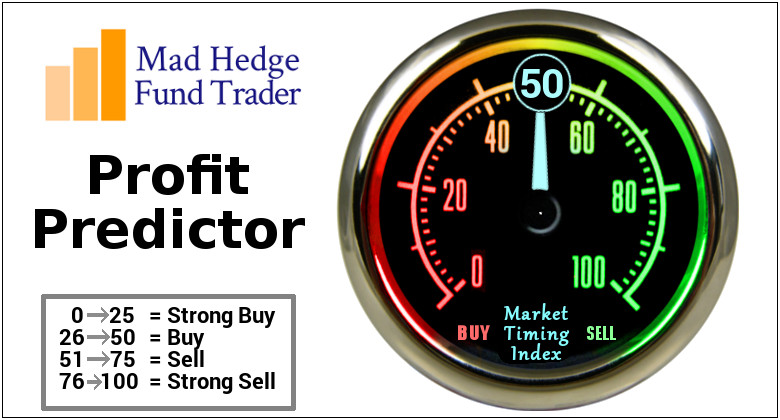
It’s not typical for stock market news to alter the lives of millions of people across the globe, but this is what Biogen (BIIB) managed to accomplish this week.
The company received accelerated approval from the US Food and Drug Administration (FDA) for its controversial Alzheimer’s disease treatment, Aducanumab.
The drug, which is now marketed as Aduhelm, marks a potential breakthrough medication for over 6 million Americans suffering from the debilitating illness and to possibly billions all worldwide.
Basically, Aduhelm targets what Biogen calls “a defining pathology of the disease” by decreasing the amyloid beta plaque levels in the brains of patients suffering from Alzheimer’s disease.
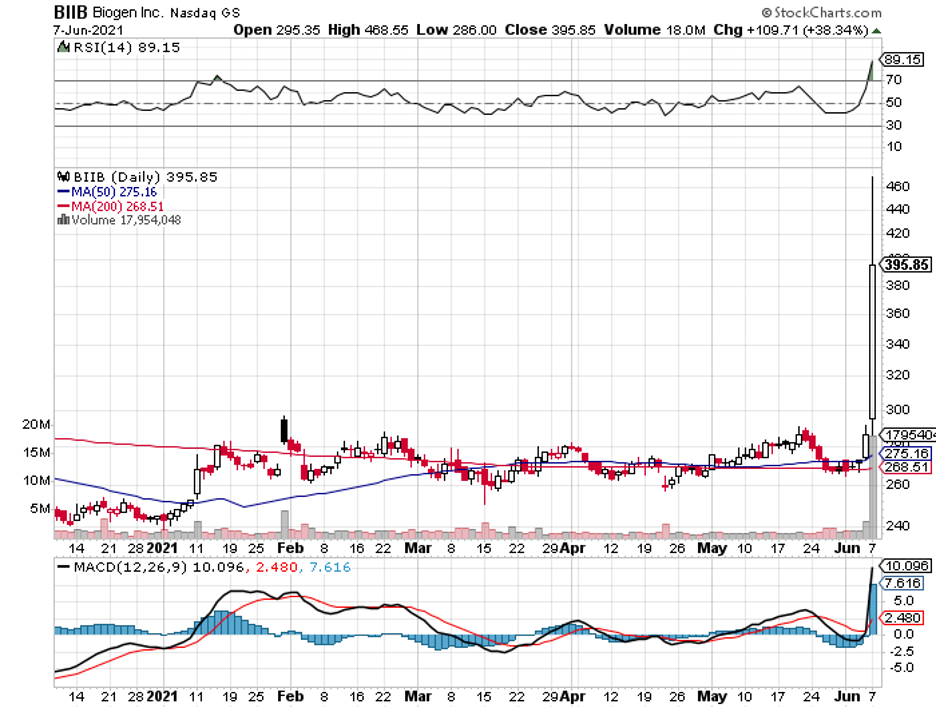
Biogen shares spiked by roughly 60% following the Aduhelm news, with the pop in the biotechnology stock even more impressive than what was initially predicted.
This latest FDA approval also brings a ray of hope for the biotechnology industry.
Biotech shares have been in a slump this year, with the SPDR S&P Biotech ETF (XBI) falling by 9.2% thus far.
Potential second-order effects of the Biogen win can easily be seen in other developers of Alzheimer’s disease treatments.
Although the moves may not be as dramatic as Biogen’s, several biotech companies benefited from the good news.
Directly benefiting from it is Japanese drugmaker Eisai (ESALY), which has been working with Biogen on Alzheimer’s disease treatment. This company’s American depository receipts climbed by 48.2% after the news broke.
Eli Lilly (LLY), which is also working on its own Alzheimer’s therapy, saw its shares go up 9.3%.
Even Roche (RHHBY), which is still in the early stages of its development of a similar treatment, enjoyed a 1.6% increase, while an under-the-radar biotech company, Denali Therapeutics (DNLI), experienced a 7.8% increase.
Other smaller companies that benefited from Biogen’s news include Sarepta Therapeutics (SRPT), Ionis Pharmaceuticals (IONS), Intercept Pharmaceuticals (ICPT), Cassava Sciences (SAVA), and Annovis Bio (ANVS).
In terms of pricing, Aduhelm is estimated to cost $56,000 per year.
Although there is still no definite number in terms of how much Aduhelm could generate in sales for the company, there have been early estimates prior to this news.
Before this accelerated approval, Aduhelm was projected to add at least $16 billion in market capitalization to Biogen.
If successful, the drug can contribute a minimum of $10 billion in sales annually—a performance that would make Aduhelm one of the best-selling drugs of all time.
At this price point as well, the drug could peak at $5.7 billion by 2027.
Understanding that the cost is too high for some, Biogen has been working on establishing partnerships with healthcare and insurance companies to help patients cover the expenses.
So far, Biogen has been negotiating with Cigna (CI) to come up with terms to make Aduhelm available to Alzheimer’s patients via a value-based contract.
That is, the pricing will be assessed based on how responsive the patient will be to the treatment.
Biogen has also been working on collaborating with CVS Health (CVS) to develop more efficient ways to implement cognitive screenings in urban markets.
The two companies have been looking into boosting testing within underserved communities to improve early diagnosis, with the project commencing by September.
Some cities included in this initiative are Washington, D.C., Los Angeles, Dallas, Chicago, South Carolina, Atlanta, New York, Detroit, and Philadelphia.
Biogen has finally regained its momentum thanks to this accelerated and unprecedented approval.
That means we can expect Biogen to leverage this massive revenue stream to round out the rest of its programs and boost its R&D, as well as possibly compensating its shareholders with share buybacks and even dividends in the second half of this decade.
Mad Hedge Biotech & Healthcare Letter
June 1, 2021
Fiat Lux
FEATURED TRADE:
ANOTHER BUY-THE-DIP OPPORTUNITY DROPPED IN OUR LAPS
(AMGN), (QGEN), (GH), (AZN), (MRTX), (LLY), (JNJ), (SNY), (JNJ)
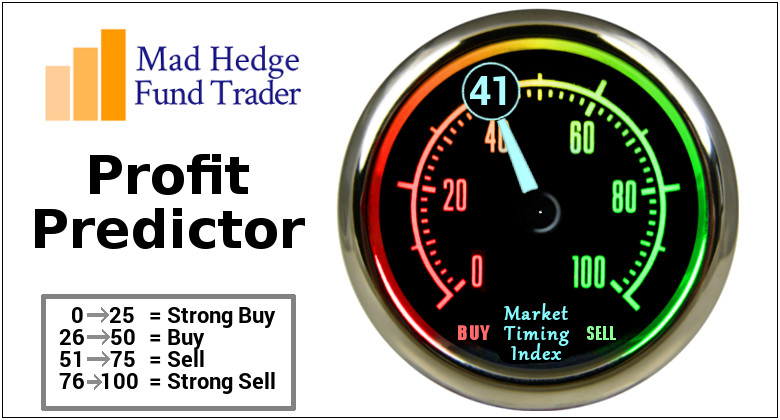
The ideal stocks are those you can just buy and hold for a long time. A healthcare and biotechnology company that perfectly fits the bill is Amgen (AMGN).
Amgen wasn’t an active participant in the COVID-19 race.
Instead, the biotechnology giant chose to stick with its circle of competence and focused on delivering remarkable results to its shareholders through boosting its revenue and increasing dividends.
Recently, this hyper-focus has paid off.
Amgen received FDA approval to market a drug that targets cancer cells in an area that researchers have been attempting to hit for decades.
The new treatment, Lumakras, will be the first of its kind to target a tumor growth process commonly known as KRAS for non-small cell lung cancer (NSCLC).
To understand the extent of Amgen’s breakthrough, scientists and researchers have been working on developing a KRAS blocker for over 40 years.
Prior to this, KRAS had been known as an “undruggable” target.
Basically, Amgen came up with a drug that can target the notorious and illusive cancer-causing protein—something that was previously considered the “Achilles heel” of lung cancer tumors.
More impressively, Lumakras was approved three months ahead of its schedule.
Based on the results of its Phase 2 trials, Lumakras can stall the progress of lung cancer in roughly 81% of the patients for a median time of 10 months.
In the Phase 3 trials, Amgen is looking into testing the drug in combination with other medications to hit the tumors that developed resistance to the pill.
A key factor in Lumakras’ launch is determining the types of patients who’d benefit most from the drug.
So far, Amgen has been collaborating with diagnostic partners, particularly Qiagen (QGEN) and Guardant Health (GH), for biomarker testing.
In terms of pricing, Amgen estimates monthly spending on Lumakras to be $17,900.
In the United States, roughly 30,000 patients of KRAS-mutated lung cancers are reported annually.
That puts Lumakras sales to at least $100 million for 2021 alone.
By 2025, the drug is expected to rake in roughly $1 billion annually, with sales growing to $1.51 billion in 2026.
These are actually conservative estimates that assume only a 50% success rate from Lumakras in the next few years.
Given the provisional and accelerated approval the drug has already received from the FDA though, it is safe to say that it can achieve at least 75% success rate, which means it can generate higher revenue.
The KRAS target is not limited to lung cancer. It also appears in other solid tumors, which Amgen continues to test Lumakras in a dozen other types, including colorectal cancer.
Depending on expansion plans, Lumakras sales can reach $3.2 billion by 2030.
Again, this expansion is a conservative estimate.
If the expansion for Amgen’s drug would be anything like AstraZeneca’s (AZN) blockbuster Tagrisso, which eventually became a recommended first-line therapy option for NSCLC, then Lumakras sales can peak at $4 to $5 billion.
Considering the potential of this market, it no longer comes as a surprise that competitors are hot on Amgen’s heels just days after Lumakras’ approval was announced.
The closest rival so far is Mirati Therapeutics (MRTX), which also has KRAS-inhibitor candidates in Phase 1 and Phase 2 trials.
Prior to that, Eli Lilly (LLY) and Johnson & Johnson (JNJ) tried their hands at KRAS mutation but failed.
Aside from Lumakras, Amgen has another blockbuster candidate in store for its shareholders: asthma drug Tezepelumab.
Developed in collaboration with AstraZeneca, this drug is already in the second late-stage pipeline and has been showing promising results so far.
Globally, there are about 2.5 million patients with severe asthma, with 1 million suffering from eosinophilic asthma in the United States. Amgen is hoping to target the latter population.
If Tezepelumab gets approved, it would be in direct competition against Sanofi (SNY) and Regeneron’s (REGN) asthma drug Dupixent. Peak sales for this asthma drug is estimated at roughly $3.5 billion.
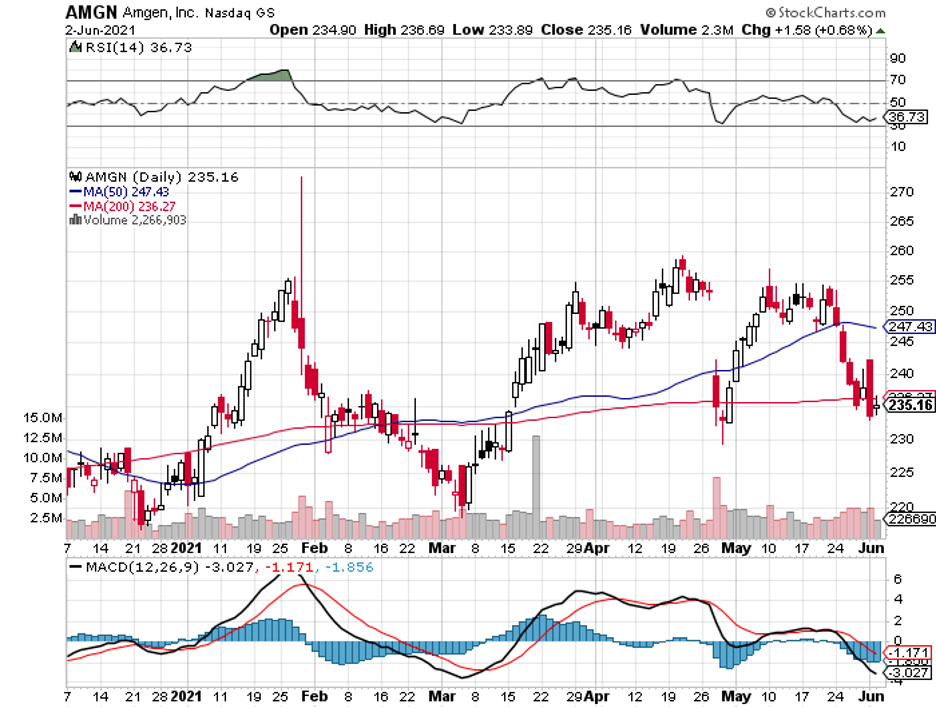
Over the past 12 months, Amgen’s stock performance has been rangebound.
Although this is obviously frustrating for growth-oriented shareholders, I think the short-term volatility of the stock may present good opportunities for value-conscious investors.
That is, I view the drop in Amgen’s share price as another favorable buying opportunity.
Mad Hedge Biotech & Healthcare Letter
May 20, 2021
Fiat Lux
FEATURED TRADE:
(REGENERATED REGENERON)
(REGN), (PFE), (JNJ), (AMGN), (BMY), (GILD), (MRK), (LLY), (SNY), (BAYRY), (NVS), (RHHBY)
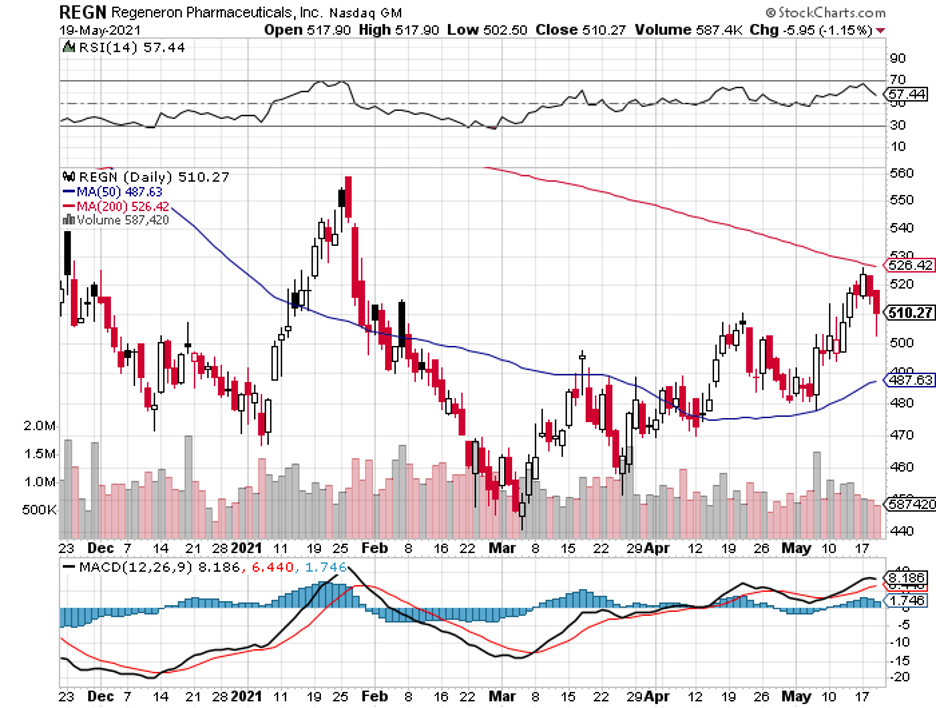
The biotechnology and healthcare sectors have become attractive investment targets for investors who recognize the value and essence of these industries along with the possible risks associated with them.
While not all companies in these areas are great investments, some offer remarkable growth opportunities.
One company worth considering is Regeneron (REGN), with its strong and stable investment thesis and steady organic growth.
Regeneron joins the ranks of Pfizer (PFE) and Johnson & Johnson (JNJ) as one of the handful of biopharmaceutical companies to release solid first quarter results this 2021 compared to other big names in the industry, including Amgen (AMGN), Bristol Myers Squibb (BMY), Gilead Sciences (GILD), Merck (MRK), and Eli Lilly (LLY).
The New York-based company reported a 38% boost in its revenue compared to the same period in 2020, reaching $2.5 billion for the first quarter of 2021 alone.
Virtually all of Regeneron’s products generated solid growth during this period, with the company’s COVID-19 antibody cocktail REGEN-COV delivering the highest sales at $262 million.
To underscore just how significant REGEN-COV is to Regeneron this quarter, its absence from the roster would take away 18% from the company’s overall revenue growth.
Riding the momentum of its COVID-19 program, Regeneron has developed Inmazeb, which is a treatment for Ebola virus infection.
Aside from its COVID-19 antibody cocktail, Regeneron also saw an impressive boost in the performance of its atopic dermatitis drug Dupixent.
Dupixent, which Regeneron sells in partnership with Sanofi (SNY), generated $1.26 billion in sales in the first quarter, showing off a notable 48% increase from its 2020 report.
Although Dupixent is a shared product with Sanofi, this dermatitis drug holds incredible promise for Regeneron.
To date, only 6% of eligible patients are being treated with Dupixent. This indicates a massive space that is yet to be explored by both companies.
Taking into consideration the pace at which Dupixent has been growing so far, this drug is projected to peak at roughly $12.5 billion in sales in the coming years.
Another high-selling drug for Regeneron is wet age-related macular degeneration (AMD) treatment Eylea.
Sales for this drug, which was developed in collaboration with Bayer (BAYRY), went up from $1.2 billion in the first quarter of 2020 to $1.3 billion this year.
The increase in sales for Eylea is a welcome surprise for both Regeneron and Bayer, especially since more and more competitors are attempting to topple the drug as the top product in the niche.
Cornering the AMD segment is an attractive venture for any biopharmaceutical company.
After all, Eylea generated $4.9 billion in sales in 2020 from the US market alone.
Thus far, two main competitors have come forward as the strongest.
One is Novartis (NVS), which released Beovu in 2019.
The second, and possibly the stronger competitor between the two, is Roche (RHHBY) with Faricimab.
To ensure its dominance in the AMD market, Regeneron has been expanding the use of Eylea.
The latest development is the drug’s enrollment in the Phase 3 program, which would allow extended periods in between treatments but still deliver the same level of efficacy and safety.
Aside from these, Regeneron is looking into additional revenue streams ahead.
One growth segment is its oncology program, particularly its cancer drug Libtayo, which may soon be marketed to cover a fourth type of cancer.
Regeneron aims to submit Libtayo for review as a treatment for advanced cervical cancer.
On top of this, the drug is also a strong contender in the development of several antibody treatments.
Thus far, the company has 12 oncology antibodies under clinical development.
Overall, Regeneron’s strong results for the first quarter of 2021 highlighted its continuous evolution into a company carrying multiple and diverse portfolios of products and pipeline programs that address an extensive range of serious diseases, from COVID-19 and rare diseases to cancer.
Mad Hedge Biotech & Healthcare Letter
May 13, 2021
Fiat Lux
FEATURED TRADE:
(THE HOLY GRAIL OF DIABETES)
(NVO), (LLY), (SNY), (BNTX), (CRSP), (EDIT), (NTLA)
Diabetes and obesity continue to be two of the major health issues across the globe—and these problems are only getting worse.
There are about 463 million people worldwide afflicted with diabetes, with only half of this number actually diagnosed and even fewer seeking treatment.
This situation is alarming considering that diabetes is a major cause of diseases like heart attacks, stroke, blindness, kidney failure, and even amputation of the lower limb.
The key to handling diabetes for many diabetics is taking insulin, which is a hormone that aids in regulating the amount of glucose in the patient’s blood.
To date, only 16% of diabetics take insulin.
Interestingly, there are only a handful of producers of this drug despite the fact that the global spending for insulin is estimated to reach $28 billion by 2026.
Only three companies practically control over 90% of the insulin market. That dominance, along with the absence of generic competition, allowed them to generously reward their shareholders.
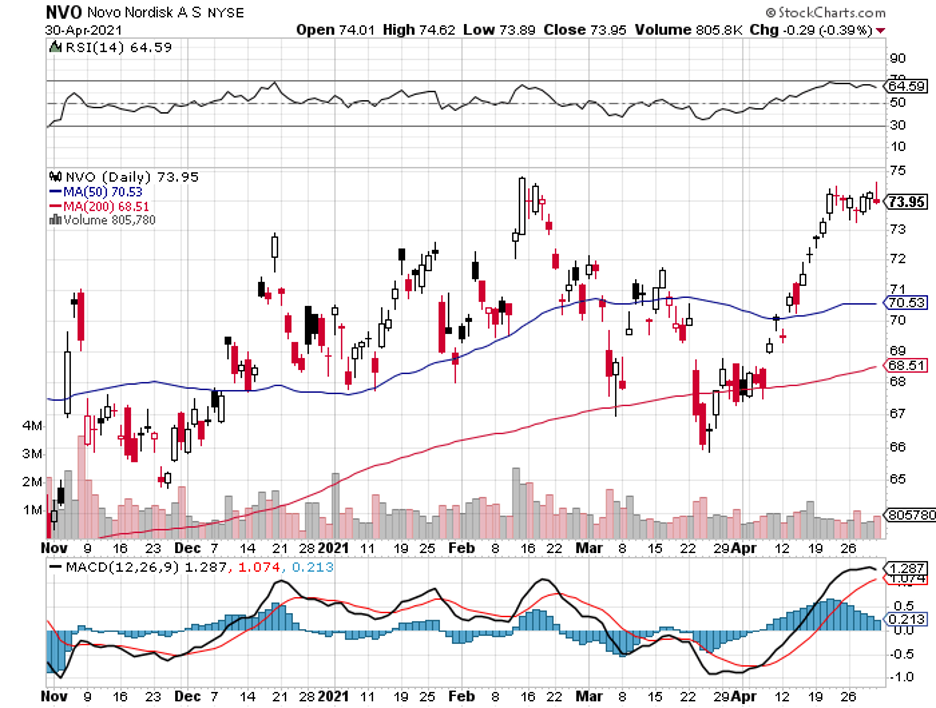
Currently, one company is dominating the insulin market and holds a virtual monopoly of this lucrative industry: Novo Nordisk (NVO).
In fact, Novo Nordisk shares have increased by over 2,500% since 2000—an honest to goodness wealth-building investment.
For years, Novo Nordisk has focused on developing products specifically for diabetes and obesity.
Thanks to its efforts in these sectors, the company has become the undisputed leader with a 44.5% share of the insulin market and a 49.9% share of the blood sugar drug GLP-1 market.
In 2018 alone, Novo Nordisk generated roughly $14.26 billion in revenue from its diabetes lineup.
In comparison, the second largest producer of these products, Eli Lilly (LLY), generated only $9.71 billion.
Meanwhile, the third challenger in this space, Sanofi (SNY), began its exit from the diabetes industry when the pandemic struck last year.
At this point, Novo Nordisk holds 29.2% of the global diabetes market, making the company within arm’s reach of its goal to conquer one-third of the segment by 2025.
Amid its success in the industry, Novo Nordisk refuses to rest on its laurels. The company continues to come up with innovative treatments for diabetes and obesity.
Novo Nordisk’s latest product is Rybelsus, which is an oral medication for blood sugar, particularly for Type 2 diabetes patients.
In an effort to corner the market, Rybelsus is actually a direct competitor of Novo Nordisk’s own products, Ozempic and Victoza, which target the same market. The difference is that the new product can be taken orally while the two older ones need to be injected into the bloodstream.
When Ryblesus was launched in late 2020, it was hailed as the “holy grail” of diabetes treatments and generated $64.5 million in the first six months.
To understand the potential of Rybelsus, it’s good to remember the growth story of Ozempic.
From $264 million in sales in 2018, this drug skyrocketed to rake in $1.7 billion by 2019 and generated $1.1 billion in the first half of 2020.
Although diabetes clearly holds the bulk of Novo Nordisk’s portfolio, it’s not the sole revenue stream for the company.
In the past years, Novo Nordisk has also been developing treatments for chronic obesity—a condition that could lead to serious diseases, including various types of cancer and heart disorders.
Global obesity has roughly tripled since 1975, with the COVID-19 pandemic accelerating this alarming trend.
For context, 1.9 billion adults were diagnosed as overweight in 2016. Of these, 650 million were considered obese.
More alarmingly, only 2% of 650 million people suffering from obesity are receiving any medical treatment.
In relation to Novo Nordisk’s revenue stream, this offers notable potential for future revenues for the segment.
The company’s flagship obesity drug, Saxenda, has shown extremely strong growth in terms of market share as well as total revenue since its launch.
With incredible attention focused on groundbreaking treatments for diabetes like messenger RNA from companies like BioNTech (BNTX), CRISPR Therapeutics (CRSP), Editas Medicines (EDIT), and Intellia Therapeutics (NTLA), it’s understandable to find a company established in the 1920s extremely boring.
However, it’s important to always keep in mind what investing is truly about. It’s distributing your money to businesses that have the capacity and potential to grow over the long term.
This is what sets apart companies like Novo Nordisk.
Historically, Novo Nordisk has been giving back to its shareholders for decades.
Since it debuted in the US market in 1981, the company has returned roughly 22,000% to its investors.
Four decades later, shareholders can rest easy and expect continuous rewards in the years to come. So, take advantage of this opportunity and buy the dips.