• support@madhedgefundtrader.com
  • Member Login
Mad Hedge Fund Trader
  • Home
  • About
  • Store
  • Luncheons
  • Testimonials
  • Contact Us
  • Click to open the search input field Click to open the search input field Search
  • Menu Menu

Tag Archive for: (LLY)

Mad Hedge Fund Trader

Don't Miss the Boat on This Best of Breed Biotechnology Stock

Biotech Letter

The past few weeks have been hectic for the healthcare industry, with Moderna (MRNA), Pfizer (PFE), BioNTech (BNTX), and even Johnson & Johnson (JNJ) working hard to manufacture and distribute their COVID-19 vaccines all over the world.

There’s one major player in the healthcare industry that has been out of the spotlight for quite some time: Amgen (AMGN).

While Amgen has been doing its part from the sidelines by helping out companies like Eli Lilly (LLY) with the manufacturing of their COVID-19 drugs, it looks like investors are flocking towards businesses that allocate more resources toward fighting off the pandemic.

In fact, JNJ recently reached a new high at $170 per share.

Nonetheless, I think investors are missing out on a great opportunity by ignoring Amgen these days.

The biotech world, which basically involves formulating drugs and treatments for living organisms, was somewhat limited back in 1980.

Over the past decades, however, this industry has shifted and managed to successfully launch groundbreaking drugs commercially.

Before, only a handful of legacy companies had occupied this space. Now, so many up-and-coming companies try to conquer the biotech world.

For context, an FDA report in 2019 showed that 64% of drugs approved in the previous year were developed by biotech companies.

Moving forward, it’s reasonable to say that the biotech industry will continue to come up with breakthrough treatments for rare and complex conditions compared to our traditional pharmaceutical companies.

Actually, this sector has been hot in recent years, with companies like AbbVie (ABBV) and Celgene, now with Bristol-Myers Squibb (BMY), coming up with mega-blockbuster treatments, such as Humira and Revlimid, that rake in billions in sales annually.

Among them, Amgen has emerged as one of the most consistent and aggressive players in the biotech world, with competitors still struggling to topple some of its products after decades of being in the market.

This biotech giant has also been busy boosting its pipeline of newly developed treatments. It’s even bolstering its biosimilar lineup to ensure its dominance in the sector.

Last year, Amgen’s revenue rose by 9%, with more growth indicators lighting the way for a brighter future for the company.

While Amgen has been working on many conditions, its portfolio still looks focused on particular diseases.

In 2020 alone, Amgen’s seven blockbusters each generated over $1 billion in revenue. Among these, four managed to rake in more than $2 billion in annual sales.

Amgen’s impressive lineup of drugs includes psoriatic arthritis treatment Enbrel, osteoporosis and bone cancer injection Prolia, and even newcomer heart disease medication Repatha.

With its rivals nipping at the heels of its first-generation blockbusters like Neupogen, Amgen has been hustling to find ways to reinvent itself.

Apart from developing new drugs, the company has been looking into acquisitions to sustain its position at the top.

Recently, Amgen has been doubling down on its newest shining star: Otezla.

Otezla was one of the company’s biggest purchases, with Amgen acquiring this drug for a whopping $13.4 billion from Celgene in August 2019.

In 2019, Otezla sales rose by 25% to reach $1.6 billion. By 2020, the drug generated $2.2 billion in sales, showing off a 36.5% jump.

Over the next few years, Amgen estimates that Otezla sales will climb by over 10% annually.

Riding the momentum of not only Otezla but its entire portfolio and programs in the pipeline, Amgen aims to dominate the immunology sector.

Among the candidates in Amgen’s pipeline, the most promising is its lung cancer medication Sotorasib, which should complete Phase 2 in the first half of 2021.

Meanwhile, Amgen’s latest deal outside its own pipeline is the $1.9 billion acquisition of Five Prime Therapeutics (FPRX), which is a small biotech company developing treatments for stomach cancers. The agreement should be finalized by June 2021.

Five Prime’s experimental treatment, Bemarituzumab, perfectly aligns with the other stomach cancer medications queued in Amgen’s pipeline.

If this proves successful, then Bemarituzumab will be a strong contender against Bristol-Myers Squibb’s blockbuster treatment Opdivo.

While Opdivo has been in the market longer, Five Prime’s candidate has consistently shown stronger and more promising results since the trials started.

Prior to its deal with Prime Five, Amgen acquired a 20% stake in Beijing-based biotech company BeiGene (BGNE). This is a telling move as it indicates the company’s efforts to expand its reach in Asia, particularly in China and Japan.

Another revenue stream that Amgen has been pushing for expansion is its biosimilars sector.

The company released its first-ever blockbuster, Epogen, in 1989. Since then, this anemia drug has been a top seller. However, biosimilar competition eventually caused a decline in its sales starting in 2015.

Learning from the fall of Epogen in the hands of biosimilars, Amgen decided to turn its weakness into its strength.

Since 2015, the company has been expanding its work on biosimilars. In that year alone, Amgen developed 29 biosimilars for its own products and launched 18 more to compete with other companies.

To date, biosimilars have been generating at least $2 billion in revenues, with 10 more queued in Amgen’s pipeline. 

Considering the accelerated growth of the biotechnology sector, now is not the time to count out Amgen.

Today, Amgen has transformed itself into one of the leaders in the biotech world, generating over $25 billion in revenue.

Since 1988, the company has only reported a decline in its year-over-year revenue three times: 2009, 2018, and 2019.

This performance shows tangible proof that Amgen is not a “one-hit-wonder” type of biotech stock. Instead, it demonstrates its capacity to generate solid earnings and sustainability.

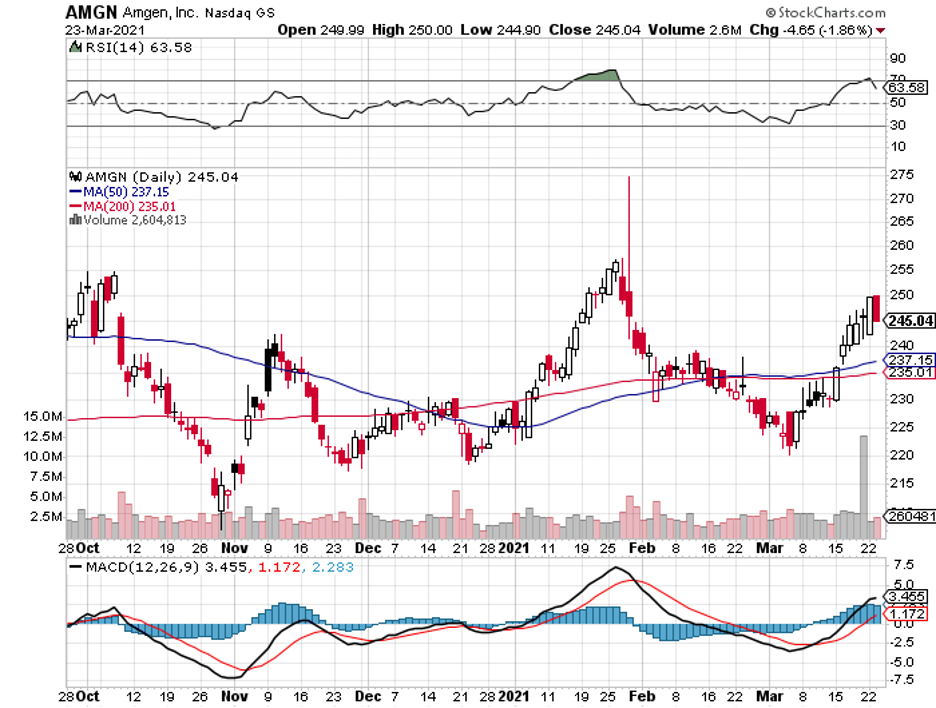
Currently, Amgen trades at a price-to-earnings multiple that’s actually 40% lower than the average S&P 500 stock. Its EPS is estimated to rise in the high single digits in the next several years.

Simply looking at its 2020 fiscal report, it’s obvious that Amgen delivered an impressive performance considering the recession and the pandemic.

The company also continues to reward its shareholders with double dividend increases plus an aggressive repurchase program, which Amgen plans to spend roughly $3 billion to $4 billion.

Recently, the stock has been trading at a roughly 30% discount. This is a real bargain considering everything Amgen has to offer.
Amgen biotech

https://madhedgefundtrader.com/wp-content/uploads/2019/05/cropped-mad-hedge-logo-transparent-192x192_f9578834168ba24df3eb53916a12c882.png 0 0 Mad Hedge Fund Trader https://madhedgefundtrader.com/wp-content/uploads/2019/05/cropped-mad-hedge-logo-transparent-192x192_f9578834168ba24df3eb53916a12c882.png Mad Hedge Fund Trader2021-03-25 15:00:252021-03-29 14:34:41Don't Miss the Boat on This Best of Breed Biotechnology Stock
Mad Hedge Fund Trader

March 18, 2021

Biotech Letter

Mad Hedge Biotech & Healthcare Letter
March 18, 2021
Fiat Lux

FEATURED TRADE:

(A BLUE CHIP STOCK SELLING AT A DISCOUNT)
(LLY), (GILD), (REGN), (SNY), (AMGN), (TEVA), (NVO), (ABBV), (BMY)

https://madhedgefundtrader.com/wp-content/uploads/2019/05/cropped-mad-hedge-logo-transparent-192x192_f9578834168ba24df3eb53916a12c882.png 0 0 Mad Hedge Fund Trader https://madhedgefundtrader.com/wp-content/uploads/2019/05/cropped-mad-hedge-logo-transparent-192x192_f9578834168ba24df3eb53916a12c882.png Mad Hedge Fund Trader2021-03-18 14:02:232021-03-18 15:18:47March 18, 2021
Mad Hedge Fund Trader

A Blue Chip Stock Selling at a Discount

Biotech Letter

It’s not unheard of in the biotechnology industry to watch the stock prices of small or even mid-cap drug developers rise and fall by 30% following trial results or new drug approval.

However, when the company is Eli Lilly (LLY), which holds a $179 billion market capitalization, then biotech investors need to pay attention.

After all, the only plausible conclusion to draw from this is that there have been some seismic advancements done by the company.

Two potentially breakthrough treatments are the culprit behind the volatility in Eli Lilly stock these days.

The first is Eli Lilly’s COVID-19 program, in which the company is looking into using Bamlanivimab (LY-CoV555) solo or combining it with Etesevimab (LY-CoV016).

What we know so far is that the combo drug can lower the risk of death and hospitalization among high-risk COVID-19 patients by as high as 87%.

In November 2020, the FDA granted Eli Lilly’s Bamlanivimab Emergency Use Authorization.

The solo treatment was also authorized for the same usage in Morocco, Europe, Canada, Rwanda, and some regions of the Middle East, where Eli Lilly is collaborating with the Bill and Melinda Gates Foundation for distribution.

Last February 2021, its combo treatment received the same approval.

To date, Eli Lilly has shipped roughly 1 million doses of Bamlanivimab and is committed to supplying an additional 1 million this quarter.

To meet the demand for the Bamlanivimab-Etesevimab combo, Eli Lilly will be working with pharmaceutical titan Amgen (AMGN).

In the company’s 2020 earnings report, Eli Lilly disclosed that Bamlanivimab accounted for $871 million of their sales.

For 2021, the market for COVID-19 treatments is valued at $27.25 billion.

Taking into consideration the competitors coming up with similar medications, such as Gilead Sciences (GILD), Regeneron (REGN), and Sanofi (SNY), the conservative estimate for the sales for Bamlanivimab alone is estimated to reach roughly $1 billion to $2 billion this year.

The second potential breakthrough that’s affecting Eli Lilly’s prices is its Alzheimer’s disease treatment, Donanemab.

Eli Lilly recently released positive data from the Phase 2 trial of Donanemab, with the treatment slowing down cognitive decline by 32% after 76 weeks.

In fact, a notable decline was already observed among the patients as early as 36 weeks.

This is an impressive result, and there’s talk that Eli Lilly’s plan of possible commercialization of Donanemab by 2024 could be fast-tracked to as early as the first half of 2023.

Interestingly, the positive news was met with negative reactions by the investors.

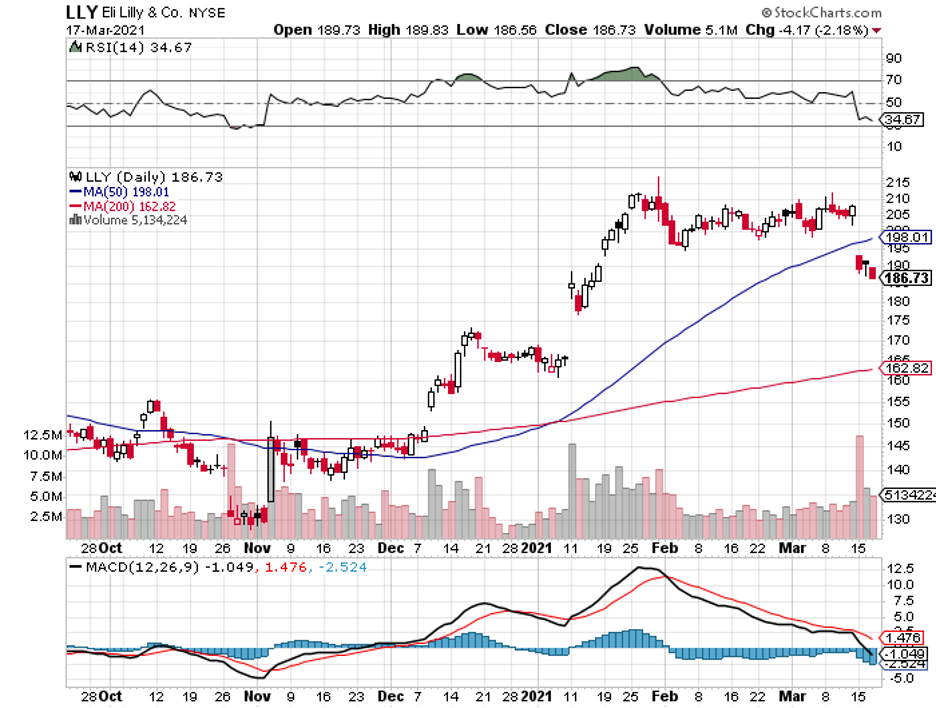
Eli Lilly fell by 9% following the Donanemab update, sending shares tumbling from $208.18 to $189.16.

This reaction effectively erased almost $20 billion in the company’s market value.

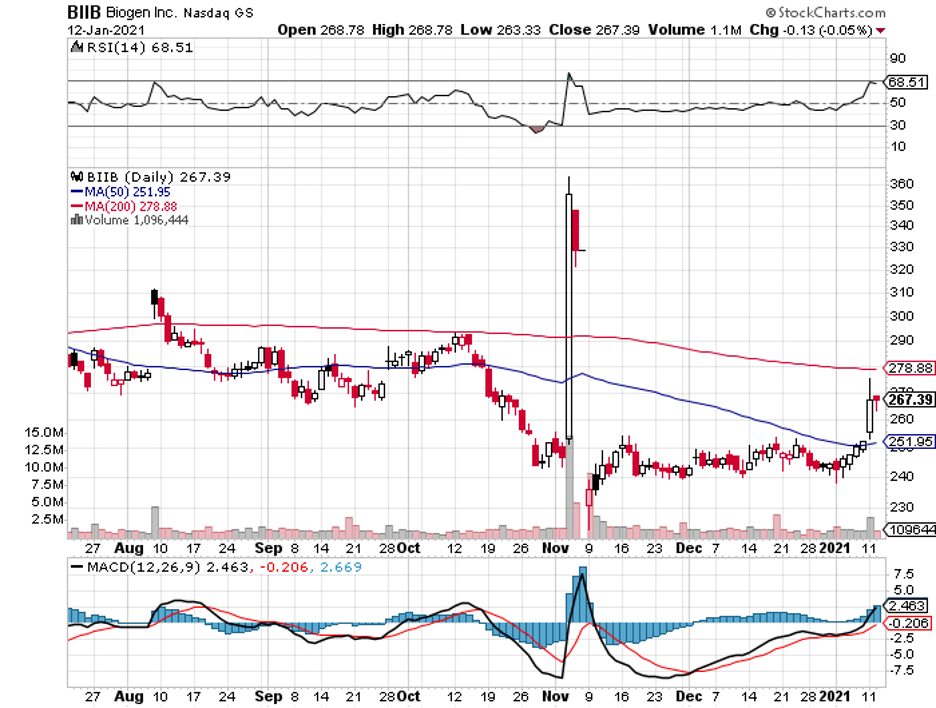
The negative reaction to Eli Lilly’s news may be stemming from the pending application of Biogen’s (BIIB) own Alzheimer’s drug, Aducanumab, which is expected to receive word from the FDA by June.

Investors anticipate that Aducanumab’s performance would be indicative of Donanemab’s future.

Looking at the trial results though, I can say that this shouldn’t be the case. Since the beginning, Donanemab has outperformed Aducanumab in practically every aspect.

Either way, what cannot be denied here is the market opportunity.

When the market thought that Aducanumab would get FDA approval in November 2020, the share price of Biogen saw a whopping 44% jump from $246 to $354 overnight.

Meanwhile, Donanemab’s potential sales volumes have been estimated to reach over $10 billion annually. 

Other than Donanemab, Eli Lilly has been developing more contenders to boost its neuroscience division. Right now, this segment generates 6.3% of the company’s total revenues.

One of the promising drugs in the portfolio is migraine treatment Emgality, which recorded a 123% increase in sales last year to hit $362 million.

Thus far, Emgality holds at least 31% of the migraine market and still has room for growth and expansion.

This is a remarkable performance considering that its competitors include Amgen’s Aimovig and Teva’s (TEVA) Ajovy.

Another solid earner is antidepressant treatment Cymbalta, which generated over $768 million in sales last year, up by 5% year-on-year.

Outside its neuroscience efforts, one of Eli Lilly’s strongest growth drivers is its diabetes franchise.

This segment accounts for roughly 47% of its revenues and is led by Trulicity with $5 billion in sales last year, up 23% year-over-year.

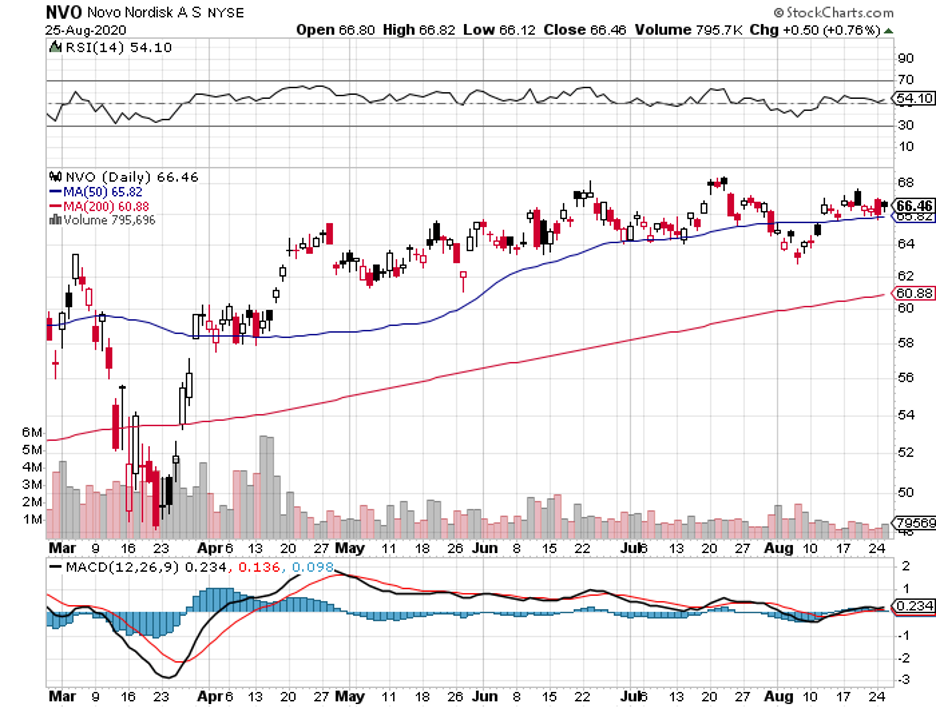
Eli Lilly’s diabetes program has grown so much in the past years that it now aggressively competes against Novo Nordisk (NVO), a monopoly-like presence in this space.

In fact, Trulicity has been able to successfully protect its own market share against Novo’s heavily marketed Rybelsus, with data showing that users of Eli Lilly’s diabetes injectable recorded 60% adherence levels compared to Novo’s 43%.

In terms of expansion, Eli Lilly also won a new approval for Trulicity to be used to treat cardiovascular conditions as well.

This additional indication puts Trulicity’s peak sales at roughly $7.43 billion.

In an effort to corner the diabetes market, Eli Lilly also developed Tirzepatide.

Basically, this treatment is a long-term hedge against the pending loss of Trulicity’s patent exclusivity by 2027.

However, Tirzepatide is projected to surpass its predecessor in sales and reach double-digit billions.

Overall, Eli Lilly has positioned itself well in the diabetes market.

While it’s engaged in an aggressive battle for dominance against Novo Nordisk, there’s a lot of room for both.

The diabetes treatment segment is a continuously expanding market, with its value doubling in size from 2015 to 2015. Within this period, this market is projected to grow from $31 billion to $59 billion.

Aside from its diabetes and neuroscience programs, Eli Lilly has also been active in developing its immunology and oncology segments.

This is an ambitious plan, considering that practically all pharmaceutical companies are working on treatments in this space.

After all, the auto-immune market is massive as it’s worth well over $50 billion.

One of the bestsellers in Eli Lilly’s portfolio is plaque psoriasis treatment Taltz, which grew its sales by 31% year-over-year to reach $1.8 billion last year.

Some of the major competitors in this space are Bristol Myers Squibb (BMY) with Zeposia, Sanofi’s Dupixent, and AbbVie’s (ABBV) Skyrizi.

What could be promising news for Eli Lilly is the fact that AbbVie’s ultra-bestseller Humira is going off-patent by 2023.

This means that it could open up the market to allow both Taltz and Olumiant, another top-selling Eli Lilly treatment, to grab part of the lucrative market share.

Ultimately, Eli Lilly is a business that offers a promising commercialized portfolio and a remarkable near-term pipeline, which can reasonably support an annual revenue growth rate of roughly 10% even if we don’t factor in the effects of Donanemab.

Apart from the potential aftermath of the pending Biogen news, the fall in Eli Lilly’s shares could also be attributed to the extremely high expectation of investors.

Alzheimer’s has no approved cure, and there are only a handful of treatments developed from this neurological disease—none of which are even marginally effective.

It’s normal for investors to be wary of positive data results since they’ve been down this road before and are merely attempting to temper their excitement.

Amid the selloff, I believe that Donanemab is far from a lost cause. More importantly, I think the drop in Eli Lilly’s share price presents a rare buying opportunity for investors.

Therefore, I advise buying the dip.

https://madhedgefundtrader.com/wp-content/uploads/2019/05/cropped-mad-hedge-logo-transparent-192x192_f9578834168ba24df3eb53916a12c882.png 0 0 Mad Hedge Fund Trader https://madhedgefundtrader.com/wp-content/uploads/2019/05/cropped-mad-hedge-logo-transparent-192x192_f9578834168ba24df3eb53916a12c882.png Mad Hedge Fund Trader2021-03-18 14:00:452021-03-23 18:32:20A Blue Chip Stock Selling at a Discount
Mad Hedge Fund Trader

March 2, 2021

Biotech Letter

Mad Hedge Biotech & Healthcare Letter
March 2, 2021
Fiat Lux

FEATURED TRADE:

(ANOTHER PLAYER JOINS THE ALZHEIMER’S DISEASE DRUG RACE)
(SAVA), (PFE), (HLUYY), (LLY), (AVXL), (CRTX), (BIIB), (GILD)

https://madhedgefundtrader.com/wp-content/uploads/2019/05/cropped-mad-hedge-logo-transparent-192x192_f9578834168ba24df3eb53916a12c882.png 0 0 Mad Hedge Fund Trader https://madhedgefundtrader.com/wp-content/uploads/2019/05/cropped-mad-hedge-logo-transparent-192x192_f9578834168ba24df3eb53916a12c882.png Mad Hedge Fund Trader2021-03-02 15:02:282021-03-02 16:20:27March 2, 2021
Mad Hedge Fund Trader

Another Player Joins the Alzheimer's Disease Drug Race

Biotech Letter

Over 5.8 million people in the United States live with Alzheimer’s disease, and there are at least 487,000 new cases recorded every year.

Sadly, there has been no new treatment approved for this condition since 2003.

It isn’t for the lack of trying though.

In fact, large-cap biotechnology companies like Pfizer (PFE), H Lundbeck A/S (HLUYY), and Eli Lilly (LLY) have tried their hands at coming up with a drug to treat Alzheimer’s disease.

Unfortunately, none of them succeeded.

Amid the failure of these industry giants to develop a cure, a small-cap biotechnology company based in Austin, Texas has emerged with a potential answer to the problem.

Cassava Sciences (SAVA), which has a market capitalization of $2 billion, is offering investors a different direction—and its efforts haven’t gone unnoticed.

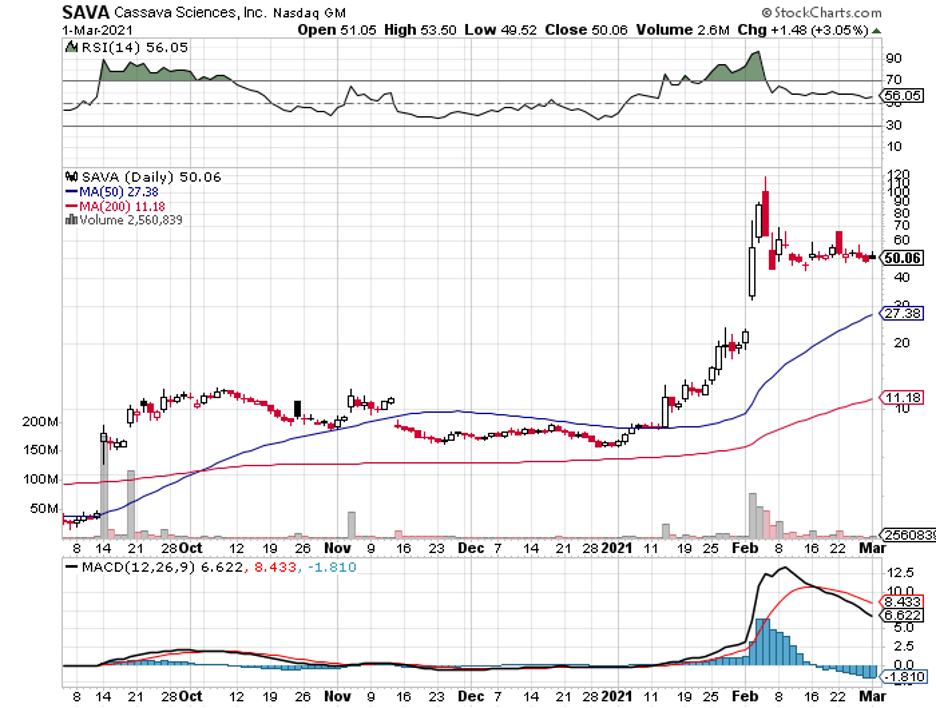
Over the past 12 months, Cassava stock rose by a whopping 668%.

The overwhelming interest in the stock is understandable.

In February, Cassava released promising reports about its own Alzheimer’s drug candidate, Simufilam.

Patients who took Simufilam for six months showed 10% improvement on their cognition tests, while their dementia-related behavior improved by 29%.

The next stage would be for Cassava to go through Phase 3 of the study for Simufilam.

Interestingly, the success of Simufilam’s trials has not only benefited Cassava but also several smaller biotechnology companies working on Alzheimer’s disease treatments.

Specifically, Anavex Life Sciences (AVXL), which only has a market capitalization of almost $900 million, gained an impressive 129.4% boost. 

Meanwhile, Cortexyme (CRTX), which has a market capitalization of $1.07 billion, rose by 57.8% this year following the positive data release.

While Cassava’s results are definitely worth looking into, it’s critical to understand the limits of the data the company has provided the public thus far.

My caution against Cassava at this point is not based on the belief that its Alzheimer’s disease program will fail.

Rather, I’m wary of the stock because its value right now is heavily based on the misunderstood perception that Simufilam has already succeeded.

Looking at the current data from the company, I believe that the skyrocketing price at this point remains unjustified.

It’s important to keep in mind that the FDA will not grant approval to a drug unless it shows satisfactory effectiveness in Phase 3 clinical trial.

A fairly recent example of a cautionary tale is the fanfare generated by Biogen (BIIB) when it released promising data for its own Alzheimer’s drug, Aducanumab.

However, this isn’t to say that Simufilam won’t make it, or that it will experience the same issues faced by Biogen.

This simply means that valuing this stock requires a more sober assessment. It’s challenging to determine its actual value right now with all the speculative fever surrounding it.

Remember, clinical trials for Alzheimer’s disease would set a company back roughly $1.8 billion on average.

It also typically takes more than four years to complete. At this point, Cassava only has approximately $94.3 million in cash.

This means it would need to either land a development partner to help shoulder the expenses or sell additional stock to come up with additional funds.

The Alzheimer’s drug market is massive, which is a clear indicator of the dire need in this space because there remain no reliable drugs available.

On the low end of the estimate, the global Alzheimer’s drug sales is projected to be $3.5 billion back in 2018.

On the high end, the number could reach $4.9 billion in 2013 to over $13.3 billion by 2023.

What are the prospects of an effective Alzheimer’s disease drug? Let’s go back to Biogen.

Its Aducanumab, which never managed to release impressive data, still estimated peak sales of roughly $4.2 billion.

Back of the envelope math says that an approved, safe, and effective treatment would undoubtedly generate blockbuster multi-billion dollar sales.

After all, large-cap companies pay a premium for exclusive rights to promising drugs.

To use an approved exclusive drug as an example, let’s take a look at the September 2020 deal between Immunomedics and Gilead Sciences (GILD).

Prior to the deal, Immunomedics developed an exclusive and promising chemotherapy drug called Trodelvy.

Like Aducanumab, that treatment was valued to rake in $4 to $5 billion in peak sales.

Seeing the potential, Gilead Sciences bought out Immunomedics to get Trodelvy.

The deal? It was worth $21 billion, or approximately 100x where Cassava trades when 2021 started.

Although it’s difficult to determine how much Cassava would eventually be valued, the sales for its Alzheimer’s drug should project better numbers than the regularly doubted Aducanumab.

The bottomline is this: Cassava is a promising stock that offers an Alzheimer’s disease drug candidate that reported better results than what the big players in the industry achieved so far.

Investors should expect volatility from this company in the next few months or even years as it enters a crucial stage: the Phase 3 trials, otherwise known as the drug development graveyard.

cassava


https://madhedgefundtrader.com/wp-content/uploads/2019/05/cropped-mad-hedge-logo-transparent-192x192_f9578834168ba24df3eb53916a12c882.png 0 0 Mad Hedge Fund Trader https://madhedgefundtrader.com/wp-content/uploads/2019/05/cropped-mad-hedge-logo-transparent-192x192_f9578834168ba24df3eb53916a12c882.png Mad Hedge Fund Trader2021-03-02 15:00:272021-03-04 21:42:27Another Player Joins the Alzheimer's Disease Drug Race
Mad Hedge Fund Trader

January 14, 2021

Biotech Letter

Mad Hedge Biotech & Healthcare Letter
January 14, 2021
Fiat Lux

FEATURED TRADE:

(ARE THESE THE NEW NEUROSCIENCE TRAILBLAZERS?)
(LLY), (BIIB), (MRNA), (DNA)

https://madhedgefundtrader.com/wp-content/uploads/2019/05/cropped-mad-hedge-logo-transparent-192x192_f9578834168ba24df3eb53916a12c882.png 0 0 Mad Hedge Fund Trader https://madhedgefundtrader.com/wp-content/uploads/2019/05/cropped-mad-hedge-logo-transparent-192x192_f9578834168ba24df3eb53916a12c882.png Mad Hedge Fund Trader2021-01-14 14:02:392021-01-14 16:32:55January 14, 2021
Mad Hedge Fund Trader

Are These The New Neuroscience Trailblazers?

Biotech Letter

Aducanumab isn’t going gently into the night.

Positive data from Eli Lilly (LLY) breathed renewed interest in the efforts to find a cure for Alzheimer’s disease, the most common form of dementia and the sixth leading cause of death among Americans.

With 1 in 10 people aged 65 and older suffering from this condition, it’s no wonder that Big Pharma has invested so much in searching for a treatment.

Lilly’s candidate, Trailblazer-ALZ 2, is in its Phase 2 trials. Results showed that the progression of moderate Alzheimer’s disease among patients who took the drug showed a 32% decline compared to a placebo.

In a sector riven by failure and with a potential target market as lucrative as $30 billion annually, investors welcomed Lilly’s news with enthusiasm.

If successful, Trailblazer-ALZ 2 could reach $5 billion in peak sales. As expected, the results boosted Lilly’s stock, with it rising by 14% from $166 to $190.

While the Lilly study is promising, it involved only 272 patients.

This is easily dwarfed by Biogen’s (BIIB) efforts to find a cure for Alzheimer’s. As of last count, the giant biotechnology company’s previous trial for its own drug, Aducanumab, involved over 3,200 patients.

More importantly, Lilly’s Trailblazer-ALZ 2 is projected to hit the market in 2025, while Biogen’s Aducanumab is “ready to go.”

Aducanumab is a monthly infusion designed as a long-term treatment for generally healthy individuals who are beginning to show symptoms of Alzheimer’s disease.

Although this treatment has yet to be approved, the FDA is said to be in favor of its approval.

Outside the US, Biogen has also filed for potential approval in Japan and Europe. All approvals could come by early to mid-2021. 

If approved, Aducanumab is expected to reach $12 billion in peak sales.

While this plan is still up in the air, the $12 billion in sales alone could easily justify the entire company’s current valuation.

Despite the uncertainty, Biogen remains promising thanks to the high potential of the existing drugs in its roster and its R&D unit.

In terms of pipeline, the company has at least 30 active clinical programs. Eight of which are already in Phase 3 and filed, including Aducanumab.

In recent years, Biogen has been focusing on expanding its neuroscience segment.

With over $28 billion potential market size, it no longer comes as a surprise why Biogen is pouring in cash in this particular sector.

Bolstering its efforts in the neuroscience segment, Biogen has recently invested in the Series A round of Atalanta Therapeutics, a Boston-based pioneering neurodegenerative diseases biotechnology company founded in 2018.

Attracted by Atalanta’s research on siRNA, which are molecules that can “silence” genes in the brain, Biogen and another biotechnology bigwig, Genentech (DNA), invested a combined $110 million to get a piece of the action.

Specifically, Biogen signed up to collaborate with Atalanta on treatments for Huntington’s along with several other central nervous system disorders.

As for Genentech, the $73.9 billion valued company’s deal with Atalanta covers Alzheimer’s and Parkinson’s.

In both agreements, Atalanta gets upfront payments, milestones, and royalties.

What we know so far is that Atalanta’s siRNA can silence Huntington's disease gene for at least six months. It can also alleviate symptoms affecting the spinal cords, but this part of the research has only been done on nonhuman primates.

Biogen, which has a market capitalization of $41.15 billion, has seen its share price fluctuate dramatically due to concerns over its Alzheimer’s drug.

The company withstood significant volatility in 2020, experiencing over 40% price swings in both directions. This is primarily because of the ups and downs of its Aducanumab trials, which heavily swayed the opinion of market participants.

Moving forward, I expect Biogen to have a massive year this 2021.

That’s the upside of this stock.

Even at its midpoint and if major treatments like Aducanumab fail to gain approval, I still anticipate a respectable year for this biotechnology company. That kind of security is worth paying attention to, and it can also signal its capacity to drive strong rewards.

Biogen has been shunned in the past year due to its volatility.

After all, who would want to invest in an unpredictable drug like Aducanumab when there are major stock indices and newcomers like Moderna (MRNA) making record-breaking highs?

For investors willing to look beneath the surface though, Biogen offers so much more than what meets the eye.

aducanumab

https://madhedgefundtrader.com/wp-content/uploads/2019/05/cropped-mad-hedge-logo-transparent-192x192_f9578834168ba24df3eb53916a12c882.png 0 0 Mad Hedge Fund Trader https://madhedgefundtrader.com/wp-content/uploads/2019/05/cropped-mad-hedge-logo-transparent-192x192_f9578834168ba24df3eb53916a12c882.png Mad Hedge Fund Trader2021-01-14 14:00:372021-01-16 20:46:59Are These The New Neuroscience Trailblazers?
Mad Hedge Fund Trader

December 10, 2020

Biotech Letter

Mad Hedge Biotech & Healthcare Letter
December 10, 2020
Fiat Lux

FEATURED TRADE:

(A STOCK TO SWEETEN YOUR YEAR)
(NVO), (LLY), (MRK), (PFE)

https://madhedgefundtrader.com/wp-content/uploads/2019/05/cropped-mad-hedge-logo-transparent-192x192_f9578834168ba24df3eb53916a12c882.png 0 0 Mad Hedge Fund Trader https://madhedgefundtrader.com/wp-content/uploads/2019/05/cropped-mad-hedge-logo-transparent-192x192_f9578834168ba24df3eb53916a12c882.png Mad Hedge Fund Trader2020-12-10 16:03:222020-12-10 16:10:18December 10, 2020
Mad Hedge Fund Trader

A Stock to Sweeten Your Year

Biotech Letter

Diabetes is one of the major health issues plaguing the United States, with the CDC reporting that over 34 million people are suffering from this disease – and 20% of them are not even aware of their condition.

More alarmingly, there are at least 88 million individuals that are already in the prediabetic stage.

Since the number of people with diabetes has multiplied in the past 20 years, it presents a massive market for a lot of biotechnology and healthcare companies.

In 2019, the diabetes treatment and drug sector in the US alone recorded a landmark valuation of more than $15 billion and the CDC expects this number to reach $16 billion by 2025.

That’s why it comes as no surprise that more and more companies are attempting to corner the diabetes market.

Since it was founded back in 1876, Eli Lilly (LLY) has been known as the king of the diabetes industry.

However, one competitor has been aggressively working to dethrone Eli Lilly: Novo Nordisk (NVO).

In 2019, NVO’s share in the global diabetes market reached an impressive 29%.

Now, the company aims to boost its share to reach more than 33% by 2025.

Looking at its track record, NVO’s goal of becoming one of the most dominant forces in the diabetes sector is very close to reality.

The company recorded consecutive revenue and net income increases for the past three years.

According to its second quarter report for 2020, NVO reported $4.8 million in revenue. Meanwhile, its net income reached $1.7 billion, representing an 11% boost compared to its performance in the same period last year.

NVO has also seen a promising growth from its newly launched Type 2 diabetes treatments, Ozempic and Rybelsus.

Ozempic alone has been phenomenal, with the drug already reporting $1.1 billion in sales for the first half of 2020 in the US.

This shows off an impressive 156% increase from its record during the same period in 2019 – and the drug has yet to reach its peak.

To put things in perspective, Ozempic recorded $1.7 billion in annual sales last year, a substantial jump from the $264 million it earned when it was launched in 2018.

Rybelsus is another drug expected to take in huge numbers for NVO. The drug has already brought in $64.5 million in revenue in the first six months since its launch in the fourth quarter of 2019.

While all these sound promising, NVO actually has another trick up its sleeve.

The company is planning to sustain its growth by catering to large and well-defined but underserved sectors.

Interestingly, this is similar to the strategy used by Merck (MRK) and Pfizer (PFE) from 1982 to 2000.

At the time, the two healthcare titans decided to cater to the then under-penetrated market of cardiovascular disease.

Initially, the goal was to provide treatments that can abate the risk factors of a heart disease called atherosclerosis. Merck and Pfizer isolated two issues they wanted to address: hypertension and high cholesterol.

Apart from eventually creating drugs specializing in these health issues, Pfizer went on to discover that an ingredient of its products has the sought-after side effect of letting men feel “young” and active once again.

Thus, the best selling Viagra was born.

From the way NVO has been handling its pipeline candidates, a similar result might be well on its way.

For instance, its moneymaker Ozempic is now considered a promising candidate for another underserved market: the progressive liver disease NASH.

Other than that, NVO is also working on listing obesity as a chronic disease. That way, insurers will be required to cover treatment for the condition.

To date, there are 650 million people categorized as obese and only 2% of them are seeking treatment.

Once again, Ozempic will be a stepping stone in this plan.

NVO has been testing the drug’s efficacy on diminishing the patient’s appetite, calling the experimental Ozempic application AM833.

This can gradually transform into a solid revenue source as there are roughly 460 million people suffering from diabetes worldwide, and only 6% of them are in control of their condition.

Basically, NVO is aiming to prevent complications derived from obesity and diabetes.

With such a distinct approach to the growing opportunities, NVO is undoubtedly on its way to building a mega-franchise.

Despite the COVID-19 pandemic wreaking havoc across the globe, NVO is one of the handful of companies with rising earnings expectations this year.

From the previous guidance of $2.72 earnings per share, the company increased it to $2.86 for the rest of the year. Even its 2021 forecast climbed from $3.05 EPS to $3.14.

Overall, this company offers a solid and sustainable revenue stream along with a promising pipeline of candidates with the potential to become mega-blockbusters well beyond the diabetes sector.

nvo 

https://madhedgefundtrader.com/wp-content/uploads/2019/05/cropped-mad-hedge-logo-transparent-192x192_f9578834168ba24df3eb53916a12c882.png 0 0 Mad Hedge Fund Trader https://madhedgefundtrader.com/wp-content/uploads/2019/05/cropped-mad-hedge-logo-transparent-192x192_f9578834168ba24df3eb53916a12c882.png Mad Hedge Fund Trader2020-12-10 16:00:012020-12-15 01:18:39A Stock to Sweeten Your Year
Mad Hedge Fund Trader

November 5, 2020

Biotech Letter

Mad Hedge Biotech & Healthcare Letter
November 5, 2020
Fiat Lux

FEATURED TRADE:

(IT’S GO TIME FOR BIOGEN’S ALZHEIMER’S DRUG)
(BIIB), (LLY), (AXSM), (MYL)

https://madhedgefundtrader.com/wp-content/uploads/2019/05/cropped-mad-hedge-logo-transparent-192x192_f9578834168ba24df3eb53916a12c882.png 0 0 Mad Hedge Fund Trader https://madhedgefundtrader.com/wp-content/uploads/2019/05/cropped-mad-hedge-logo-transparent-192x192_f9578834168ba24df3eb53916a12c882.png Mad Hedge Fund Trader2020-11-05 13:02:142020-11-05 13:30:49November 5, 2020
Page 24 of 28«‹2223242526›»

tastytrade, Inc. (“tastytrade”) has entered into a Marketing Agreement with Mad Hedge Fund Trader (“Marketing Agent”) whereby tastytrade pays compensation to Marketing Agent to recommend tastytrade’s brokerage services. The existence of this Marketing Agreement should not be deemed as an endorsement or recommendation of Marketing Agent by tastytrade and/or any of its affiliated companies. Neither tastytrade nor any of its affiliated companies is responsible for the privacy practices of Marketing Agent or this website. tastytrade does not warrant the accuracy or content of the products or services offered by Marketing Agent or this website. Marketing Agent is independent and is not an affiliate of tastytrade. 

Legal Disclaimer

There is a very high degree of risk involved in trading. Past results are not indicative of future returns. MadHedgeFundTrader.com and all individuals affiliated with this site assume no responsibilities for your trading and investment results. The indicators, strategies, columns, articles and all other features are for educational purposes only and should not be construed as investment advice. Information for futures trading observations are obtained from sources believed to be reliable, but we do not warrant its completeness or accuracy, or warrant any results from the use of the information. Your use of the trading observations is entirely at your own risk and it is your sole responsibility to evaluate the accuracy, completeness and usefulness of the information. You must assess the risk of any trade with your broker and make your own independent decisions regarding any securities mentioned herein. Affiliates of MadHedgeFundTrader.com may have a position or effect transactions in the securities described herein (or options thereon) and/or otherwise employ trading strategies that may be consistent or inconsistent with the provided strategies.

Copyright © 2026. Mad Hedge Fund Trader. All Rights Reserved. support@madhedgefundtrader.com
Scroll to top