• support@madhedgefundtrader.com
  • Member Login
Mad Hedge Fund Trader
  • Home
  • About
  • Store
  • Luncheons
  • Testimonials
  • Contact Us
  • Click to open the search input field Click to open the search input field Search
  • Menu Menu

Tag Archive for: (ABBV)

Mad Hedge Fund Trader

A Blue Chip Stock Selling at a Discount

Biotech Letter

It’s not unheard of in the biotechnology industry to watch the stock prices of small or even mid-cap drug developers rise and fall by 30% following trial results or new drug approval.

However, when the company is Eli Lilly (LLY), which holds a $179 billion market capitalization, then biotech investors need to pay attention.

After all, the only plausible conclusion to draw from this is that there have been some seismic advancements done by the company.

Two potentially breakthrough treatments are the culprit behind the volatility in Eli Lilly stock these days.

The first is Eli Lilly’s COVID-19 program, in which the company is looking into using Bamlanivimab (LY-CoV555) solo or combining it with Etesevimab (LY-CoV016).

What we know so far is that the combo drug can lower the risk of death and hospitalization among high-risk COVID-19 patients by as high as 87%.

In November 2020, the FDA granted Eli Lilly’s Bamlanivimab Emergency Use Authorization.

The solo treatment was also authorized for the same usage in Morocco, Europe, Canada, Rwanda, and some regions of the Middle East, where Eli Lilly is collaborating with the Bill and Melinda Gates Foundation for distribution.

Last February 2021, its combo treatment received the same approval.

To date, Eli Lilly has shipped roughly 1 million doses of Bamlanivimab and is committed to supplying an additional 1 million this quarter.

To meet the demand for the Bamlanivimab-Etesevimab combo, Eli Lilly will be working with pharmaceutical titan Amgen (AMGN).

In the company’s 2020 earnings report, Eli Lilly disclosed that Bamlanivimab accounted for $871 million of their sales.

For 2021, the market for COVID-19 treatments is valued at $27.25 billion.

Taking into consideration the competitors coming up with similar medications, such as Gilead Sciences (GILD), Regeneron (REGN), and Sanofi (SNY), the conservative estimate for the sales for Bamlanivimab alone is estimated to reach roughly $1 billion to $2 billion this year.

The second potential breakthrough that’s affecting Eli Lilly’s prices is its Alzheimer’s disease treatment, Donanemab.

Eli Lilly recently released positive data from the Phase 2 trial of Donanemab, with the treatment slowing down cognitive decline by 32% after 76 weeks.

In fact, a notable decline was already observed among the patients as early as 36 weeks.

This is an impressive result, and there’s talk that Eli Lilly’s plan of possible commercialization of Donanemab by 2024 could be fast-tracked to as early as the first half of 2023.

Interestingly, the positive news was met with negative reactions by the investors.

Eli Lilly fell by 9% following the Donanemab update, sending shares tumbling from $208.18 to $189.16.

This reaction effectively erased almost $20 billion in the company’s market value.

The negative reaction to Eli Lilly’s news may be stemming from the pending application of Biogen’s (BIIB) own Alzheimer’s drug, Aducanumab, which is expected to receive word from the FDA by June.

Investors anticipate that Aducanumab’s performance would be indicative of Donanemab’s future.

Looking at the trial results though, I can say that this shouldn’t be the case. Since the beginning, Donanemab has outperformed Aducanumab in practically every aspect.

Either way, what cannot be denied here is the market opportunity.

When the market thought that Aducanumab would get FDA approval in November 2020, the share price of Biogen saw a whopping 44% jump from $246 to $354 overnight.

Meanwhile, Donanemab’s potential sales volumes have been estimated to reach over $10 billion annually. 

Other than Donanemab, Eli Lilly has been developing more contenders to boost its neuroscience division. Right now, this segment generates 6.3% of the company’s total revenues.

One of the promising drugs in the portfolio is migraine treatment Emgality, which recorded a 123% increase in sales last year to hit $362 million.

Thus far, Emgality holds at least 31% of the migraine market and still has room for growth and expansion.

This is a remarkable performance considering that its competitors include Amgen’s Aimovig and Teva’s (TEVA) Ajovy.

Another solid earner is antidepressant treatment Cymbalta, which generated over $768 million in sales last year, up by 5% year-on-year.

Outside its neuroscience efforts, one of Eli Lilly’s strongest growth drivers is its diabetes franchise.

This segment accounts for roughly 47% of its revenues and is led by Trulicity with $5 billion in sales last year, up 23% year-over-year.

Eli Lilly’s diabetes program has grown so much in the past years that it now aggressively competes against Novo Nordisk (NVO), a monopoly-like presence in this space.

In fact, Trulicity has been able to successfully protect its own market share against Novo’s heavily marketed Rybelsus, with data showing that users of Eli Lilly’s diabetes injectable recorded 60% adherence levels compared to Novo’s 43%.

In terms of expansion, Eli Lilly also won a new approval for Trulicity to be used to treat cardiovascular conditions as well.

This additional indication puts Trulicity’s peak sales at roughly $7.43 billion.

In an effort to corner the diabetes market, Eli Lilly also developed Tirzepatide.

Basically, this treatment is a long-term hedge against the pending loss of Trulicity’s patent exclusivity by 2027.

However, Tirzepatide is projected to surpass its predecessor in sales and reach double-digit billions.

Overall, Eli Lilly has positioned itself well in the diabetes market.

While it’s engaged in an aggressive battle for dominance against Novo Nordisk, there’s a lot of room for both.

The diabetes treatment segment is a continuously expanding market, with its value doubling in size from 2015 to 2015. Within this period, this market is projected to grow from $31 billion to $59 billion.

Aside from its diabetes and neuroscience programs, Eli Lilly has also been active in developing its immunology and oncology segments.

This is an ambitious plan, considering that practically all pharmaceutical companies are working on treatments in this space.

After all, the auto-immune market is massive as it’s worth well over $50 billion.

One of the bestsellers in Eli Lilly’s portfolio is plaque psoriasis treatment Taltz, which grew its sales by 31% year-over-year to reach $1.8 billion last year.

Some of the major competitors in this space are Bristol Myers Squibb (BMY) with Zeposia, Sanofi’s Dupixent, and AbbVie’s (ABBV) Skyrizi.

What could be promising news for Eli Lilly is the fact that AbbVie’s ultra-bestseller Humira is going off-patent by 2023.

This means that it could open up the market to allow both Taltz and Olumiant, another top-selling Eli Lilly treatment, to grab part of the lucrative market share.

Ultimately, Eli Lilly is a business that offers a promising commercialized portfolio and a remarkable near-term pipeline, which can reasonably support an annual revenue growth rate of roughly 10% even if we don’t factor in the effects of Donanemab.

Apart from the potential aftermath of the pending Biogen news, the fall in Eli Lilly’s shares could also be attributed to the extremely high expectation of investors.

Alzheimer’s has no approved cure, and there are only a handful of treatments developed from this neurological disease—none of which are even marginally effective.

It’s normal for investors to be wary of positive data results since they’ve been down this road before and are merely attempting to temper their excitement.

Amid the selloff, I believe that Donanemab is far from a lost cause. More importantly, I think the drop in Eli Lilly’s share price presents a rare buying opportunity for investors.

Therefore, I advise buying the dip.
https://madhedgefundtrader.com/wp-content/uploads/2019/05/cropped-mad-hedge-logo-transparent-192x192_f9578834168ba24df3eb53916a12c882.png 0 0 Mad Hedge Fund Trader https://madhedgefundtrader.com/wp-content/uploads/2019/05/cropped-mad-hedge-logo-transparent-192x192_f9578834168ba24df3eb53916a12c882.png Mad Hedge Fund Trader2021-03-18 14:00:452021-03-23 18:32:20A Blue Chip Stock Selling at a Discount
Mad Hedge Fund Trader

March 4, 2021

Diary, Newsletter, Summary

Global Market Comments
March 4, 2021
Fiat Lux

Featured Trade:

(THE BARBELL PLAY WITH BERKSHIRE HATHAWAY),
(BRKA), (BRKA), (BAC), (KO), (AXP), (VZ), (BK) (USB),
(TLT), (AAPL), (MRK), (ABBV), (CVX), (GM), (PCC), (BNSF)

https://madhedgefundtrader.com/wp-content/uploads/2019/05/cropped-mad-hedge-logo-transparent-192x192_f9578834168ba24df3eb53916a12c882.png 0 0 Mad Hedge Fund Trader https://madhedgefundtrader.com/wp-content/uploads/2019/05/cropped-mad-hedge-logo-transparent-192x192_f9578834168ba24df3eb53916a12c882.png Mad Hedge Fund Trader2021-03-04 10:04:292021-03-04 13:02:02March 4, 2021
Mad Hedge Fund Trader

The Barbell Play with Berkshire Hathaway

Diary, Newsletter

It’s time to give myself a dope slap.

I have been pounding the table all year about the merits of a barbell strategy, with equal weightings in technology and domestic recovery stocks. By owning both, you’ll always have something doing well as new cash flows bounce back and forth between the two sectors like a ping pong ball.

After all, nobody gets sector rotation right, unless they have been practicing for 50 years, like me.

Full disclosure: I have to admit that after 50 years of following him, I love Buffet. He was one of the first subscribers to my newsletter when it started up in 2008. Some of his best ideas have come from the Mad Hedge Fund Trader, like buying Bank of America for $5 in 2008.

Oh, and he hates Wall Street for constantly fleecing people. Ditto here.

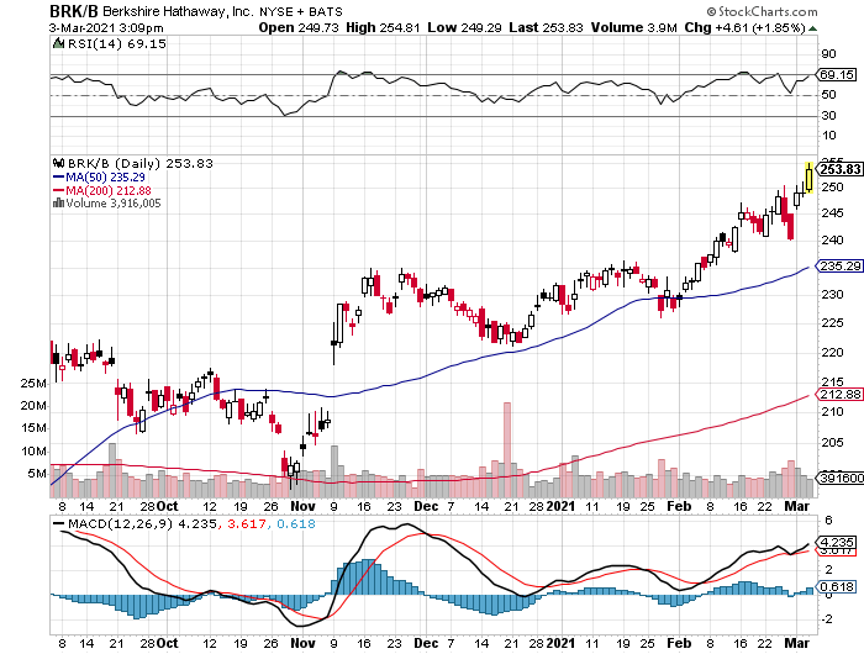
In reading Warren Buffet’s annual letter (click here for the link), it occurred to me that his Berkshire Hathaway (BRKB) shares were in effect a one-stop barbell investment.

For a start, Warren owns a serious slug of Apple (AAPL), some $120 billion worth, or 2.5% of the total fund. That gives (BRKB) some technology weighting. It cost him only $20 billion. The dividends he received entirely paid for the initial cost. So he owns 4% of Apple for free.

I remember the battle over the initial “BUY” five years ago. Warren fought it, insisting he didn’t understand the smart phone business. In the end, he bought Apple for its global brand value alone.

That is Warren Buffet to a tee.

The next five largest publicly listed holdings are Bank of America (BAC), Coca-Cola (KO), American Express (AXP), and Verizon Communications (VZ). These are your classic domestic recovery sectors. And with a heavy weighting in other banks (BK) (USB), Buffet is effectively short the bond market (TLT), another position I hugely favor.

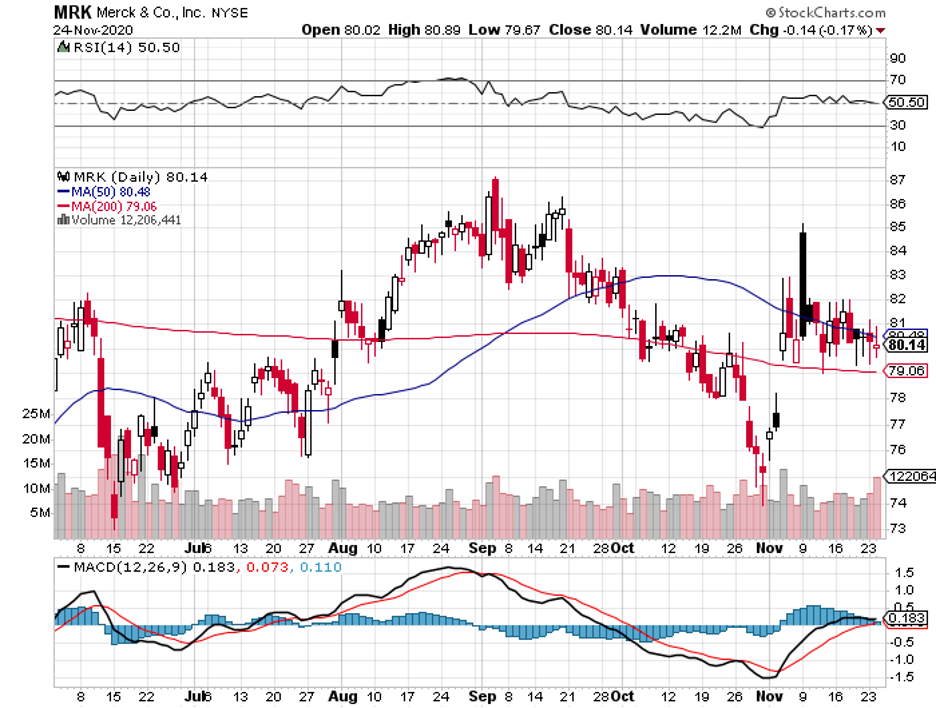
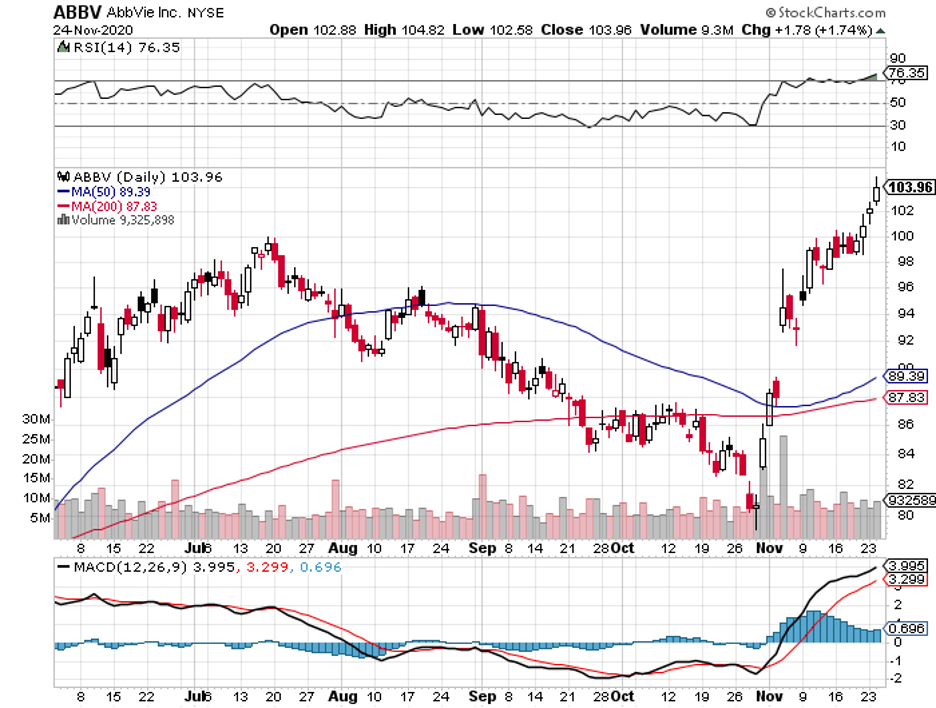
Also included in the package is a liberal salting of pharmaceuticals, Merck (MRK) and AbbVie (ABBV). He has a small energy weighting with Chevron (CVX). He even has a position in old heavy metal America with General Motors (GM).

Berkshire is also one of the world’s largest property & casualty insurance owners. Its current “float” is $138 billion. You all know his flagship holding, GEICO. And the gecko mascot isn’t going anywhere as long as Warren lives. It was Warren’s idea.

It all seems to work for Warren. In 2020, he earned a staggering $42.5 billion. All told, Berkshire’s businesses employ 360,000, second to only Amazon (AMZN), and is the largest taxpayer in the United States, accounting for 3% of government revenues. Berkshire is also the largest owner of capital goods & equipment in the US worth $156 billion, topping (AT&T).

Many of Warrens's early 1956 $1,000 investors are millionaires many times over….and over 100 years old, prompting him to muse if ownership of his shares extended life.

Warren’s annual letter, which he spends practically the entire year working on, is always one of the best reads in the financial markets. There isn’t a better 50,000-foot view out there. He also admits to his mistakes, such as his disastrous purchase of Precision Castparts (PCC) in 2016 for $37 billion, which later suffered from the crash in the aerospace industry. In 2020, Buffet wrote off $11 billion of that acquisition.

He can do worse. In 1993, he bought the Dexter Shoe Company for $433 million worth of Berkshire stock. The company went under, but the Berkshire stock today is worth $8.7 billion.

Buffet’s letters always refer back to some of his “greatest hits,” today legends in the business history of the United States: GEICO, Furniture Mart, Berkshire Hathaway Energy, and See’s Candies, one of the largest employers of women in the US using 150-year-old recipes. Its peanut brittle is to die for.

In 2009, Buffet snatched away from me BNSF for a song, now the most profitable railroad in the country, an amalgamation of 360 railroads over 170 years. I say “snatched away” because it was my favorite railroad trading vehicle for decades until he bought the entire company. I hear its trains run by my home every night as a grim reminder.

Another benefit to owning (BRKB) is that Buffet is far and away the largest buyer of his own shares, soaking up $25 billion worth in 2020. And he is buying the shares of other companies that are also aggressively buying their own shares, like Apple ($200 billion with last year). It all sounds like the perfect money creation machine to me.

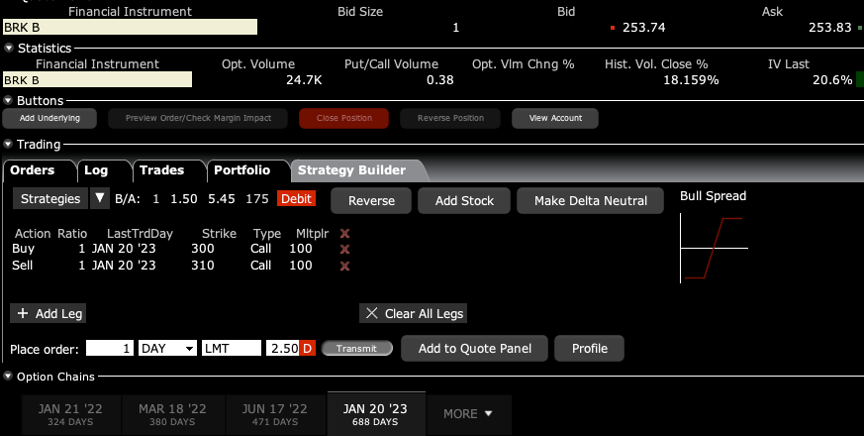
It gets better. Berkshires “B” shares trade options, meaning you can buy LEAPS (Long Term Equity Anticipation Securities), which by now, you all know and love. I’ll run some numbers for you.

With (BRKB) now trading at $254, you can buy the January 2023 $300-$310 call spread for $2.50. If the shares close anywhere over $310 by the 2023 expiration, the position will be worth $10.00, giving you a gain of 300%. And you only need an appreciation of $56, or 22% in the shares to capture this blockbuster profit, giving you upside leverage of an eye-popping 13.63X in the best run company in America.

See, I told you you’d like it.

This is how poor people become rich. In fact, my target for (BRKB) is $300 for end of 2021 and $400 for 2022, right when the two-year LEAPS expire.

One question I often get about Berkshire is what happens when Warren Buffet goes to his greater reward, not an impossible concept given that he is 90 years old.

I imagine the shares will have a bad day or two, and then recover. Buffet has been hiring his replacements for a decade or more, and he handed off day-to-day operation years ago (I didn’t want to move to Omaha, no mountains).

When that happens, it will be the best buying opportunity of the year. And another chance to load up on those LEAPS.


https://madhedgefundtrader.com/wp-content/uploads/2019/05/cropped-mad-hedge-logo-transparent-192x192_f9578834168ba24df3eb53916a12c882.png 0 0 Mad Hedge Fund Trader https://madhedgefundtrader.com/wp-content/uploads/2019/05/cropped-mad-hedge-logo-transparent-192x192_f9578834168ba24df3eb53916a12c882.png Mad Hedge Fund Trader2021-03-04 10:02:012021-04-22 09:10:54The Barbell Play with Berkshire Hathaway
Mad Hedge Fund Trader

February 18, 2021

Biotech Letter

Mad Hedge Biotech & Healthcare Letter
February 18, 2021
Fiat Lux

FEATURED TRADE:

(WARREN BUFFETT’S BIOPHARMACEUTICAL BETS)
(MRK), (ABBV), (BMY), (PFE), (NKTR), (VZ), (CVX), (AAPL), (BRK.B)

https://madhedgefundtrader.com/wp-content/uploads/2019/05/cropped-mad-hedge-logo-transparent-192x192_f9578834168ba24df3eb53916a12c882.png 0 0 Mad Hedge Fund Trader https://madhedgefundtrader.com/wp-content/uploads/2019/05/cropped-mad-hedge-logo-transparent-192x192_f9578834168ba24df3eb53916a12c882.png Mad Hedge Fund Trader2021-02-18 13:02:182021-02-18 15:55:58February 18, 2021
Mad Hedge Fund Trader

Warren Buffett’s Biopharmaceutical Bets

Biotech Letter

Aside from the recent big moves involving Verizon Communications (VZ), Chevron (CVX), and Apple (AAPL), Warren Buffett has also been busy with biopharmaceutical stocks.

Just before 2020 ended, Berkshire Hathaway (BRK.B) made notable changes in its positions particularly in Merck (MRK), AbbVie (ABBV), Bristol-Myers Squibb (BMY), and Pfizer (PFE).

Berkshire boosted its investment in Merck by 28.1% to reach 28.7 million shares.

Meanwhile, its AbbVie holdings were increased by 20% to hit 25.5 million shares.

It also added 11.2% in its investments in Bristol, totaling to 33.3 million shares.

In contrast, the company cut 3.7 million shares from its Pfizer holdings.

In terms of growth potential, these biopharmaceutical companies hold the most promising prospects in the next decade. 

Merck, hailed as a vaccine stalwart, is behind the blockbuster cancer treatment Keytruda.

For context, Keytruda generated $14.4 billion in sales in 2020 alone.

Despite fears over the expiring patent exclusivity of this drug, the company still trades at roughly 11.5 times earnings and is actually projected to achieve 11% long-term EPS growth rate.

Merck also continues to leverage Keytruda in the development of the next generation of treatments in its pipeline.

In fact, the company recently sealed a clinical collaboration with Nektar Therapeutics (NKTR) to assess the effectiveness of Keytruda when combined with Nektar’s own bempegaldesleukin in the treatment of squamous cell carcinoma.

Other than expanding its oncology sector, Merck has been developing its animal health business as well. So far, this particular segment has grown by 7% year over year, reaching $4.7 billion in 2020.

If things work out, then Merck could emerge as a huge competitor against Pfizer’s own animal healthcare spinoff, Zoetis (ZTS), in the future.

To date, Merck has at least 31 candidates in Phase 2 trials and 25 more undergoing Phase 3 studies.

Needless to say, these will be valuable in enriching the company’s lineup especially with the challenges that Keytruda will face in the next years.

As for AbbVie, this company trades at approximately 8.3 times the earnings estimated in the next 12 months. This is well below its five-year average of 10.4 times earnings.

However, the company is projected to show at least 13% EPS growth rate in the long term.

Despite the challenges of 2020, with the company going down 2.6%, the long-term prospects for AbbVie remain positive.

Although AbbVie broke through the dermatology market following its acquisition of Botox-maker Allergan in the past year, it still has to contend with a major problem: arthritis medication Humira.

Humira is not only AbbVie’s top-selling treatment but also the best selling drug in the world today.

In 2020 alone, this anti-inflammatory treatment raked in $19.8 billion in sales. However, AbbVie might soon lose this edge since its exclusive rights to Humira in the US will expire in 2023.

Amidst the anxiety over this issue though, AbbVie continues to defy expectations.

Last year, the company reported a 65.9% growth in its net revenue despite the overall slowdown caused by the pandemic.

As for 2021, AbbVie is anticipating an even better year thanks to its portfolio diversification efforts.

To date, the company’s lineup now spans neuroscience, immunology, eye care, women’s health, and of course, aesthetics.

Meanwhile, Bristol Myers has been pegged to achieve roughly 8% growth rate in the long term. Right now, the stock trade at 7.9 times earnings estimated over the next 12 months.

Like AbbVie and Merck, Bristol has been dealing with patent expiration issues—a problem that pushed its stock down by 4.1% so far this year.

One of the major updates involving Bristol is its massive $74 billion acquisition of Celgene in 2019.

While the deal raised a lot of eyebrows at the time, it brought cancer blockbuster Revlimid into the company’s fold.

Revlimid, which still enjoys protection from a flood of generics for a few more years, has been pumping up sales for Celgene nonstop for over a decade. The drug is expected to generate the same, if not higher, profits for Bristol.

Two more blockbuster drugs in Bristol’s lineup are facing impending patent exclusivity issues, Opdivo, which would expire in 2028, and Eliquis in 2026.

Nonetheless, the positives outweigh the negatives for Bristol. After all, this company invested so much in diversification.

Sales of Opdivo, Revlimid, and Eliquis continued to trend upwards last year.

Opdivo alone managed to generate $7 billion in annual revenue, prompting Bristol to expand the indications for this product.

However, the more promising news lies in the updates that the recently launched products, like multiple sclerosis drug Zeposia and anemia treatment Reblozyl, are gaining traction in the market.

Thanks to the development of its pipeline, the company expects that its new product lineup would account for roughly 27% of its total revenues by 2025.

Overall, Berkshire’s choice of biopharmaceutical companies are offering promising growths in the next several years despite the setbacks they are facing today.

While some investors get alarmed over negative updates, it looks like the Oracle of Omaha is following his own advice: “Whether we're talking about socks or stocks, I like buying quality merchandise, when it is marked down.”


https://madhedgefundtrader.com/wp-content/uploads/2019/05/cropped-mad-hedge-logo-transparent-192x192_f9578834168ba24df3eb53916a12c882.png 0 0 Mad Hedge Fund Trader https://madhedgefundtrader.com/wp-content/uploads/2019/05/cropped-mad-hedge-logo-transparent-192x192_f9578834168ba24df3eb53916a12c882.png Mad Hedge Fund Trader2021-02-18 13:00:002021-02-19 14:51:57Warren Buffett’s Biopharmaceutical Bets
Mad Hedge Fund Trader

December 22, 2020

Biotech Letter

Mad Hedge Biotech & Healthcare Letter
December 22, 2020
Fiat Lux

FEATURED TRADE:

THE MOST FAMOUS CANCER STOCK YOU’VE NEVER HEARD OF
(TRIL), (NVAX), (PFE), (IMMU), (SHOP), (GILD), (ABBV)

https://madhedgefundtrader.com/wp-content/uploads/2019/05/cropped-mad-hedge-logo-transparent-192x192_f9578834168ba24df3eb53916a12c882.png 0 0 Mad Hedge Fund Trader https://madhedgefundtrader.com/wp-content/uploads/2019/05/cropped-mad-hedge-logo-transparent-192x192_f9578834168ba24df3eb53916a12c882.png Mad Hedge Fund Trader2020-12-22 13:02:062020-12-23 11:35:20December 22, 2020
Mad Hedge Fund Trader

The Most Famous Cancer Stock You’ve Never Heard of

Biotech Letter

Biotechnology stocks have proven time and time again to be excellent growth vehicles for risk-tolerant investors.

Underscoring this claim are companies like COVID-19 vaccine frontrunner Novavax (NVAX), which generated jaw-dropping returns on capital for their investors within an impressively short period.

Now, another biotechnology stock is showing telltale signs of following their footsteps: Trillium Therapeutics (TRIL).

Trillium’s story is a familiar one in the biotechnology industry.

Trading only in the penny stock range back in 2019, the company’s share price practically quadrupled since the start of 2020.

Taking into consideration that this meteoric rise actually happened while COVID-19 was blasting the world to smithereens, it’s hardly surprising that this news didn’t receive much media attention.

Trillium’s shares are currently up by an astounding 1,260% -- and the company still has so much room to grow from here.

For context, Trillium had a market capitalization of $7 million in November 2019. This number skyrocketed to $1.3 billion since its shift to cancer technology.

Although a lot of factors came into play, the key turning point for Trillium was when the company decided to go all-in on its cancer programs.

Ultimately, Trillium’s goal is to challenge chemotherapy.

The move to shutter its lead programs on tumor treatments and instead focus on developing cancer-fighting technology was the gamble of a lifetime for the company.

This gutsy move impressed investors, and Trillium was never the same since then.

Today, Trillium is the No. 1 stock on Canada’s S&P/TSX Composite Index, overtaking its previous leader e-commerce giant Shopify (SHOP) by almost 10-fold.

In the US, Trillium shares rank as the No. 4 best-performing company on the Nasdaq Composite Index.

While its epic stock market rally may have some investors feeling left out, all signs point to further gains in the future even for those who missed the initial boom.

Among the major capitalists of this biotechnology company is giant biopharmaceutical company and COVID-19 vaccine leader Pfizer (PFE), which invested $25 million in Trillium’s common stock.

While this equity stake may seem small in relation to Pfizer’s $212.16 billion market capitalization, this initial show of confidence is hailed as a prelude to an even bigger investment in the future.

So far, the most exciting cancer treatments in Trillium’s pipeline are TTI-621 and TTI-622.

These programs are in the same class of emerging cancer technologies, called CD47-based therapies, that prompted Gilead Sciences’ (GILD) $4.9 billion acquisition of Forty Seven, Inc. in April this year.

Aside from Gilead, AbbVie (ABBV) has also been reported to have invested a huge sum in this technology.

In simplest terms, CD47-based therapies can bypass the “don’t eat me signal” put up by some cancer cells in an effort to evade immune detection.

Thus far, both TTI-621 and TTI-622 have been showing promising results. Trillium recently announced that it will increase the dosage in these programs.

While Trillium leaders have not been specific in terms of being open to an acquisition, their recent statements indicate that they are not completely opposed to one.

It’s either that or a partnership with a company as big or even bigger than Pfizer.

As with all the biotechnology stocks, however, there will always be a risk.

For Trillium, the most evident one is competition.

While it’s true that the company has been recognized as the leader in the CD47 arena, more and more competitors are entering the immuno-oncology space.

Right now, the most obvious rival is Gilead, which added Immunomedics (IMMU) to its arsenal via a $21 billion acquisition deal.

Given the sheer amount of money that Gilead has been spending to practically corner the immuno-oncology market, it’s to be expected that more biopharmaceutical titans will enter the fray.

This is one of the reasons Trillium has been tagged as a prime candidate for a massive acquisition deal soon. So far, Pfizer is considered the most probable suitor.

Despite its astonishing performance this year, Trillium’s market capitalization still remains within the small-cap territory. That’s to be expected since its lead assets are still undergoing trials.

Considering that it is an early-stage biotechnology stock, Trillium does not have much in terms of income.

However, the company does have enough cash to last for a while. At the moment, it has $130 million cash.

With its total expenses of $38.8 million in 2019, I say this could offer the company more than three years of breathing room financially.

But it would be shocking if Trillium’s value won’t enter the large-cap territory (higher than $10 billion) if and when the company’s high-value assets reach the late-stage studies.

The fact that it’s also an attractive acquisition candidate offers incredible incentive to its investors.

Simply put, Trillium’s stock could get as much as 1,000% gain over the coming two to three years, making it an ideal investment for risk-tolerant investors.

https://madhedgefundtrader.com/wp-content/uploads/2019/05/cropped-mad-hedge-logo-transparent-192x192_f9578834168ba24df3eb53916a12c882.png 0 0 Mad Hedge Fund Trader https://madhedgefundtrader.com/wp-content/uploads/2019/05/cropped-mad-hedge-logo-transparent-192x192_f9578834168ba24df3eb53916a12c882.png Mad Hedge Fund Trader2020-12-22 13:00:442020-12-23 17:22:33The Most Famous Cancer Stock You’ve Never Heard of
Mad Hedge Fund Trader

December 1, 2020

Biotech Letter

Mad Hedge Biotech & Healthcare Letter
December 1, 2020
Fiat Lux

FEATURED TRADE:

(BET LIKE WARREN BUFFETT)
(MRK), (BRK.A), (AAPL), (JPM), (GILD), (PFE), (ABBV)

https://madhedgefundtrader.com/wp-content/uploads/2019/05/cropped-mad-hedge-logo-transparent-192x192_f9578834168ba24df3eb53916a12c882.png 0 0 Mad Hedge Fund Trader https://madhedgefundtrader.com/wp-content/uploads/2019/05/cropped-mad-hedge-logo-transparent-192x192_f9578834168ba24df3eb53916a12c882.png Mad Hedge Fund Trader2020-12-01 14:02:492020-12-01 14:14:50December 1, 2020
Mad Hedge Fund Trader

Bet Like Warren Buffett

Biotech Letter

Warren Buffett’s moves via Berkshire Hathaway (BRK.A) showed some telling signs this third quarter.

For one, the Oracle of Omaha has surprisingly trimmed his holdings in Apple (AAPL) and even JPMorgan Chase (JPM).

Another telltale sign that change is coming can be seen in his positions in biopharmaceutical titans.

Let’s take a closer look at one of the three biggest biopharma investments of Berkshire to date: Merck.

While the New Jersey-based pharmaceutical titan has not been as widely reported as its counterparts in the COVID-19 race, Merck has actually been working on a promising coronavirus program.

In fact, the company is part of the first five COVID-19 programs included in Donald Trump’s Operation Warp Speed.

Just last week, the company added another promising COVID-19 treatment to its pipeline via the $425 million cash acquisition of Oncolmmune—a move that would give Merck access to the privately-owned company’s COVID-19 treatment, called CD24Fc.

 If successful, CD24Fc will be a powerful treatment for mild to severe cases of COVID-19.

To date, only Gilead Sciences’ (GILD) Veklury has received FDA approval and even that treatment failed to address all the health concerns.

In comparison, CD24Fc is expected to undergo a smooth sailing journey from clinical trials to its market launch in 2021.

Meanwhile, Merck may have another ace in the hole with its COVID-19  program.

While the company is already months behind the frontrunners, Merck has a competitive advantage over the COVID-19 vaccine candidates submitted by Pfizer (PFE), Moderna (MRNA), and even AstraZeneca (AZN).

Its experimental COVID-19 vaccine does not require any freezing.

This means that unlike the candidates of Pfizer and Moderna, Merck’s vaccine does not need ultra-special handling and transportation.

On top of that significant advantage, Merck has been working with the nonprofit organization International AIDS Vaccine Initiative to develop a COVID-19 vaccine that only requires a single dose.

In contrast, the leading candidates today require two shots of their vaccines to become effective.

Apart from betting big on its COVID-19 program, Merck is also upping the stakes in its oncology pipeline.

Its recent move is the $2.75 billion acquisition of VelosBio—a partnership that adds another potent arrow to Merck’s already powerful quiver of cancer drugs.

This deal with VelosBio provides Merck with access to cancer treatments under development. Most of these home in on the deadly cancer cells but manage to spare the patients from several horrible side effects.

Prior to this, Merck shelled out $1 billion to gain an equity stake in Seagen (SGEN). The deal also grants Merck access to an extensive antibody drugs pipeline.

Aside from its oncology-related acquisitions—all of which have been home runs for its investors—Merck’s existing cancer pipeline has been consistent moneymakers.

Apart from lung cancer treatment Keytruda, which generated a whopping $11.9 billion in sales in 2019 alone, Merck has a virtually unbeatable arsenal against cancer.

In fact, its thyroid cancer drug Lenvima, which was initially approved for thyroid cancer in 2015, already expanded its indications to cover renal cell carcinoma and potentially even melanoma, endometrial cancer, NSCLC, and bladder cancer.

This could bring Keytruda-like success for Merck in the future.

Aside from Merck, Warren Buffett also invested in biopharmaceutical titans Pfizer and AbbVie.

As of September, Berkshire Hathaway holds 3.7 million Pfizer shares, 21.3 million AbbVie shares, and 22.4 million Merck shares.

These moves are especially noteworthy since the company has not owned any of these biopharma giants at the end of June.

Looking at the profile of these companies, there is no obvious connection or theme.

As discussed, Merck is heavily investing in its oncology pipeline.

AbbVie has been busy diversifying and building a pipeline independent from its megablockbuster Humira.

In fact, this biopharmaceutical giant has delved into dermatology with its massive acquisition of Allergan, aka the Botox-maker.

Meanwhile, Pfizer has been in the news thanks to its COVID-19 vaccine.

Aside from its coronavirus program, Pfizer has been focused on completing the merger between its Upjohn unit and generic drugmaker Mylan (MYL) to form a new company, called Viatris.

Analyzing all three closely though, one thing becomes clear: They are trading off their all-time highs and have been doing it for the entire 2020.

Do you know what that means?

Warren Buffett has been bargain shopping.


warren buffett


https://madhedgefundtrader.com/wp-content/uploads/2019/05/cropped-mad-hedge-logo-transparent-192x192_f9578834168ba24df3eb53916a12c882.png 0 0 Mad Hedge Fund Trader https://madhedgefundtrader.com/wp-content/uploads/2019/05/cropped-mad-hedge-logo-transparent-192x192_f9578834168ba24df3eb53916a12c882.png Mad Hedge Fund Trader2020-12-01 14:00:472020-12-04 15:50:09Bet Like Warren Buffett
Mad Hedge Fund Trader

October 20, 2020

Biotech Letter

Mad Hedge Biotech & Healthcare Letter
October 20, 2020
Fiat Lux

FEATURED TRADE:

THE MOST FAMOUS CANCER STOCK YOU’VE NEVER HEARD OF
(TRIL), (NVAX), (PFE), (IMMU), (SHOP), (GILD), (ABBV)

https://madhedgefundtrader.com/wp-content/uploads/2019/05/cropped-mad-hedge-logo-transparent-192x192_f9578834168ba24df3eb53916a12c882.png 0 0 Mad Hedge Fund Trader https://madhedgefundtrader.com/wp-content/uploads/2019/05/cropped-mad-hedge-logo-transparent-192x192_f9578834168ba24df3eb53916a12c882.png Mad Hedge Fund Trader2020-10-20 10:02:132020-12-24 10:19:32October 20, 2020
Page 17 of 20«‹1516171819›»

tastytrade, Inc. (“tastytrade”) has entered into a Marketing Agreement with Mad Hedge Fund Trader (“Marketing Agent”) whereby tastytrade pays compensation to Marketing Agent to recommend tastytrade’s brokerage services. The existence of this Marketing Agreement should not be deemed as an endorsement or recommendation of Marketing Agent by tastytrade and/or any of its affiliated companies. Neither tastytrade nor any of its affiliated companies is responsible for the privacy practices of Marketing Agent or this website. tastytrade does not warrant the accuracy or content of the products or services offered by Marketing Agent or this website. Marketing Agent is independent and is not an affiliate of tastytrade. 

Legal Disclaimer

There is a very high degree of risk involved in trading. Past results are not indicative of future returns. MadHedgeFundTrader.com and all individuals affiliated with this site assume no responsibilities for your trading and investment results. The indicators, strategies, columns, articles and all other features are for educational purposes only and should not be construed as investment advice. Information for futures trading observations are obtained from sources believed to be reliable, but we do not warrant its completeness or accuracy, or warrant any results from the use of the information. Your use of the trading observations is entirely at your own risk and it is your sole responsibility to evaluate the accuracy, completeness and usefulness of the information. You must assess the risk of any trade with your broker and make your own independent decisions regarding any securities mentioned herein. Affiliates of MadHedgeFundTrader.com may have a position or effect transactions in the securities described herein (or options thereon) and/or otherwise employ trading strategies that may be consistent or inconsistent with the provided strategies.

Copyright © 2026. Mad Hedge Fund Trader. All Rights Reserved. support@madhedgefundtrader.com
Scroll to top